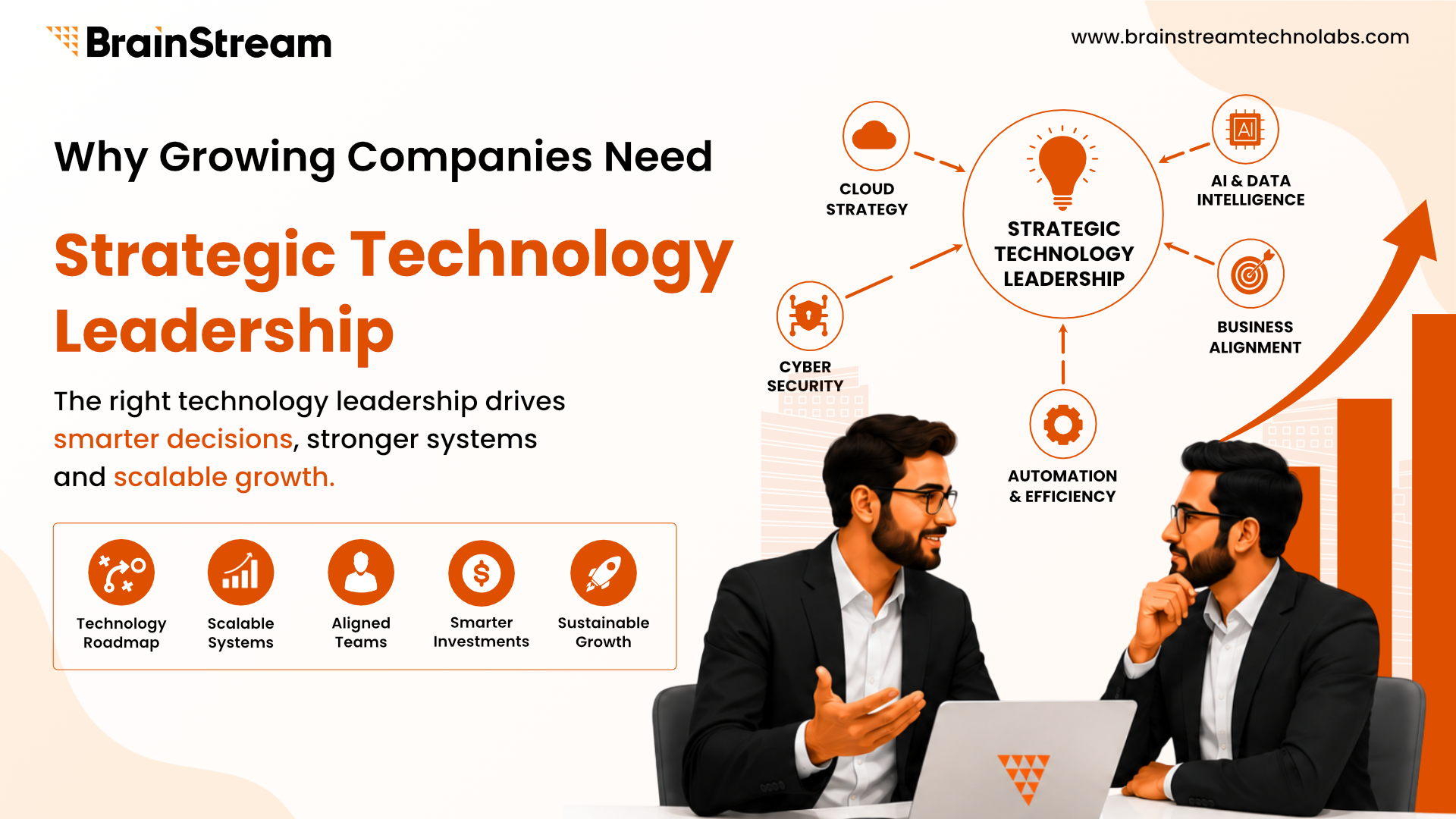
Why Growing Companies Need Strategic Technology Leadership?
Growth is exciting, but it also brings new challenges. As companies expand, technology decisions become more complex. What worked for a startup with ten employees may not support a business with fifty, one hundred, or even five hundred team members.
Many growing companies focus on hiring developers or investing in the latest tools. While these steps are important, they often overlook one critical factor: strategic technology leadership.
Technology is no longer just an operational function. It has become a key driver of business growth, customer experience, innovation, and competitive advantage.
The question is no longer “Do we need technology?”
The real question is:
“Do we have the right technology strategy to support our growth?”
Let’s explore why strategic technology leadership has become essential for every growing business.
What Is Strategic Technology Leadership?
Strategic technology leadership is the ability to align technology decisions with business goals.
Instead of simply managing IT infrastructure, technology leaders focus on:
- Supporting business growth
- Improving operational efficiency
- Reducing technology risks
- Driving innovation
- Planning for the future
- Maximizing technology investments
In many organizations, this role is handled by a Chief Technology Officer (CTO) or a Fractional CTO.
Their responsibility goes beyond choosing software. They ensure every technology decision contributes to long-term business success.
Why Growing Companies Need Technology Leadership?
As businesses grow, technology becomes more complex.
Without strategic leadership, companies often face:
- Disconnected software systems
- Rising operational costs
- Slow product development
- Security vulnerabilities
- Poor customer experiences
- Technical debt
- Difficulty scaling
A technology leader helps prevent these problems before they impact the business.
1. Technology Should Support Business Goals
Many companies purchase software because it’s popular.
However, the best technology is the one that solves your business challenges.
Strategic technology leaders evaluate every investment by asking:
- Will this improve efficiency?
- Will it increase revenue?
- Will it enhance customer experience?
- Will it support future growth?
Technology should always serve the business—not the other way around.
2. Better Technology Decisions Save Money
Poor technology decisions are expensive.
Growing companies often accumulate multiple software subscriptions that don’t integrate well.
This leads to:
- Duplicate work
- Higher licensing costs
- Manual processes
- Employee frustration
Strategic planning helps businesses invest in solutions that provide long-term value.
3. Scaling Requires the Right Architecture
Many startups build products quickly.
However, rapid development sometimes creates technical debt.
As user numbers grow, businesses may experience:
- Slow applications
- System failures
- Security issues
- Performance bottlenecks
Technology leaders design scalable architectures that support future growth without constant rebuilding.
4. Cybersecurity Can No Longer Be an Afterthought
Cyber threats continue to increase.
Growing businesses often become attractive targets because they store valuable customer and business data.
Technology leadership ensures:
- Secure software development
- Data protection
- Compliance with industry standards
- Risk management
- Disaster recovery planning
Strong security builds customer trust.
5. Digital Transformation Needs Direction
Many organizations invest in AI, automation, cloud platforms, and digital tools.
However, without a clear roadmap, these investments rarely deliver maximum value.
Technology leaders prioritize initiatives based on business impact rather than trends.
This approach improves ROI while reducing unnecessary spending.
6. AI Is Creating New Leadership Challenges
Artificial Intelligence is changing how businesses operate.
Organizations now need guidance on:
- AI adoption
- Automation opportunities
- Data governance
- AI ethics
- Technology integration
Strategic technology leadership helps companies adopt AI responsibly while maximizing business value.
7. Innovation Becomes a Competitive Advantage
Companies that innovate consistently often outperform competitors.
Technology leaders encourage innovation by:
- Evaluating emerging technologies
- Modernizing legacy systems
- Improving development processes
- Supporting experimentation
- Driving continuous improvement
Innovation is no longer optional.
It’s essential for long-term growth.
Signs Your Business Needs Strategic Technology Leadership
You may need technology leadership if:
- Software systems don’t integrate.
- Product development is slowing.
- Technology costs continue to rise.
- Security concerns are increasing.
- Teams rely on manual processes.
- Customers expect better digital experiences.
- AI initiatives lack direction.
- Your company is growing rapidly.
These challenges often indicate that the business has outgrown its current technology strategy.
Why Many Growing Companies Choose a Fractional CTO?
Hiring a full-time CTO may not always be practical.
That’s why many startups and growing businesses choose a Fractional CTO.
A Fractional CTO provides executive-level technology leadership without the cost of a full-time executive.
Benefits include:
- Technology strategy
- Digital transformation planning
- AI adoption guidance
- Architecture reviews
- Vendor selection
- Development team mentoring
- Technology roadmap planning
This approach gives businesses access to senior expertise while remaining cost-effective.
Common Mistakes Businesses Make
Avoid these common mistakes:
- Choosing technology without a strategy.
- Scaling outdated systems.
- Ignoring cybersecurity.
- Delaying modernization.
- Investing in tools without measuring ROI.
- Treating IT as a support function instead of a business driver.
Final Thoughts
Growing a business requires more than hiring developers or purchasing new software. It requires a clear technology vision that aligns with long-term business objectives.
Strategic technology leadership ensures every technology investment supports growth, improves efficiency, strengthens security, and creates better customer experiences.
Whether through a full-time CTO or a Fractional CTO, businesses that invest in technology leadership are better prepared to innovate, scale, and compete in an increasingly digital world.
As companies continue to embrace AI, automation, and cloud technologies, having the right technology strategy will become one of the biggest factors in long-term success.
FAQs
1. What is strategic technology leadership?
Strategic technology leadership is the process of aligning technology decisions with business goals. It helps companies choose the right tools, improve operations, manage risks, and support long-term growth.
2. Why is technology leadership important for growing businesses?
As businesses grow, their technology becomes more complex. Strategic technology leadership ensures systems remain scalable, secure, and aligned with business objectives, helping companies avoid costly mistakes and improve efficiency.
3. What does a technology leader do?
A technology leader develops the company’s technology strategy, oversees software development, manages digital transformation, improves cybersecurity, and ensures technology investments support business growth.
4. When should a company hire a CTO or a Fractional CTO?
A company should consider hiring a CTO or Fractional CTO when it is scaling rapidly, planning digital transformation, adopting AI, modernizing legacy systems, or facing technology challenges that require strategic guidance.
5. What is the difference between a CTO and a Fractional CTO?
A full-time CTO works exclusively for one company, while a Fractional CTO provides executive-level technology leadership on a part-time or project basis. This makes a Fractional CTO a cost-effective option for startups and growing businesses.
6. How does strategic technology leadership support digital transformation?
Strategic technology leadership helps businesses create a clear roadmap for adopting modern technologies such as AI, cloud computing, automation, and custom software. This ensures technology investments deliver measurable business value.
7. Can strategic technology leadership help reduce business costs?
Yes. By selecting the right technology, eliminating unnecessary software, improving workflows, and reducing manual processes, strategic technology leadership can lower operational costs and improve productivity.
8. How can AI support strategic technology leadership?
AI helps technology leaders automate repetitive tasks, analyze business data, improve decision-making, enhance customer experiences, and identify new opportunities for innovation and growth.
9. What are the signs that a business needs strategic technology leadership?
Common signs include disconnected software systems, rising technology costs, slow product development, cybersecurity concerns, poor system integration, and difficulty scaling operations.
10. How do I choose the right technology partner for my business?
Look for a partner with industry experience, strong technical expertise, transparent communication, proven case studies, and the ability to align technology solutions with your business goals. A reliable partner should focus on long-term success rather than just delivering software.

Manish Khilwani
Author
Co-Founder at BrainStream Technolabs, he focuses on building people-first, scalable eCommerce and digital products that help brands grow with clarity and innovation.
Table of contents
BLOGS
Learn & Grow with Us
Get the latest updates on trends and strategies that shape the business world. Our insights are here to keep you informed and inspired.
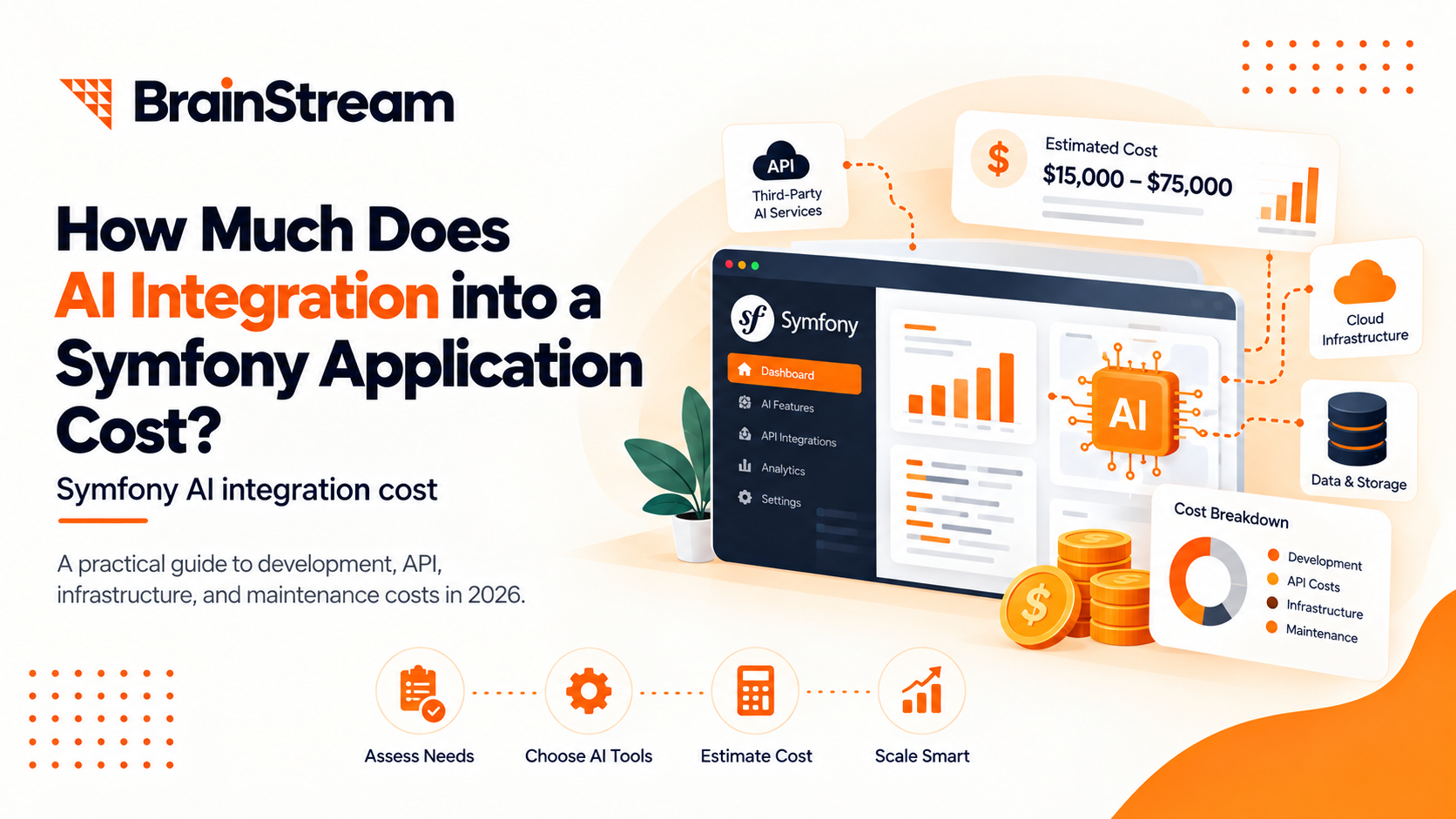
How Much Does AI Integration into a Symfony Application Cost in 2026?
Adding artificial intelligence to your Symfony application can improve customer…
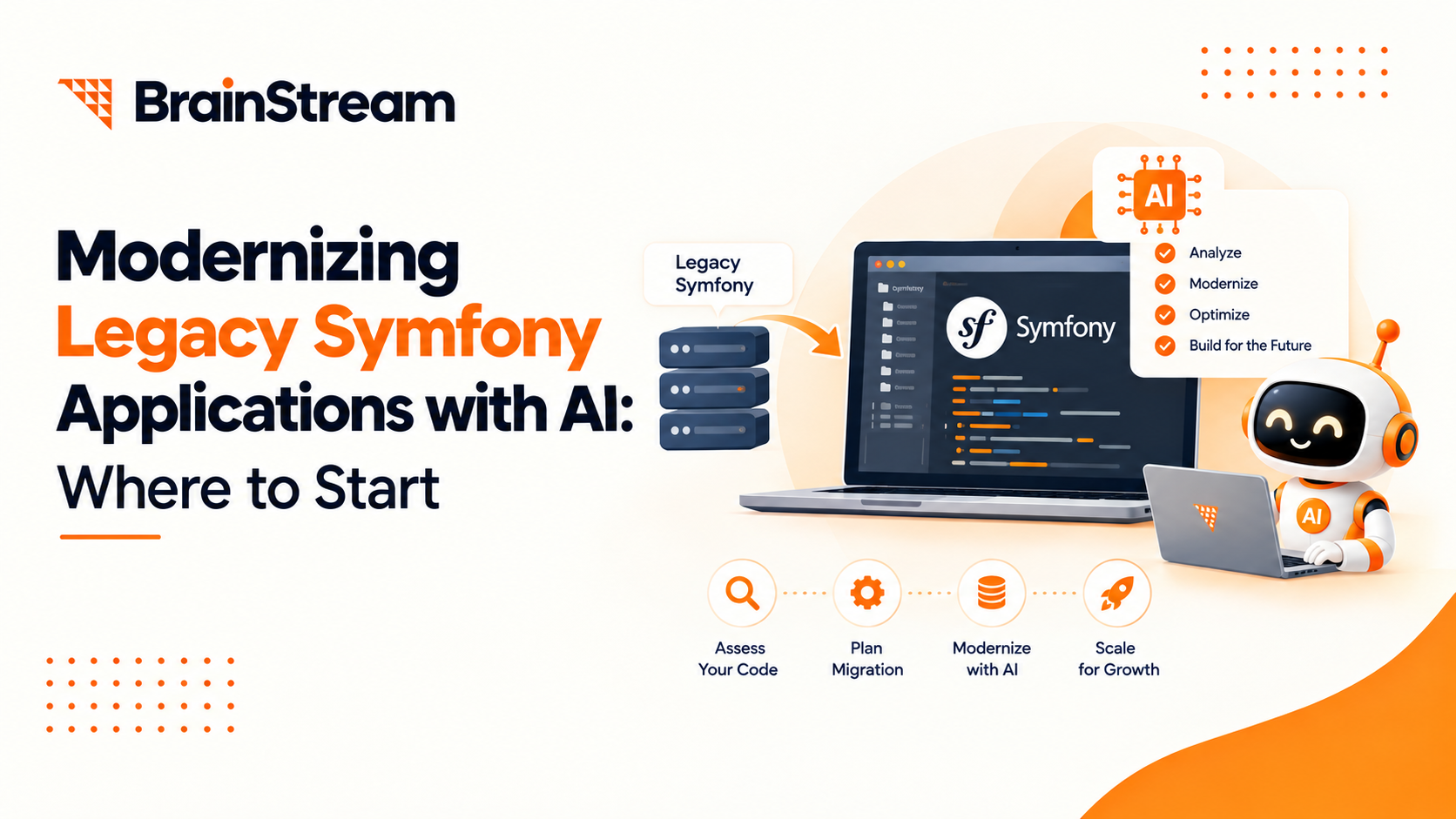
Modernizing Legacy Symfony Applications with AI: Where to Start
Your Symfony application still runs your business. However, adding features…
Agentic Commerce in 2026: How AI Agents Are Changing Online Shopping
Online shopping is entering a new phase. For years, shoppers…
Top 7 Must-Have Bagisto Extensions to Improve Your eCommerce Store in 2026
Running an online store takes more than adding products and…