











Summary:
A sales funnel in IT services helps businesses turn website visitors into qualified leads and long-term clients. This beginner-friendly guide explains what a sales funnel is, how it works for IT companies, and why growing businesses need structured funnels, CRM automation, and lead nurturing to scale efficiently.
January 8, 2026
In today’s competitive digital landscape, simply having a website or running ads is no longer enough for IT service companies. If your website gets traffic but fails to convert visitors into leads or clients, the problem isn’t traffic; it’s the absence of a sales funnel.
For IT service providers, software companies, and digital agencies, a well-structured sales funnel acts as a bridge between marketing efforts and revenue growth. It guides potential clients step-by-step, builds trust, and converts interest into long-term business relationships.
This beginner’s guide explains what a sales funnel is in IT services, how it works, and why growing businesses must implement one to scale consistently.
What Is a Sales Funnel in IT Services?
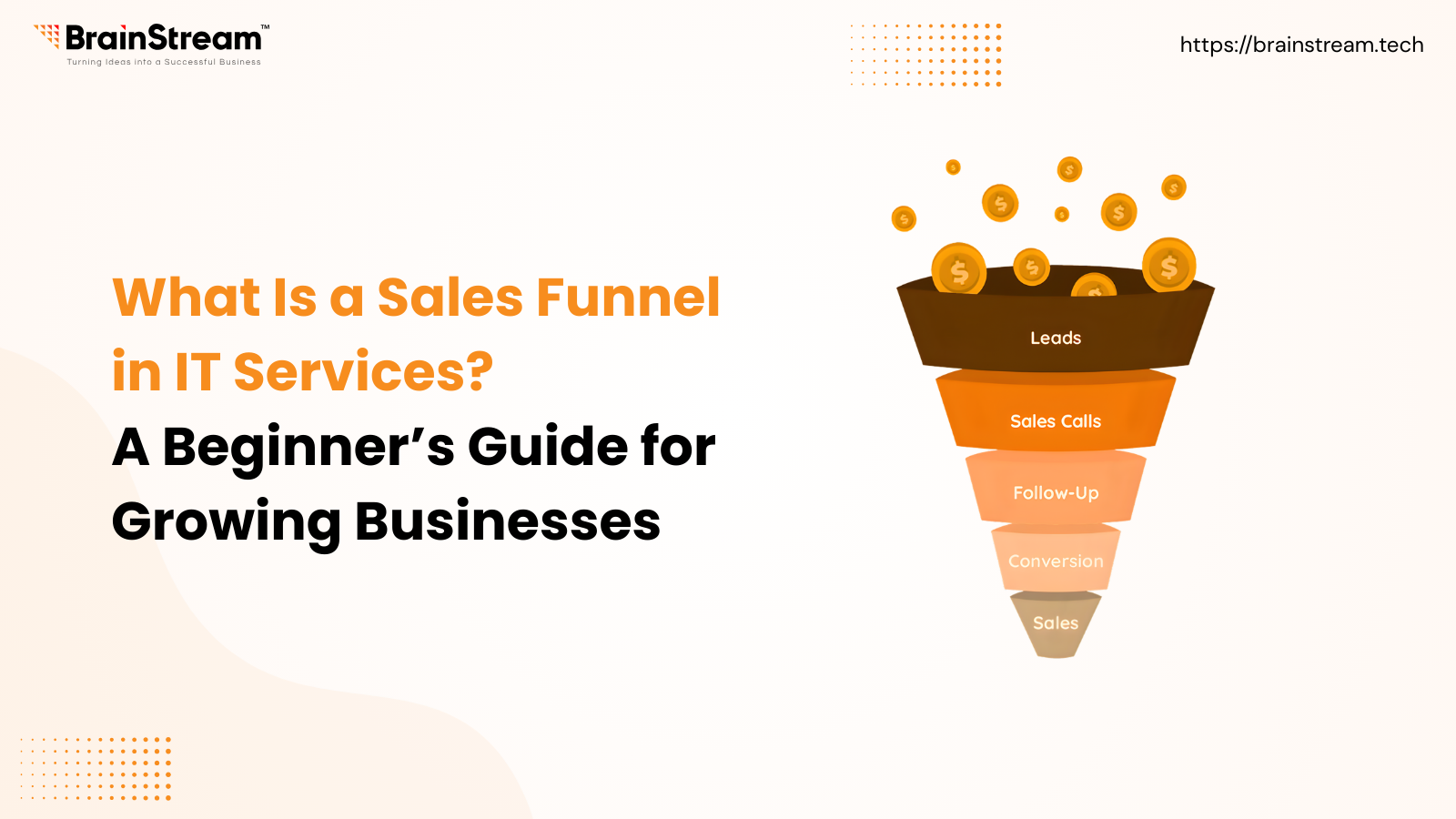
A sales funnel in IT services is a structured process that tracks and guides potential clients from their first interaction with your brand to becoming paying customers, and eventually loyal partners.
It’s called a funnel because:
- Many prospects enter at the top (website visitors, ad clicks, inquiries)
- Only a smaller number convert into qualified leads
- An even smaller group becomes paying clients
For IT companies, this funnel is especially important because:
- Sales cycles are longer
- Decisions are rational, not impulsive
- Trust, expertise, and communication matter more than discounts
A sales funnel ensures no opportunity is lost due to poor follow-ups, unclear messaging, or manual sales processes.
Why IT Service Businesses Need a Sales Funnel
Many IT companies rely on:
- Word-of-mouth
- Random inquiries
- Manual follow-ups
- Spreadsheets or emails to manage leads
This approach works at a small scale, but it completely breaks down when your business starts growing.
Here’s why a sales funnel is essential for IT services:
1. Predictable Lead Flow
Instead of waiting for inquiries, funnels create a systematic way to attract and convert leads.
2. Better Lead Qualification
Not every inquiry is a good fit. Funnels help filter serious prospects from casual visitors.
3. Higher Conversion Rates
Right message, right time; tailored content improves conversions.
4. Improved Sales Efficiency
Automation reduces manual follow-ups and saves your team’s time.
5. Scalability
You can grow without hiring more salespeople immediately.
How a Sales Funnel Works in IT Services
Unlike eCommerce, IT service funnels are relationship-driven and education-based.
A typical IT sales funnel works like this:
- A business owner searches for a solution online
- They discover your website or blog
- They consume helpful content
- They submit an inquiry or request a consultation
- The sales team follows up and nurtures the lead
- Proposal → discussion → deal closure
- Ongoing support and upsell opportunities
Each stage requires different communication and content.
Key Stages of a Sales Funnel in IT Services
1. Awareness Stage
This is where potential clients first discover your business.
Common channels:
- SEO blogs
- Google Ads
- Social media
- Referrals
- LinkedIn outreach
Goal: Educate and attract, not sell.
Example:
A user searches “custom CRM development company” and lands on your blog.
2. Interest Stage
At this stage, prospects explore your services and expertise.
What they do:
- Read blog posts
- Browse service pages
- Download guides
- Subscribe to newsletters
Your job: Build credibility and explain how you solve real business problems.
3. Consideration Stage
Now the prospect is comparing options.
They look for:
- Case studies
- Testimonials
- Pricing clarity
- Technical expertise
- Past projects
This is where IT companies win or lose deals.
Clear messaging, proof, and communication are critical here.
4. Intent Stage
The prospect shows buying signals.
Examples:
- Contact form submission
- Demo request
- Proposal discussion
- Call scheduling
Your focus: Quick response, personalized communication, and clear next steps.
5. Purchase Stage
This is where the deal closes.
Important factors:
- Professional proposals
- Clear timelines
- Transparent pricing
- Trust and confidence
A smooth process increases deal closure rates.
6. Retention & Growth Stage
In IT services, this stage is just as important as closing the deal.
Why?
- Repeat business
- Upsells (support, maintenance, enhancements)
- Referrals
Satisfied clients become long-term revenue sources.
Content That Works at Each Funnel Stage
| Funnel Stage | Best Content Types |
| Awareness | Blogs, SEO articles, videos |
| Interest | Guides, whitepapers, newsletters |
| Consideration | Case studies, comparisons |
| Intent | Free consultations, demos |
| Purchase | Proposals, onboarding docs |
| Retention | Email updates, support resources |
How to Build a Sales Funnel for IT Services (Step-by-Step)
Step 1: Define Your Target Audience
Know exactly who you serve:
- Startups
- SMEs
- Enterprises
- Industry-specific clients
Understand their pain points and decision-making process.
Step 2: Map the Customer Journey
Identify:
- Where leads come from
- How they interact with your website
- Where do they drop off
This helps design funnel stages effectively.
Step 3: Create High-Intent Landing Pages
Your website must guide users clearly:
- Strong CTAs
- Clear service explanations
- Trust signals
Step 4: Automate Lead Capture
Use CRM and automation tools to:
- Capture inquiries
- Assign leads
- Track communication
- Avoid missed follow-ups
Step 5: Nurture Leads Consistently
Not every lead is ready to buy immediately.
Use:
- Email sequences
- Follow-ups
- Educational content
This builds trust over time.
Step 6: Track, Measure & Optimize
Key metrics to track:
- Conversion rate
- Lead quality
- Sales cycle length
- Cost per acquisition
Optimization is continuous.
Common Sales Funnel Mistakes IT Companies Make
- Treating all leads the same
- No follow-up system
- Over-selling too early
- No CRM or automation
- Ignoring post-sale engagement
Avoiding these mistakes alone can significantly increase revenue.
Benefits of a Strong Sales Funnel for IT Businesses
- Consistent lead generation
- Better-qualified prospects
- Higher deal closure rates
- Reduced sales workload
- Predictable growth
- Improved customer lifetime value
Final Thoughts
A sales funnel is not just a marketing concept; it’s a business growth system.
For IT service companies, a well-designed sales funnel:
- Turns traffic into leads
- Leads to clients
- Clients become long-term partners
If your business is serious about scaling, investing in sales funnel strategy, CRM automation, and structured lead nurturing is no longer optional; it’s essential.
About Brainstream Technolabs
At Brainstream Technolabs, we help businesses design, develop, and optimize custom sales funnels, CRM solutions, and automation systems that drive real growth and conversions.

Manish Khilwani 

Co-Founder at BrainStream Technolabs, he focuses on building people-first, scalable eCommerce and digital products that help brands grow with clarity and innovation.
Share :




Keep up-to-date with our newsletter.
Sign up for our newsletter to receive weekly updates and news directly to your inbox.