














Summary:
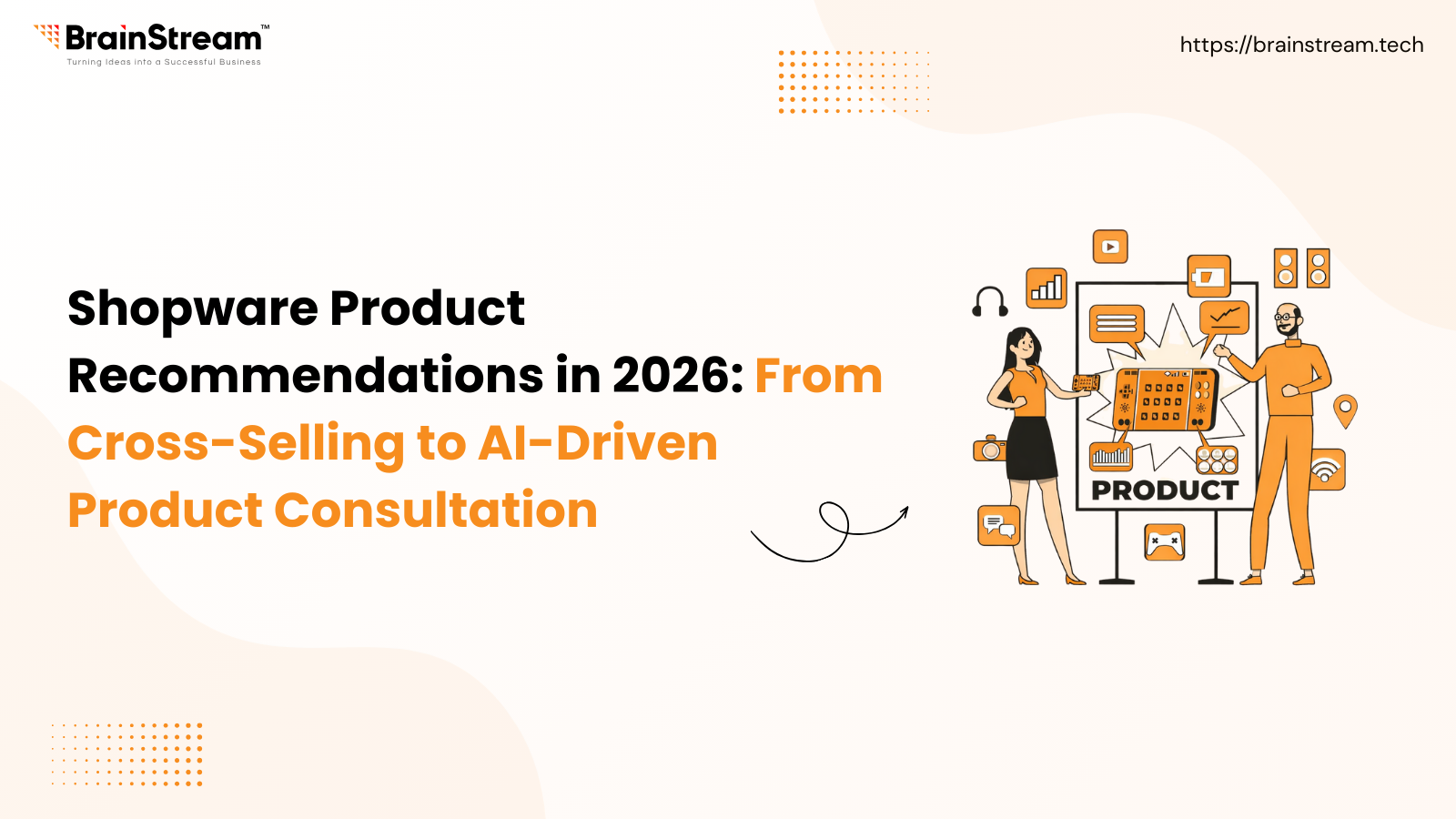
In 2026, traditional Shopware product recommendations like static cross-selling sliders are no longer enough. Customers expect personalized guidance, not generic suggestions. This guide explains how AI-powered product consultation transforms Shopware stores into interactive advisors, reduces decision fatigue, and significantly improves conversion rates by focusing on customer intent instead of product popularity.
January 28, 2026
In 2026, simple product sliders and static cross-sell recommendations aren’t enough. Today’s customers expect personalized guidance, and AI-based product consultation turns your Shopware store into a real advisor, driving higher conversions and better customer satisfaction.
- Standard Shopware cross-selling shows products, but not why they matter to each shopper
- Most users now ignore static recommendation banners
- AI consultation asks questions and tailors suggestions based on real intent
- Strategically placing recommendations across your funnel boosts results
- The shift from “customers also bought” to “how can I help you?” is a core edge in 2026 e-commerce
Why Classic Recommendations No Longer Work
Imagine walking into a store searching for the perfect camping tent, but instead of a helpful advisor, all you see are generic signs pointing to other accessories. That’s the experience millions of online shoppers face every day. Traditional product recommendation widgets in Shopware, like “Customers who bought this also bought…”, show related products, but they don’t help customers decide.
These classic tools are reactive; they display products based on categories or past purchases, but modern customers demand direction, not decoration. In 2026, those who rely solely on conventional sliders are missing out on significant revenue and engagement opportunities.
In this guide, you’ll learn:
- How to leverage Shopware 6’s built-in recommendation capabilities
- Why traditional recommendations often get ignored
- How AI-based guided selling transforms conversion performance
Shopware 6 Basics: Setting Up Standard Product Recommendations
Before moving into advanced AI consultation, let’s cover the starting point, the tools Shopware 6 provides out of the box. These basics remain important for foundational recommendation logic.
Manual Cross-Selling
Manual cross-selling is ideal when you want exact control over which products appear together, such as ensuring that a specific camera only shows its compatible lenses.
How to set up manual cross-selling:
- Open Shopware Admin and go to Catalogs > Products
- Select a product and navigate to the Cross Selling tab
- Click Add new cross-selling
- Assign a title (e.g., “Essential Accessories”)
- Choose Manual Assignment
- Search and add each associated product manually
Pros:
- Highly precise and relevant
Cons:
- Not manageable at scale for large inventories
Dynamic Product Groups
Dynamic Product Groups automate recommendations using rule-based logic rather than manual selection. For example, you can auto-recommend “Best Selling Hiking Boots over €150 with stock available.” Shopware then fills recommendations dynamically based on that logic.
Setup steps:
- Go to Catalogs > Dynamic Product Groups
- Create a new group with your desired conditions
- Link this group to the product’s cross-selling settings
This approach reduces manual maintenance, but like manual assignment, it still pushes products rather than solving shopper needs.
The Core Problem: Why Traditional Recommendations Often Miss the Mark
Even though Shopware’s built-in tools are functional, they share a key limitation: they are product-centric, not customer-centric.
Traditional recommendation logic:
- Displays what others bought
- Relies on pre-defined category rules
- Ignores the shopper’s specific intent or context
This creates a gap between what the technology shows and what the customer actually needs.
The Banner Blindness Phenomenon
Users have learned to ignore anything that looks like an advertisement or promotional block. Studies show that an overwhelming percentage of consumers overlook static recommendations entirely, often rendering them ineffective.
If your cross-selling appears as just another slider or promo box, it’s likely being filtered out by users’ brains as “visual noise.”
Lack of Context = Irrelevant Suggestions
Collaborative filtering, the mechanism behind “Customers who bought…”, only looks at purchase patterns. It doesn’t understand why someone is shopping.
For example, recommending beginner books to a professional photographer who just bought high-end gear misses the mark because the algorithm lacks context.
Choice Overload Causes Paralysis
Showing too many alternatives often increases hesitation instead of confidence. When faced with dozens of similar options, shoppers may delay or abandon the purchase completely.
The Solution: AI-Powered Product Consultation
What Is AI Product Consultation?
AI product consultation, often called guided selling or conversational commerce, uses artificial intelligence to ask the customer what they need and guide them to appropriate products based on their answers, much like a knowledgeable sales associate would.
Rather than relying on static filters or past purchases, AI models analyze:
- Product descriptions and semantic attributes
- Direct customer input (e.g., preferences, use cases)
- Real-time context to recommend fitting products
This turns recommendations into meaningful suggestions with explanations.
How AI Consultation Enhances Engagement
| Aspect | Standard Cross-Selling | AI Consultation |
| Data Basis | Historical purchases | Shopper’s expressed needs |
| Interaction | Passive display | Interactive conversation |
| Format | Slider carousel | Chat, guided Q&A |
| Personalization | Low | High, real-time |
| Goal | More clicks | Better decisions |
How AI Works in Shopware
Modern AI solutions for Shopware do three key things:
- Semantic Product Understanding
AI reads product descriptions and recognizes context (e.g., waterproof ratings). - Needs Analysis Through Interaction
Customers answer questions or engage in a guided flow. - Contextual Matching
AI aligns shopper preferences with product attributes to make informed recommendations.
This process transforms passive browsing into active engagement.
Placing Recommendations at the Right Touchpoints
AI consultation only works if deployed strategically across the customer journey:
1. Product Detail Page (PDP):
Introduce a digital advisor or smart quiz near the “Add to Cart” button to answer questions before hesitation sets in.
2. Shopping Cart:
Use intelligent suggestions to fill potential gaps (e.g., accessories buyers might need) without distracting from checkout.
3. Category Pages:
Replace generic filters with guided product finders that tailor results based on real preferences.
Data Insights: Why AI Consultation Pays Off
Implementing AI consultation isn’t just about UX, it’s a strong business case:
- Personalized interactions can meaningfully boost conversion metrics
- Customers increasingly expect tailored guidance online
- AI consultation reduces returns and frustration by matching real needs
Research shows that companies using personalized recommendations see significant performance improvements compared to reliance on static cross-selling, reflecting both user expectations and competitive advantage.
Conclusion: The AI-Driven Advantage in 2026
Static product recommendations are not obsolete, they still add value when used correctly. But in 2026, interactive, intent-driven AI consultation has become a differentiator that elevates conversion performance, customer trust, and user satisfaction.
Your Next Steps:
- Audit your existing cross-sell logic
- Enhance with dynamic product groups where helpful
- Integrate AI consultation for guided recommendations
The competitive edge today comes from asking, “How can I help you?” instead of just showing “what others bought.”

FAQs
1. How do I activate cross-selling in Shopware 6?
In Shopware Admin, go to Catalogs > Products and set up cross-selling groups under the Cross Selling tab using manual or dynamic methods.
2. What’s the difference between upselling and cross-selling?
Cross-selling suggests complementary products, while upselling encourages a higher-value purchase.
3. Can AI improve recommendations in Shopware?
Yes, by providing context-aware, interactive recommendations that go beyond rule-based logic.
4. Why do users ignore standard recommendation banners?
Because most people trained themselves to filter out promotional elements they perceive as irrelevant.
5. How does AI consultation differ from traditional engines?
AI focuses on the customer’s expressed intent and product fit, not just what others purchased in the past.

Manish Khilwani 

Co-Founder at BrainStream Technolabs, he focuses on building people-first, scalable eCommerce and digital products that help brands grow with clarity and innovation.
Share :


Related Blog

Shopware
How Much Does Shopware Cost? Complete Pricing Guide for 2026
If you are planning to build a modern eCommerce store. Shopware is one of the most powerful platforms available today, especially in Europe. Growing brands and enterprise-level businesses widely use Shopware because it offers flexibility, scalability, and powerful headless commerce...

Shopware
Shopware Community Day 2026: The Ultimate Global Event for the Shopware Ecosystem
Shopware Community Day 2026 (SCD 2026) is more than just an ecommerce conference; it is the most important annual event for the global Shopware community. From extension partners to merchants and technology innovators, SCD 2026 brings together everyone building, scaling,...
Shopware
Shopware Gateways: A Flexible Way to Extend Shopware
A Shopware gateway acts as a dedicated communication layer between a Shopware store and external App servers. Each gateway is designed for a specific integration area, such as checkout processes, customer context handling, or in-app purchases, while relying on a...


Keep up-to-date with our newsletter.
Sign up for our newsletter to receive weekly updates and news directly to your inbox.