














Summary:
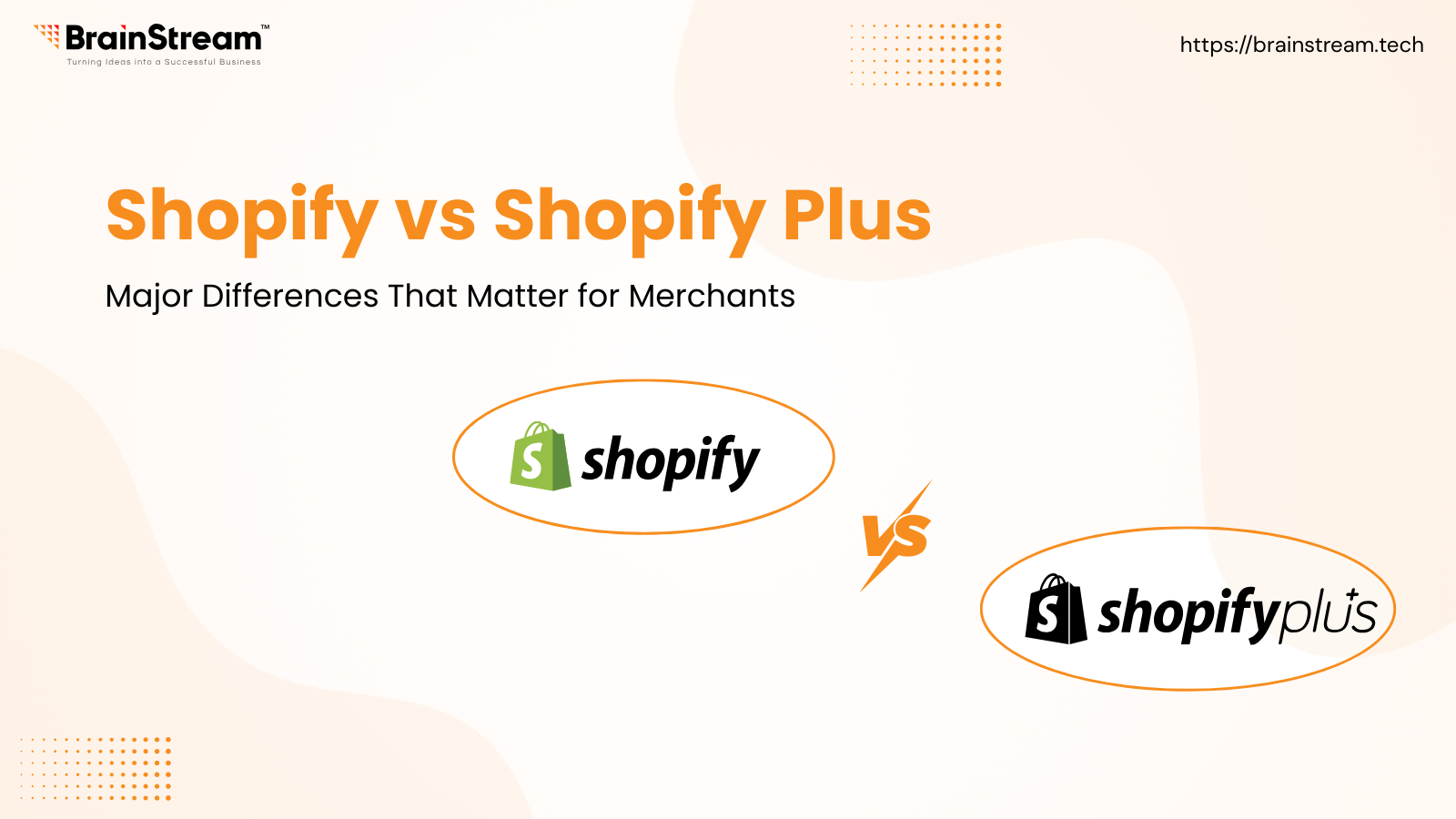
Shopify and Shopify Plus are powerful ecommerce platforms designed for different stages of business growth. While Shopify is ideal for small to mid-sized merchants seeking simplicity and affordability, Shopify Plus is designed for high-growth and enterprise brands that require advanced customisation, automation, and scalability. Understanding their key differences helps merchants choose the right platform based on traffic, revenue, and long-term business goals.
January 13, 2026
Choosing the right ecommerce platform can directly impact how fast your business grows, how well your store performs under pressure, and how much control you have over customer experience. Shopify is one of the most popular ecommerce platforms globally, trusted by millions of merchants. But as businesses scale, many start asking an important question: Is Shopify Plus worth it?
This guide breaks down the real differences between Shopify and Shopify Plus, not just features on paper, but what actually matters for merchants running or scaling an online store.
Understanding Shopify and Shopify Plus
Shopify is designed to help businesses of all sizes launch and manage online stores with ease. It’s known for its user-friendly interface, large app ecosystem, and reliable infrastructure. For startups and small to mid-sized businesses, Shopify offers everything needed to sell online efficiently.
Shopify Plus, on the other hand, is built specifically for high-growth and enterprise-level merchants. It’s not just a higher-priced plan, it’s a completely different experience, offering advanced customisation, automation, and dedicated support for businesses handling large volumes of traffic and revenue.
Pricing: More Than Just a Monthly Fee
One of the first differences merchants notice is pricing. Standard Shopify plans follow a fixed monthly structure, making them predictable and budget-friendly for smaller businesses. Shopify Plus pricing is custom and typically starts at a much higher level, reflecting its enterprise-focused capabilities.
However, the difference isn’t just about cost, it’s about value at scale. Shopify Plus often includes lower transaction fees, which can result in significant savings for high-volume merchants. For brands processing thousands of orders per month, these savings alone can justify the upgrade.
Scalability and Performance
Shopify is highly reliable for most businesses, but Shopify Plus is engineered for extreme scalability. If your store experiences traffic spikes during flash sales, product launches, or seasonal events, Shopify Plus provides the infrastructure to handle it smoothly.
Merchants using Shopify Plus benefit from enhanced server resources and platform stability, ensuring fast page loads and uninterrupted checkout experiences, even during peak demand. For large brands, downtime isn’t just inconvenient; it’s expensive.
Checkout Customization: A Critical Difference
One of the biggest limitations of standard Shopify plans is restricted checkout customization. While you can adjust branding and add apps, the core checkout flow remains largely locked.
Shopify Plus removes this limitation. Merchants gain access to advanced checkout customization options, allowing them to tailor the buying experience to their brand and customers. This is especially valuable for businesses focused on improving conversion rates, implementing custom logic, or supporting complex pricing models.
Automation with Shopify Flow
Automation is where Shopify Plus truly stands out. Shopify Flow, available only on Plus, allows merchants to automate repetitive tasks without coding. This includes actions like tagging high-value customers, managing inventory alerts, or triggering workflows based on customer behavior.
For growing businesses, automation saves time, reduces human error, and allows teams to focus on strategy instead of manual operations. Standard Shopify users often rely on third-party apps for similar functionality, which can increase costs and complexity.
Multi-Store and International Selling
Selling globally is possible on standard Shopify, but Shopify Plus makes it significantly easier. Plus merchants can manage multiple storefronts from a single dashboard, each tailored to a specific region, language, or currency.
This capability is essential for brands expanding into international markets. Instead of managing separate systems, Shopify Plus centralizes operations while still allowing localized customer experiences.
B2B and Wholesale Capabilities
While Shopify supports basic wholesale functionality through apps, Shopify Plus includes advanced tools designed for B2B and wholesale operations. Merchants can create custom pricing, offer exclusive catalogs, and provide unique checkout experiences for wholesale customers.
For businesses operating both B2C and B2B models, Shopify Plus eliminates the need for separate platforms, reducing operational complexity and improving efficiency.
API Access and Custom Integrations
As businesses grow, integrations become critical. Shopify Plus offers higher API limits, making it easier to integrate with ERP systems, CRMs, inventory management tools, and custom applications.
This flexibility allows merchants to build a tech stack that aligns perfectly with their operations. Standard Shopify plans may face limitations when handling complex or data-heavy integrations.
Support and Account Management
Standard Shopify support is reliable, but Shopify Plus takes it further with priority support and a dedicated account manager. This means faster response times, proactive guidance, and strategic insights tailored to your business goals.
For enterprise merchants, having direct access to Shopify experts can significantly reduce risk during migrations, major updates, or high-stakes sales events.
App Ecosystem and Custom Development
Both Shopify and Shopify Plus offer access to Shopify’s extensive app marketplace. However, Shopify Plus merchants often rely less on apps and more on custom-built solutions tailored to their workflows.
This reduces dependency on multiple third-party tools and helps maintain site performance, security, and long-term scalability.
Key Differences Between Shopify and Shopify Plus
| Feature | Shopify | Shopify Plus |
| Target Business Size | Small to mid-sized businesses | Large enterprises & high-growth brands |
| Pricing | Fixed plans ($39–$399/month) | Custom pricing (starts around $2,300/month) |
| Customization | Limited to themes & apps | Advanced customization including checkout |
| Checkout Control | Standard checkout | Custom checkout with advanced controls |
| Scalability | Moderate traffic handling | Built for high traffic & flash sales |
| API Limits | Standard API limits | Higher API rate limits |
| Automation | Basic automation | Advanced automation with Shopify Flow |
| Staff Accounts | Limited | Unlimited |
| Multi-Store Support | Single store | Multiple expansion stores |
| Support | Standard support | Dedicated account manager & priority support |
| B2B Capabilities | Limited | Advanced B2B & wholesale features |
| Security | PCI-DSS compliant | Enterprise-level security & compliance |
| Best For | Startups & growing brands | Large businesses with complex needs |
Migration From Shopify To Shopify Plus
1. Evaluate Your Current Store
- Assess your products, customers, orders, and data quality.
- Identify what limitations you’ve reached on Shopify (e.g., scaling issues, API limits, customization needs).
2. Plan the Migration Strategy
- Set goals: What do you want to achieve with Shopify Plus?
- Create a timeline and assign responsibilities.
- Decide whether you will use migration tools, manual migration, or a Shopify Expert/Agency.
3. Data Backup
- Export important store data:
- Products
- Customers
- Orders
- Collections
- Theme settings
- Blog content
- SEO metadata
(Always keep backups before major migrations!)
4. Theme & Design Setup
- Choose or build a Plus-compatible theme.
- You may redo the UI/UX for better conversions.
- Shopify Plus allows deeper checkout customization.
- Test designs thoroughly.
5. Apps & Integrations
- List all installed apps.
- Check Plus compatibility or find alternatives.
- Reconfigure APIs and custom integrations.
6. Custom Features and Scripts
- Use Shopify Scripts / Functions (Plus feature) to create:
- Custom discounts
- Dynamic pricing
- Special checkout rules
7. Testing & QA
- Test:
- Checkout process
- Payments
- Shipping logic
- Automation workflows
- Integrations
- Store performance
- Perform test orders.
8. Go-Live & Post-Launch
- Launch your Plus store.
- Monitor:
- Analytics
- Conversions
- Performance
- Errors/issues
- Update SEO and redirects if URLs changed.
How To Choose Between Shopify And Shopify Plus
| Decision Factor | Choose Shopify If | Choose Shopify Plus If |
| Business Size | You are a small or mid-sized business | You are a large or fast-growing enterprise |
| Monthly Revenue | Your revenue is moderate | You generate high monthly sales volume |
| Budget | You want affordable, fixed pricing | You can invest in enterprise-level pricing |
| Customization Needs | Standard themes and apps meet your needs | You need deep customization and a custom checkout |
| Traffic & Scalability | Your store gets normal traffic | You experience heavy traffic or flash sales |
| Automation | Basic automation is sufficient | You need advanced automation (Shopify Flow) |
| Support Level | Standard support is enough | You want a dedicated account manager |
| Global Expansion | You operate in a single market | You manage multiple stores or global regions |
| Team Size | You have a small team | You need unlimited staff accounts |
| Best Use Case | Startups & growing ecommerce brands | Enterprises with complex ecommerce operations |
Final Thoughts
The decision between Shopify and Shopify Plus isn’t about which platform is better, it’s about which one fits your business today and tomorrow. Shopify offers simplicity and affordability, while Shopify Plus delivers power, flexibility, and scalability for merchants ready to operate at an enterprise level.
FAQs
1. What is the main difference between Shopify and Shopify Plus?
The main difference is scalability and customization. Shopify Plus offers advanced automation, checkout customization, and enterprise-level support, while Shopify focuses on simplicity for small and mid-sized businesses.
2. Is Shopify Plus worth the cost for growing businesses?
Yes, Shopify Plus can be worth it for high-growth businesses processing large order volumes, as it offers lower transaction fees, automation tools, and better performance during high traffic.
3. When should a merchant upgrade from Shopify to Shopify Plus?
Merchants should consider upgrading when they experience rapid growth, high traffic spikes, international expansion needs, or require advanced checkout and workflow customization.
4. Can Shopify Plus handle international and multi-store selling?
Yes, Shopify Plus allows merchants to manage multiple storefronts, currencies, and languages from a single dashboard, making global expansion easier.
5. Does Shopify Plus offer better support than Shopify?
Yes, Shopify Plus provides priority support and a dedicated account manager, offering faster responses and strategic guidance for enterprise merchants.


Manish Khilwani 

Co-Founder at BrainStream Technolabs, he focuses on building people-first, scalable eCommerce and digital products that help brands grow with clarity and innovation.
Share :


Related Blog
Shopify
Top 10+ Shopify Wholesale Apps in 2026
Ultimate Guide to the Best B2B & Wholesale Solutions for Your Shopify Store Wholesale functionality allows Shopify merchants to sell products in large quantities, offer tiered pricing, manage business customers, and streamline bulk order workflows, all without running a separate...
Shopify
Shopify POS App: Features, Benefits, Integrations & Comparison Guide (2026)
In today’s retail world, integrating in-store and online sales is a game-changer. Whether you’re running a brick-and-mortar store, a pop-up stand, or an omnichannel business, having a point-of-sale system that syncs seamlessly with your online store is essential. Shopify POS...
Shopify
Beginner’s Guide to Setting Up a Shopify Fashion and Apparel Store in 2026
If you’re a fashion business owner planning to take your brand online, choosing the right eCommerce platform is the foundation of your success. With multiple platforms available, deciding where to build your fashion store can feel overwhelming. However, Shopify continues...


Keep up-to-date with our newsletter.
Sign up for our newsletter to receive weekly updates and news directly to your inbox.