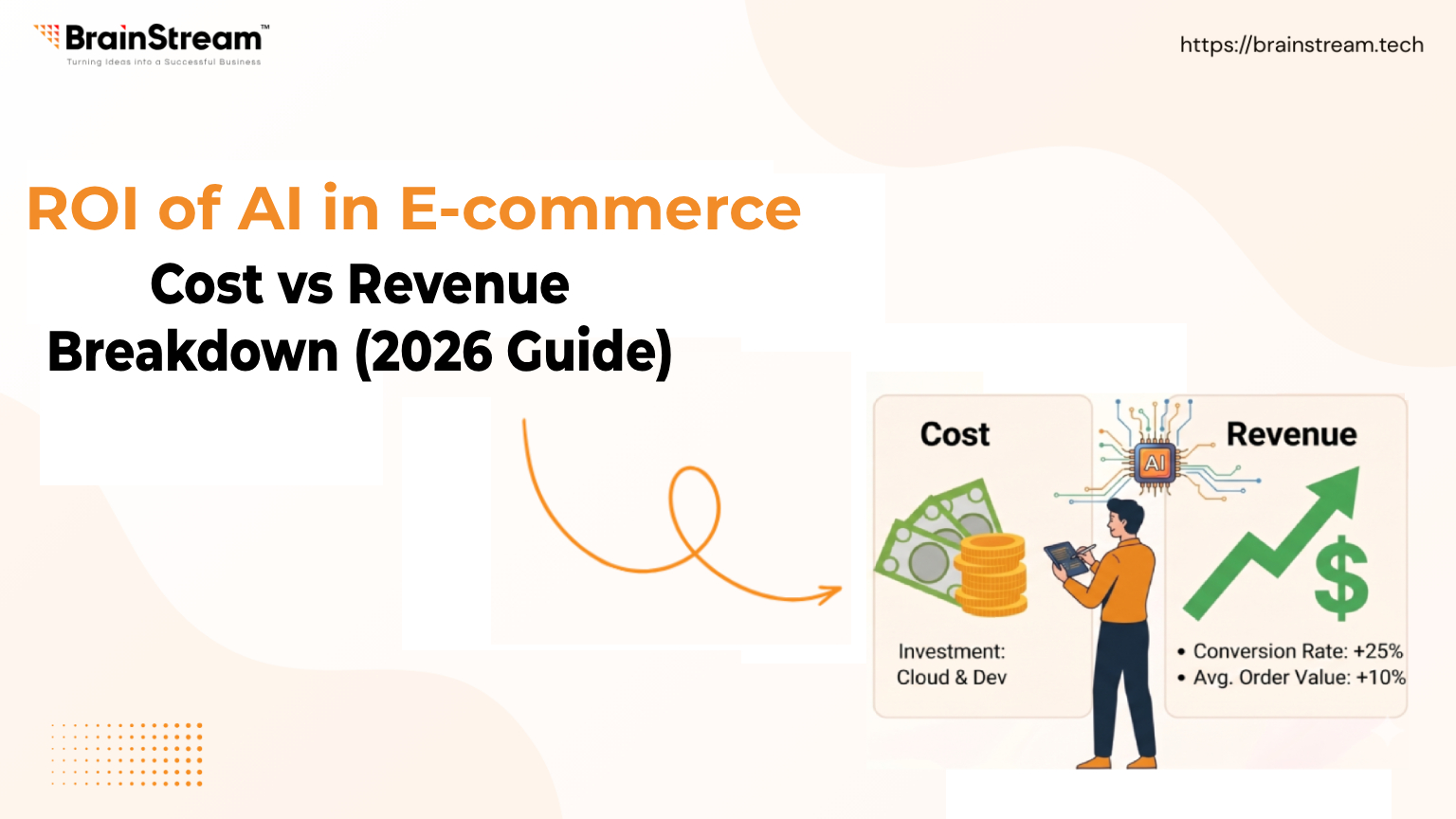
ROI of AI in E-commerce: Cost vs Revenue Breakdown (2026 Guide)
Artificial intelligence (AI) has moved far beyond being a buzzword in eCommerce. Today, it plays a direct role in how businesses attract customers, improve user experience, and increase sales. Many online stores are already using AI to recommend products, automate customer support, and optimize pricing.
Still, one question remains at the center of every decision: is investing in AI actually worth it?
To answer that, you need to understand the return on investment. Not just in theory, but in terms of real business impact, how much you spend, how much you gain, and how quickly you see results.
Understanding ROI in the Context of AI
In simple terms, ROI measures how much value you get compared to what you invest. When it comes to AI in eCommerce, that value is not limited to direct revenue. It also includes improvements in efficiency, customer satisfaction, and long-term growth.
For example, if AI helps your store convert more visitors into buyers, that directly increases revenue. If it reduces the need for manual work, it lowers operational costs. When both of these happen together, the overall impact becomes significant.
How AI Contributes to Revenue Growth
One of the strongest advantages of AI is its ability to personalize the shopping experience. Instead of showing the same products to every visitor, AI studies user behavior and displays items that match individual preferences. This makes the experience more relevant, which often leads to higher conversions.
Another important area is product discovery. Many customers leave a website simply because they cannot find what they are looking for. AI-powered search improves this by understanding intent rather than just matching keywords. As a result, users reach the right products faster and are more likely to complete a purchase.
Pricing is another factor where AI creates value. Instead of relying on fixed pricing, businesses can adjust prices based on demand, competition, and customer behavior. This allows them to stay competitive while also protecting profit margins.
What Does AI Actually Cost?
The cost of implementing AI depends on how you approach it. Some businesses start with ready-made tools that are easy to set up and require a smaller budget. These tools can deliver quick results, especially for basic use cases like chatbots or recommendations.
However, as a business grows, these tools may start to feel limiting. That is where custom AI solutions come in. Although they require a higher initial investment, they are built specifically for your business needs. This makes them more effective in the long run and often leads to better returns.
Apart from development, there are other costs to consider. Integration with your existing platform, data management, and ongoing improvements all play a role. AI is not a one-time setup, it improves over time, and that requires continuous attention.
A Practical Example of ROI
Let’s consider a simple scenario. An online store is generating consistent traffic but struggles with a low conversion rate. After introducing AI-based recommendations and personalized experiences, more visitors start finding products that match their interests.
Even a small increase in conversion rate can make a noticeable difference. When combined with a higher average order value, the overall revenue begins to grow steadily. Over time, this increase can easily outweigh the cost of implementing AI.
What makes this powerful is that the improvement does not come from a single change. It comes from multiple small optimizations working together across the customer journey.
Cost Savings Through Automation
While revenue growth is important, cost reduction is equally valuable. AI helps businesses automate tasks that would otherwise require time and human effort.
Customer support is a good example. Instead of handling every query manually, AI chatbots can respond instantly to common questions. This reduces workload while maintaining a good customer experience.
Inventory management also becomes more efficient with AI. By predicting demand more accurately, businesses can avoid overstocking or running out of products. This not only saves money but also ensures smoother operations.
When Can You Expect Results?
The timeline for seeing results depends on the type of AI solution you implement. Some improvements, such as chatbots or basic recommendations, can show impact relatively quickly. Others, like predictive analytics, may take longer to refine.
In most cases, businesses begin to notice meaningful changes within a few months. The key is to monitor performance and keep improving the system based on real data.
Common Mistakes to Avoid
AI can deliver strong results, but only when used correctly. One common mistake is adopting it without a clear goal. Without a defined objective, it becomes difficult to measure success.
Another issue is poor data quality. Since AI depends on data, inaccurate or incomplete information can limit its effectiveness. Choosing the wrong tools or relying on solutions that do not fit your business can also reduce the overall impact.
A thoughtful approach, backed by proper planning, makes a significant difference.
Final Thoughts
AI is no longer something that only large companies can afford. It has become an accessible and practical solution for businesses that want to grow. When implemented with the right strategy, it can improve both revenue and efficiency at the same time.
The important thing is not just to adopt AI, but to use it in a way that aligns with your business goals. A well-planned investment can deliver consistent results and create a strong competitive advantage.
Looking to Get Started with AI?
If you are considering AI for your eCommercebusiness, the next step is choosing the right approach. With the right implementation, AI can help you improve conversions, streamline operations, and scale more effectively.
Explore how AI retail and eCommerce solutions can support your growth and help you build a more efficient, future-ready online store.
Conclusion
The impact of AI on eCommerce is clear. It helps businesses understand their customers better, make smarter decisions, and operate more efficiently.
As competition continues to grow, adopting AI is becoming less of an option and more of a necessity. Businesses that take action early are more likely to see long-term benefits, while those that delay may find it harder to keep up.
In the end, the value of AI is not just in the technology itself, but in how effectively it is used to drive real business outcomes.
FAQs
1. What are AI solutions in eCommerce?
AI solutions in eCommerce are tools and systems that use data to automate and improve different parts of an online store. This includes product recommendations, search, pricing, customer support, and demand forecasting. The goal is to make the shopping experience more relevant for customers while helping businesses operate more efficiently.
2. How does AI improve sales in an online store?
AI improves sales by understanding customer behavior and showing the right products at the right time. When shoppers see relevant recommendations or quickly find what they need, they are more likely to complete a purchase. Over time, this leads to higher conversion rates and increased average order value.
3. Is AI expensive for e-commerce businesses?
The cost of AI depends on the approach you choose. Many businesses start with affordable tools that offer basic features. As they grow, they often move to custom AI solutions that provide better performance and flexibility. While the initial investment can vary, the long-term benefits usually outweigh the cost.
4. How long does it take to see results from AI?
Some AI features, such as chatbots or product recommendations, can start showing results within a few weeks. More advanced systems, like predictive analytics or dynamic pricing, may take a few months to fully optimize. In most cases, businesses begin to see measurable improvements within three to six months.
5. Do small e-commerce businesses really need AI?
AI is not limited to large companies anymore. Even small and mid-sized businesses can benefit from it. If you have regular traffic and want to improve conversions or save time on manual tasks, AI can make a noticeable difference.
6. What are the most useful AI features for e-commerce?
Some of the most widely used AI features include personalized product recommendations, intelligent search, chatbots for customer support, and automated pricing. These features directly impact customer experience and sales performance.
7. Can AI reduce operational costs?
Yes, AI can help reduce costs by automating repetitive tasks. For example, chatbots can handle common customer queries, and AI tools can optimize inventory management. This reduces manual work and helps businesses run more efficiently.
8. What is better: AI tools or custom AI solutions?
AI tools are a good starting point because they are easy to implement and cost-effective. However, custom AI solutions are more powerful because they are tailored to your specific business needs. They usually deliver better results in the long run, especially for growing e-commerce businesses.
9. What data is required to implement AI?
AI works best when it has access to quality data. This includes customer behavior, purchase history, product information, and website interactions. The more accurate and structured your data is, the better the results you can expect from AI.
10. How do I get started with AI in e-commerce?
The best way to start is by identifying a specific problem, such as low conversions or high cart abandonment. From there, you can choose the right AI solution to address that issue. Starting small and scaling gradually is often the most effective approach.

Manish Khilwani
Author
Co-Founder at BrainStream Technolabs, he focuses on building people-first, scalable eCommerce and digital products that help brands grow with clarity and innovation.
Table of contents
BLOGS
Learn & Grow with Us
Get the latest updates on trends and strategies that shape the business world. Our insights are here to keep you informed and inspired.
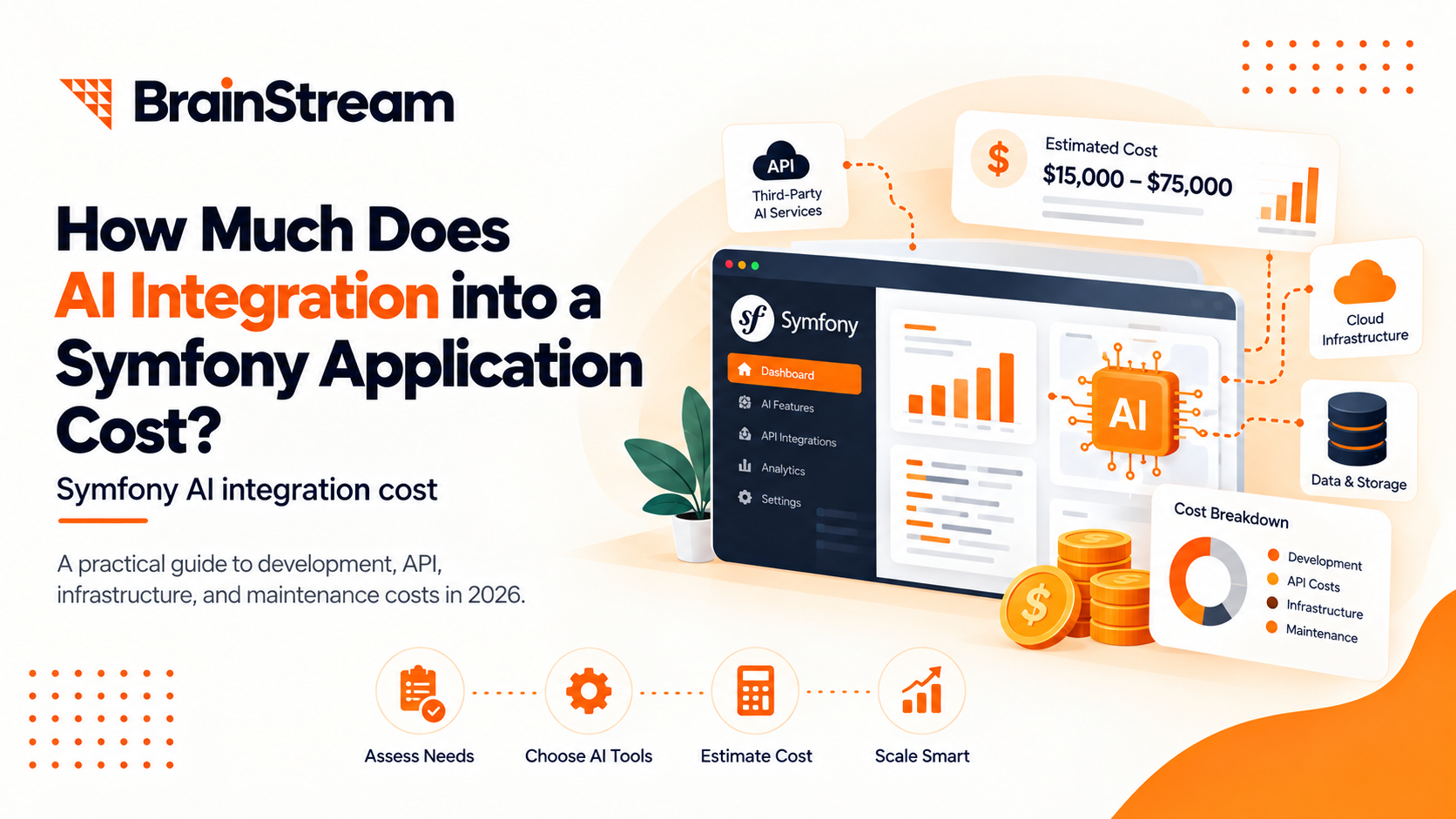
How Much Does AI Integration into a Symfony Application Cost in 2026?
Adding artificial intelligence to your Symfony application can improve customer…
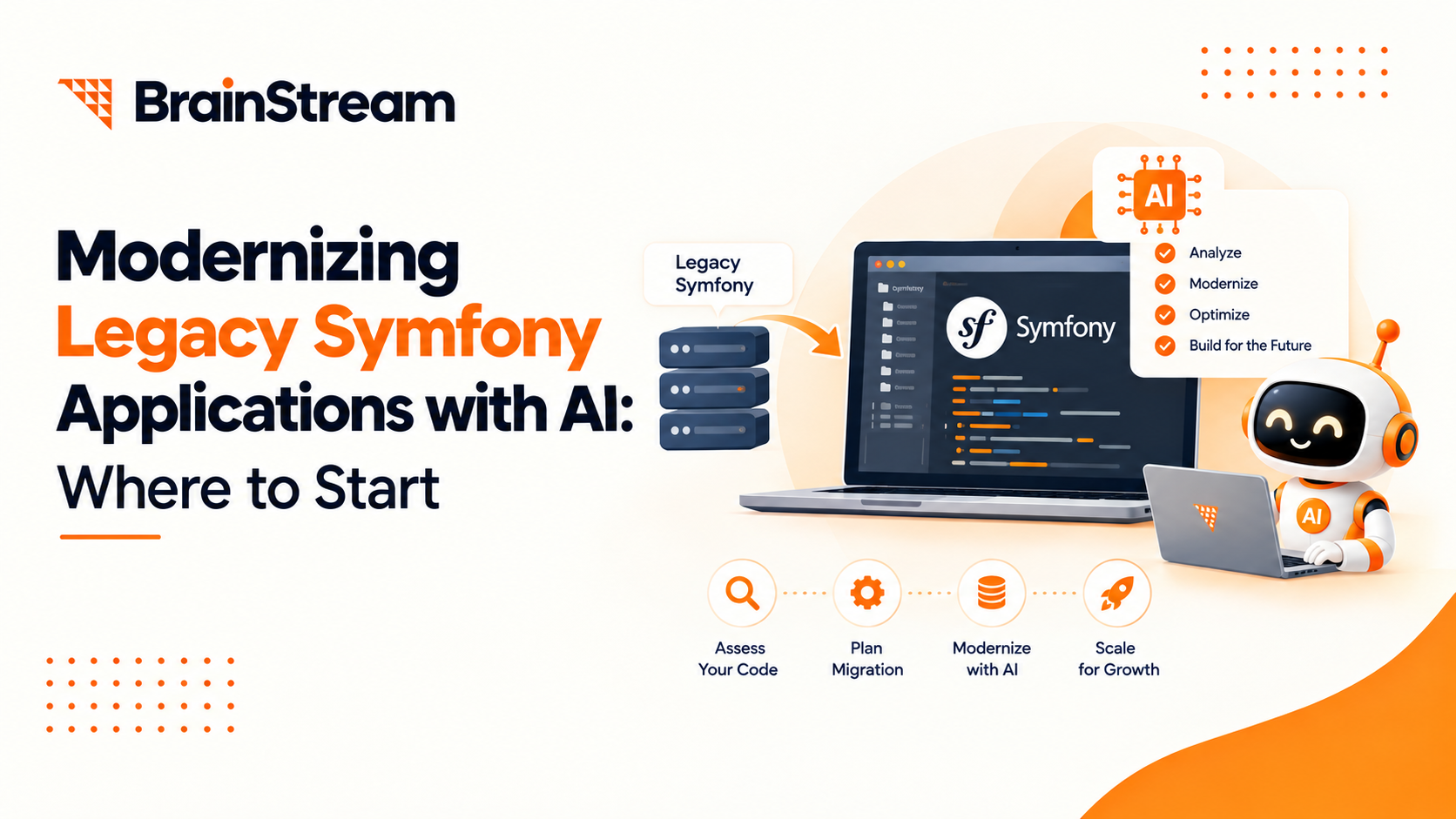
Modernizing Legacy Symfony Applications with AI: Where to Start
Your Symfony application still runs your business. However, adding features…
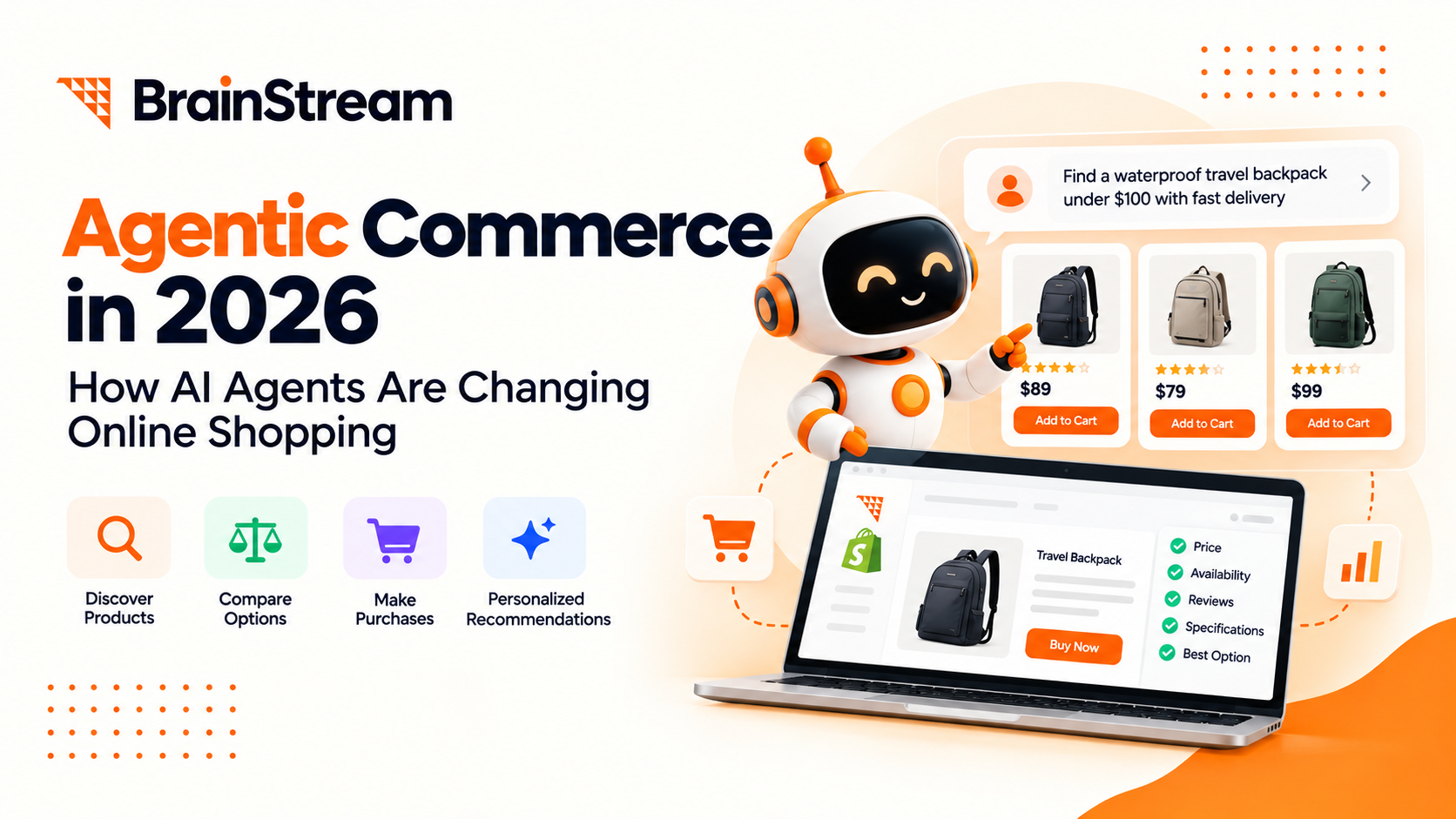
Agentic Commerce in 2026: How AI Agents Are Changing Online Shopping
Online shopping is entering a new phase. For years, shoppers…
Top 7 Must-Have Bagisto Extensions to Improve Your eCommerce Store in 2026
Running an online store takes more than adding products and…