














Summary:
In 2026, real estate success depends on smart CRM strategies. This guide explores how agents, brokers, and teams in the USA can centralize leads, automate communication, leverage AI, personalize interactions, and optimize sales pipelines using modern CRM software. Learn actionable strategies to boost productivity, increase lead conversions, and enhance client experience, ensuring your real estate business stays competitive and grows revenue.
January 5, 2026
The real estate market in 2026 is more competitive and fast-paced than ever. Buyers are tech-savvy, expectations are higher, and agents are juggling multiple tasks at once, from following up on leads to managing property listings and coordinating with clients. Amid all this, many brokers and agents struggle to stay organized and convert leads efficiently.
This is where real estate CRM software comes into play. A well-implemented CRM is no longer just a digital Rolodex; it’s a central hub for managing leads, streamlining communication, automating tasks, and enhancing client relationships. For teams looking to scale, CRM strategies are essential tools to increase efficiency, improve lead conversions, and ultimately grow revenue.
In this guide, we’ll explore the top CRM strategies for real estate agents, brokers, and teams in 2026, focusing on how modern tools, automation, AI, and personalization can give you a competitive edge in the USA real estate market.
Understanding Real Estate CRM and Why It Matters
A Customer Relationship Management (CRM) system for real estate is specifically designed to help agents, brokers, and agencies manage leads, track client interactions, and optimize sales processes. Unlike generic CRMs, real estate-focused solutions take into account the unique needs of the industry, such as longer sales cycles, multiple lead sources, property inventories, and client follow-ups.
With a CRM, your team can:
- Centralize leads from websites, social media, and property portals
- Track every client interaction automatically
- Organize properties and follow-ups efficiently
- Analyze performance and make data-driven decisions
The result? No more missed leads, better communication, and faster deal closures.
1. Centralize Leads and Client Data
One of the biggest challenges in real estate is managing leads scattered across multiple channels: emails, phone calls, website inquiries, and social media. Without a centralized system, leads can easily slip through the cracks, resulting in lost revenue and wasted effort.
A modern CRM allows teams to:
- Aggregate all leads in a single dashboard
- Assign leads automatically based on location, availability, or agent expertise
- Keep a complete history of client interactions for personalized follow-ups
Benefits:
- Improved lead visibility and accountability
- Efficient lead distribution among team members
- Reduced chances of missed opportunities
Example: A Chicago-based brokerage integrated its CRM with its website and social media campaigns, resulting in a 40% increase in lead follow-ups within three months.
2. Automate Follow-Ups and Communication
Timely follow-ups are critical in real estate. Yet, studies show that 41% of leads are never contacted after initial inquiries. Automation within CRM systems can solve this problem.
How to use automation effectively:
- Schedule automated email and SMS reminders for leads
- Integrate WhatsApp for instant communication with clients
- Set property tour reminders and follow-ups
- Trigger personalized messages based on lead actions
Why it matters: Automation ensures no lead goes unaddressed, improves the client experience, and allows agents to focus on high-value activities.
3. Leverage AI and Predictive Analytics
Artificial Intelligence (AI) is rapidly transforming CRM strategies in real estate. AI-powered CRMs can analyze historical data, predict lead behavior, and recommend high-priority prospects, helping teams allocate their efforts strategically.
Key applications in real estate CRM:
- Predictive lead scoring to identify hot prospects
- AI-based recommendations for property suggestions
- Market trend analysis for pricing and negotiation insights
- Workflow optimization to reduce manual tasks
Outcome: Teams that adopt AI-driven CRM strategies see faster deal closures, higher conversion rates, and more efficient use of resources.
4. Personalize Client Interactions
Personalization is no longer optional; it’s expected. Clients want relevant property recommendations, timely updates, and consistent communication. Real estate CRM strategies that focus on personalization can boost satisfaction, trust, and referrals.
How to implement personalization:
- Segment leads by budget, location, and property type
- Send customized property recommendations via email, SMS, or WhatsApp
- Track engagement and adjust communication accordingly
- Use automated reminders for milestones like anniversaries or previous interactions
Benefits:
- Stronger client relationships
- Increased conversion likelihood
- Higher referral opportunities
Quick Tip: Include property photos and videos in personalized messages to make communication more engaging.
5. Optimize the Sales Pipeline
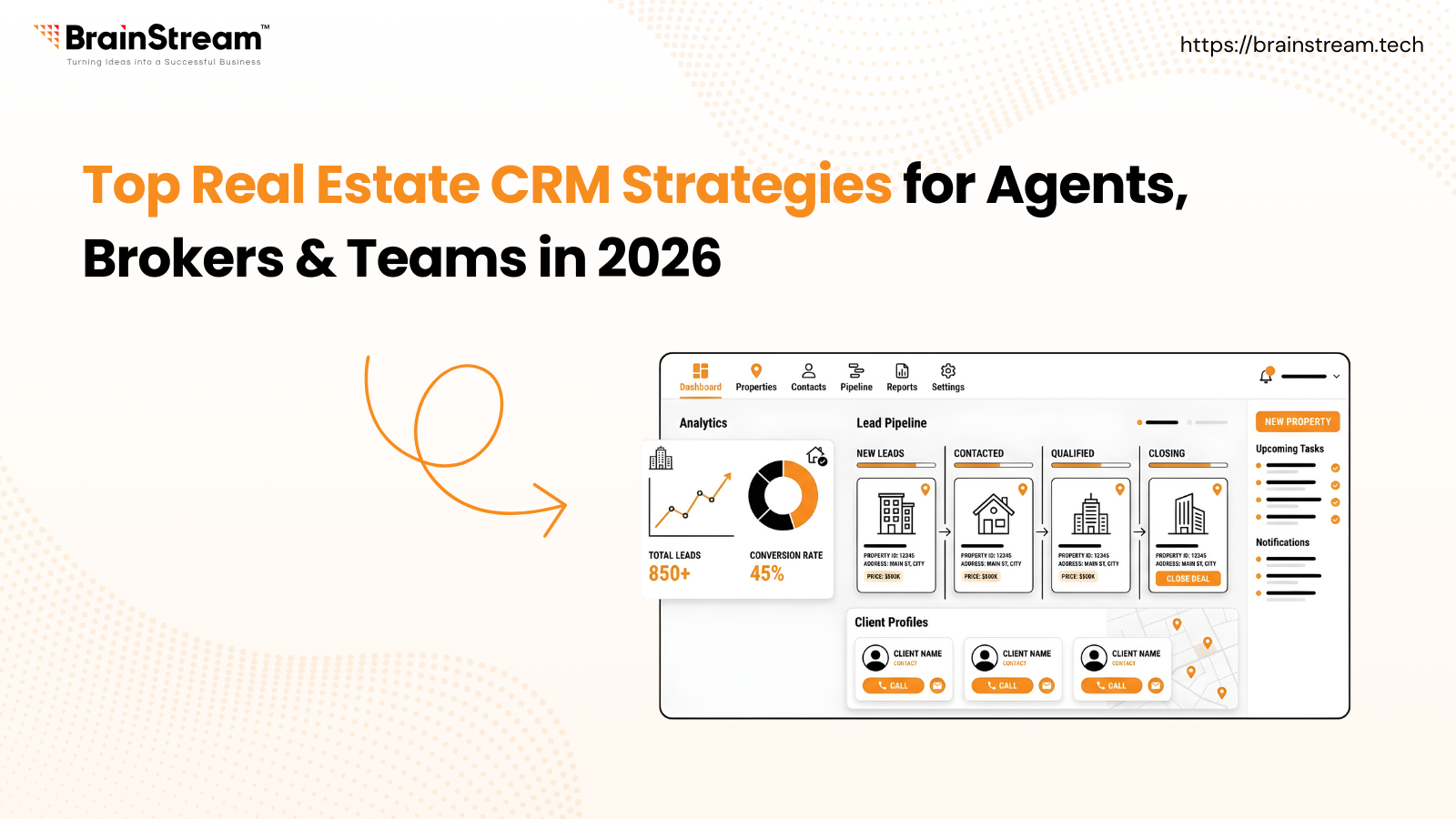
A visual, organized sales pipeline is crucial for tracking leads from initial inquiry to deal closure. Without it, agents risk losing focus, mismanaging priorities, and slowing down sales cycles.
CRM strategies for pipeline optimization:
- Create stages such as New Lead → Property Tour → Negotiation → Closed Deal
- Automate status updates as leads move through stages
- Track conversion rates at each stage for performance insights
- Identify bottlenecks to refine processes
Benefits:
- Improved team organization and focus
- Reduced sales cycle time
- Better accountability across the team
6. Integrate Marketing with CRM
For real estate teams, marketing and CRM should work together. A CRM that integrates with campaigns helps track leads from all sources, evaluate ROI, and manage follow-ups effectively.
Integration strategies:
- Sync CRM with Google Ads, Facebook Ads, and social media campaigns
- Track lead sources and campaign performance
- Use retargeting to engage potential buyers
- Automate campaign follow-ups based on lead behavior
Benefits:
- Higher-quality leads enter the pipeline
- Better ROI on marketing spend
- Enhanced understanding of lead behavior
7. Mobile CRM for On-the-Go Agents
Real estate agents spend a majority of their time in the field. A mobile CRM ensures real-time updates, instant communication, and seamless lead management.
Mobile CRM features:
- Push notifications for new leads and follow-ups
- Mobile dashboards for quick lead overview
- On-the-go property and client updates
- Scheduling and tracking property visits
Benefits:
- Faster response times
- Increased field productivity
- Better collaboration between office and field teams
8. Track Team Performance and KPIs
CRM systems allow managers to monitor team performance, identify gaps, and encourage accountability. Tracking key performance indicators (KPIs) is essential for scaling your business.
Key KPIs to track:
- Number of leads contacted
- Appointments scheduled and completed
- Deals closed
- Lead-to-deal conversion rate
Benefits:
- Motivates team members
- Identifies areas for training and improvement
- Optimizes overall sales performance
Example: A Los Angeles brokerage used CRM dashboards to track agent performance and saw a 35% increase in productivity in six months.
9. Use Automation for Repetitive Tasks
Manual tasks such as data entry, report generation, and follow-ups can drain time and resources. CRM automation reduces human errors and allows agents to focus on high-value tasks.
Automation strategies:
- Auto-populate client data
- Schedule follow-up emails and property notifications
- Auto-assign leads to agents based on rules
- Generate performance reports automatically
Benefits:
- Saves time
- Reduces errors
- Improves agent efficiency
10. Stay Updated on CRM Trends
The CRM landscape is constantly evolving. Staying updated with the latest trends ensures your team stays competitive.
Trends in 2026 include:
- AI-driven lead scoring and predictive analytics
- Multi-channel communication automation, including WhatsApp
- Mobile-first CRM platforms
- Integration with virtual tours and property analytics
Benefits:
- Future-proof your business
- Adopt strategies ahead of competitors
- Improve client engagement and retention
Conclusion
In 2026, real estate CRM strategies are critical for agents, brokers, and teams aiming to stay competitive in the USA market. By centralizing leads, automating communication, leveraging AI, personalizing interactions, optimizing sales pipelines, and integrating marketing, agencies can increase efficiency, boost lead conversion, and provide an exceptional client experience.
The right CRM strategy is no longer optional; it’s essential for scaling your business and maximizing revenue.
FAQs
Q1: What is a real estate CRM?
A real estate CRM is software that helps agents, brokers, and agencies manage leads, track interactions, automate tasks, and streamline sales processes.
Q2: Why are CRM strategies important in 2026?
CRM strategies help teams stay organized, increase lead conversions, improve client communication, and make data-driven decisions, which are crucial in a competitive market.
Q3: How does AI improve real estate CRM?
AI can predict which leads are most likely to convert, recommend properties, analyze trends, and help agents focus on high-potential clients.
Q4: Can CRM integrate with WhatsApp and email campaigns?
Yes! Modern CRMs allow multi-channel communication, enabling automated follow-ups via WhatsApp, email, SMS, and social media.
Q5: What are the benefits of mobile CRM for agents?
Mobile CRM provides real-time lead updates, instant communication, field productivity, and seamless collaboration between office and field teams.

Manish Khilwani 

Co-Founder at BrainStream Technolabs, he focuses on building people-first, scalable eCommerce and digital products that help brands grow with clarity and innovation.
Share :


Related Blog
CRM
How to Migrate Data From One CRM to Another: Step-by-Step Guide & Best Practices
Switching CRMs is a big decision for any business. Whether you’re upgrading for better automation, scalability, or reporting, one challenge remains the same: CRM data migration. Migrating data from one CRM to another is not just about exporting and importing...
CRM
Best WhatsApp CRM Software in 2026: Top Providers Compared by Features, Pricing & Use Cases
WhatsApp is no longer just a messaging app, it’s one of the most powerful customer communication channels for businesses in 2026. From lead generation and sales follow-ups to customer support and retention, WhatsApp is where customers expect fast, personalized responses....
CRM
CRM Software for Travel Agencies: Features, Benefits & Best Solutions in 2026
The travel industry in 2026 is more competitive than ever. Customers expect instant responses, personalized travel experiences, smooth bookings, and continuous support across email, WhatsApp, calls, and social media. Yet many travel agencies still rely on spreadsheets, manual follow-ups, and...


Keep up-to-date with our newsletter.
Sign up for our newsletter to receive weekly updates and news directly to your inbox.