MULTI AGENT AI SYSTEMS
Specialised AI Agents.
One Connected Workflow.
Bring specialised AI agents together to handle different parts of a business process. Coordinate research, information retrieval, and task execution across connected tools.
BrainStream Technolabs builds multi-agent AI systems with defined responsibilities, structured handovers, and human oversight where it matters.
VERIFIED BY

5.0 RATINGS

VERIFIED BY

5.0 RATINGS

VERIFIED BY

5.0 RATINGS

Let’s Plan Your Multi-Agent System
Tell us which workflow needs better coordination. Let’s explore how specialised agents could work together to support your team.

Ashish Ranpara
Co-Founder, BrainStream Technolabs.









Give Every Agent a Clear Role
Complex workflows involve different responsibilities. Gathering information, checking details, and preparing actions each require the right context and tools.
A multi-agent AI system coordinates two or more agents with defined roles. Each handles part of the work, while orchestration manages task order, shared information, and handovers.
Use this approach where specialised responsibilities offer a clear advantage. Start with a focused workflow and evaluate whether multiple agents improve results enough to justify the added complexity.

Multi-Agent AI Development Services for Connected Work
Design specialised agents, coordinate their responsibilities, and connect them with the information and tools your business uses.
Custom Multi Agent Development
Build a system around a defined business workflow. Assign focused responsibilities to each agent and establish how their outputs contribute to the overall result.
Agent Roles & Architecture
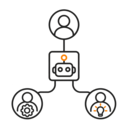
Define which agents your workflow needs and what each can access. Set clear boundaries between research, analysis, review, and execution responsibilities.
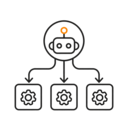
Agent Orchestration
Coordinate task order, dependencies, and handovers between agents. Choose sequential, parallel, or supervisor-led execution based on the workflow’s needs and operating constraints.
Knowledge & Context Sharing
Give agents relevant information for their assigned tasks. Structure shared context, preserve useful source references, and limit access according to each agent’s responsibilities.

Business Tool Integration
Connect agents with CRM, ERP, and internal applications through available APIs. Define which tools each agent can use and which actions require approval.
Collaborative Workflow Automation
Bring specialised agents together for multi-step processes. Coordinate information gathering, document preparation, and request handling while keeping exceptions visible to your team.

Human Review & Approvals
Add checkpoints where people need to assess an output or authorise an action. Define escalation paths for conflicting results, missing information, and sensitive changes.
Testing & Optimisation
Evaluate individual agents and the complete workflow. Review handover quality, repeated work, task completion, latency, and usage costs to identify practical improvements.
Have a Complex Process? Let’s Define Each Agent’s Role.

The Right Foundation for Coordinated AI Agents
A multi-agent system needs clear responsibilities and reliable coordination. Your workflow determines how agents communicate, access tools, and complete their tasks.
- Models & Agent Roles: Match capabilities to each agent’s responsibilities.
- Workflow Orchestration: Manage task order, dependencies, and handovers.
- Knowledge & Integrations: Connect approved information and business tools.
- Permissions & Oversight: Control access, actions, and human approvals.
- Evaluation & Monitoring: Track outcomes, failures, response times, and costs.
Keep the architecture as simple as your requirements allow. Add agents when testing shows a useful improvement.
Practical Agentic AI for Multi-Step Business Tasks
Explore processes where separate responsibilities benefit from specialised agents working towards a shared outcome.
Customer Support Coordination
Use separate agents to gather account context, retrieve support information, and prepare a response. Route unresolved issues and sensitive actions to your support team.
Research & Report Preparation
Coordinate source discovery, information extraction, and report drafting. Preserve references and flag conflicting findings so reviewers can assess the supporting evidence.
Sales & Proposal Support
Assign agents to gather account details, organise requirements, and prepare proposal drafts. Keep pricing, commitments, and customer communications subject to your team’s approval.
Document Processing Workflows
Separate document extraction, completeness checks, and request routing into defined responsibilities. Escalate uncertain information before it moves into downstream systems.
eCommerce Operations
Coordinate catalogue checks, product information retrieval, and support drafting. Give each agent controlled access while retaining approvals for refunds and other consequential changes.
Internal Operations Support
Bring together agents for request intake, information gathering, and task preparation. Help teams coordinate recurring processes with clear ownership and exception handling.
Start With a Focused Workflow. Expand With Evidence.
Your Multi-Agent AI Partner, From Design to Integration
Adding agents should make a workflow more useful and manageable. BrainStream Technolabs brings AI development and software integration together around your business requirements.
- Workflow First Planning: Identify tasks that benefit from specialised agents.
- Clear Agent Responsibilities: Define inputs, outputs, and operating boundaries.
- Connected Business Systems: Integrate approved information and existing tools.
- Practical Human Oversight: Establish review points and escalation paths.
- System Level Evaluation: Test collaboration, task outcomes, and operating costs.
Bring your process challenges and existing software. Let’s determine whether a multi-agent approach fits the work.

FAQs
What is a multi-agent AI system?
A multi-agent AI system coordinates two or more AI agents to support a shared goal. Each agent has defined responsibilities, such as retrieving information, analysing inputs, or preparing an action. Orchestration manages how their work connects.
How is a multi-agent system different from a single AI agent?
A single agent handles the assigned workflow through one primary decision-making component. A multi-agent system separates responsibilities across several agents. This can support specialisation, but it also introduces coordination overhead and additional failure points.
When should a business use multiple AI agents?
Consider multiple agents when a workflow has distinct responsibilities, different tool requirements, or tasks that can run independently. Compare the approach against a simpler solution. More agents do not automatically produce better results.
How do AI agents communicate and share information?
Agents can exchange structured messages, pass task outputs, or access controlled shared state. The architecture defines what information moves between them. Clear handover formats help reduce missing context and inconsistent results.
Can multi-agent systems connect with our existing software?
Integration depends on available APIs, access permissions, and platform capabilities. Agents can receive different tool permissions based on their roles. A technical assessment helps define which records they can read and which updates they can prepare or execute.
Can our team approve actions before agents execute them?
Yes. Workflows can pause for human review before selected actions proceed. Approval points are especially useful for spending, customer communication, and record changes. The design should also define what happens when approval is delayed or declined.
How do you evaluate a multi-agent system?
Evaluate each agent’s task performance and the complete workflow. Check handovers, conflicting outputs, repeated work, and tool failures. Measure completion quality alongside response times, human intervention, and usage costs.
How much does multi-agent AI development cost, and how long does it take?
Cost and timing depend on agent responsibilities, integrations, data preparation, and evaluation requirements. Model calls and coordination can also increase operating costs. Discovery helps establish the scope and estimate before development begins.
Can we start with a pilot before wider implementation?
Yes. Choose one workflow, define a small set of agent roles, and limit system access. Compare results against agreed success criteria and a simpler baseline. Expand only when the pilot demonstrates a worthwhile improvement.
Case Studies
We Speak Volumes Through
Our Projects
Discover how we’ve tackled real business challenges and delivered impactful results. Our case studies tell the story behind each solution.

CRM Transformation for Modern Education – Building a Scalable, AI-Ready Education CRM Ecosystem
A comprehensive CRM modernization initiative designed to unify admissions, student…

Powering the Future of Intelligent Financial Decision-Making
Real-Time Clarity for Real-World Markets We partnered with a leading…