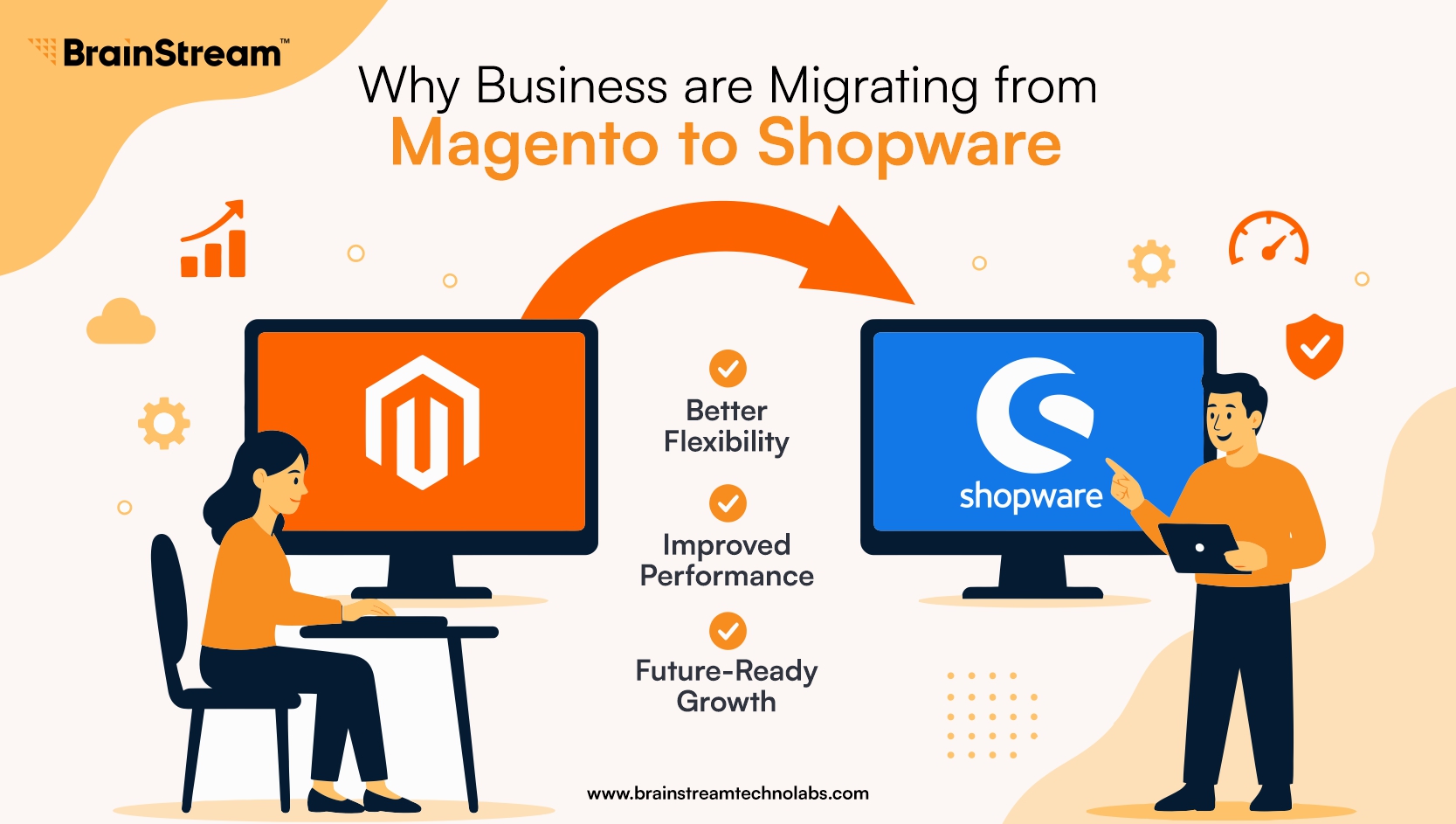
Why Businesses Are Migrating From Magento to Shopware?
The eCommerce industry is evolving rapidly. Customer expectations are higher than ever. Businesses need faster websites, better shopping experiences, and platforms that can support long-term growth.
For years, Magento was a popular choice for online stores. It offered flexibility and powerful customization options. However, many businesses now face challenges with rising development costs, complex maintenance, and lengthy upgrade processes.
As a result, companies are exploring modern alternatives.
One platform gaining significant attention is Shopware. Businesses across Europe and other global markets are choosing Shopware because it offers flexibility, scalability, and a modern architecture that supports future growth.
This shift is creating a growing trend in Magento to Shopware migration.
In this guide, we will explore why businesses are making the move, what benefits Shopware offers, and how companies can ensure a successful migration.
Why Businesses Are Reconsidering Magento?
Magento remains a powerful platform. However, maintaining and scaling a Magento store often requires significant technical resources.
For growing businesses, this can become a challenge.
Rising Development Costs
Magento projects typically require experienced developers and ongoing technical support.
Additionally, businesses often spend money on:
- Infrastructure management
- Security updates
- Custom development
- Platform maintenance
As stores become more complex, costs continue to increase.
Therefore, many companies look for platforms that offer lower maintenance requirements.
Complex Upgrade Process
Keeping Magento updated is not always simple.
Major upgrades often require:
- Code reviews
- Compatibility testing
- Extension updates
- Custom development adjustments
Because of this, businesses may delay upgrades, which can create security and performance risks.
Resource-Intensive Management
Magento offers flexibility. However, that flexibility often comes with complexity.
Store owners may depend heavily on developers for routine tasks.
In contrast, modern platforms focus on simplicity and business-user accessibility.
What Makes Shopware a Strong Magento Alternative?
Shopware is a modern eCommerce platform designed to simplify online store management while supporting enterprise-level growth.
It combines flexibility with ease of use.
As a result, businesses can focus more on growth and less on technical maintenance.
Modern API-First Architecture
One of Shopware’s biggest strengths is its API-first approach.
This architecture allows businesses to:
- Connect third-party systems easily
- Build custom integrations
- Support headless commerce strategies
- Scale efficiently
Moreover, developers can build features faster and maintain them more easily.
User-Friendly Administration
Shopware offers an intuitive administration panel.
Store managers can:
- Create landing pages
- Update products
- Launch campaigns
- Manage content
Without depending on developers for every change.
This improves operational efficiency significantly.
Built for Modern Commerce
Today’s shoppers use multiple devices and channels.
Shopware supports:
- Mobile commerce
- Omnichannel selling
- International storefronts
- Personalized customer experiences
Therefore, businesses can meet customer expectations more effectively.
Key Benefits of Magento to Shopware Migration
Migrating to Shopware offers several advantages for growing eCommerce brands.
Lower Total Cost of Ownership
Businesses often choose Shopware because it helps reduce operational expenses.
Potential savings come from:
- Easier maintenance
- Faster development
- Simplified administration
- Efficient hosting options
As a result, companies can invest more resources into growth initiatives.
Faster Time to Market
Launching new features quickly is essential in today’s competitive environment.
Shopware helps businesses:
- Launch campaigns faster
- Deploy updates efficiently
- Improve development speed
Therefore, brands can respond to market changes more effectively.
Improved Customer Experience
Customer experience directly affects conversions and retention.
Shopware supports:
- Fast-loading pages
- Responsive design
- Personalized shopping journeys
- Modern storefront experiences
Consequently, businesses can create smoother customer interactions.
Strong B2B Capabilities
Many manufacturers and wholesalers are moving to Shopware.
The platform supports:
- Customer-specific pricing
- Business accounts
- Quote requests
- Custom catalogs
These features make Shopware attractive for B2B commerce.
Magento vs Shopware: Quick Comparison
| Feature | Magento | Shopware |
|---|---|---|
| Ease of Use | Moderate | High |
| Development Complexity | High | Moderate |
| Upgrade Process | Complex | Simpler |
| API-First Architecture | Available | Native |
| Content Management | Good | Excellent |
| B2B Features | Strong | Strong |
| Time to Market | Slower | Faster |
| Maintenance Cost | Higher | Lower |
While both platforms are powerful, Shopware often delivers greater simplicity and agility.
Common Challenges During Magento to Shopware Migration
Migration projects require proper planning.
Without preparation, businesses may face avoidable issues.
Data Migration Risks
Stores must transfer:
- Products
- Categories
- Customer accounts
- Order history
Accurate data mapping is critical for success.
SEO Preservation
Search engine rankings are valuable assets.
Businesses should protect:
- URLs
- Meta titles
- Meta descriptions
- Redirect structures
Otherwise, they may lose organic traffic.
Third-Party Integrations
Many stores rely on external systems.
Examples include:
- ERP platforms
- CRM software
- Payment gateways
- Shipping solutions
These integrations require careful testing during migration.
Step-by-Step Magento to Shopware Migration Process
A structured migration approach reduces risk and improves outcomes.
Step 1: Analyze Your Current Store
Review:
- Existing features
- Extensions
- Integrations
- Performance issues
This helps identify migration requirements.
Step 2: Create a Migration Strategy
Define:
- Business goals
- Timeline
- Technical requirements
- Success metrics
Planning prevents unexpected challenges later.
Step 3: Migrate Data
Transfer essential store information.
This includes:
- Products
- Customers
- Orders
- Content pages
Data accuracy should remain a top priority.
Step 4: Build and Customize the Store
Configure Shopware according to business needs.
Additionally, optimize:
- Design
- Navigation
- User experience
- Mobile responsiveness
Step 5: Test Everything
Before launch, test:
- Checkout processes
- Integrations
- Page speed
- Mobile performance
Comprehensive testing reduces launch risks.
Step 6: Launch and Monitor
After deployment, monitor:
- Traffic
- Sales
- SEO performance
- Customer behavior
Continuous optimization supports long-term success.
Why Work With a Shopware Development Company?
A migration project involves more than moving data.
Businesses must also maintain performance, SEO rankings, and customer experience.
An experienced Shopware development company can help:
- Plan migrations effectively
- Build custom features
- Integrate business systems
- Optimize store performance
- Provide post-launch support
For businesses planning a migration, working with experienced Shopware developers reduces risk and improves results.
Common Mistakes to Avoid During Migration
Many businesses rush migration projects.
However, avoiding these mistakes can improve outcomes.
Ignoring SEO Planning
Failing to implement redirects can hurt rankings.
Migrating Without Testing
Testing prevents unexpected issues after launch.
Overlooking Mobile Experience
Mobile traffic continues to grow each year.
Choosing Features Before Defining Goals
Business objectives should always guide technical decisions.
The Future of Shopware
The future of eCommerce is becoming more flexible and customer-focused.
Shopware is investing heavily in:
- Headless commerce
- AI-powered personalization
- Composable commerce
- Omnichannel experiences
Because of this, many businesses see Shopware as a future-ready platform.
As digital commerce evolves, flexibility will become even more important.
Conclusion
Magento has served businesses well for many years. However, changing market demands require greater flexibility, faster development, and simpler management.
As a result, many organizations are choosing Magento to Shopware migration to support future growth.
Shopware provides modern architecture, strong scalability, easier administration, and a better overall user experience.
For growing eCommerce brands, these advantages can create significant long-term value.
Before starting a migration project, businesses should carefully evaluate their goals, plan thoroughly, and work with experienced Shopware professionals to ensure a successful transition.
FAQs
Is Shopware better than Magento?
Both platforms are powerful. However, many businesses prefer Shopware because of its modern architecture, ease of use, and lower maintenance requirements.
How long does the Magento to Shopware migration take?
The timeline depends on store complexity. Small stores may migrate in a few weeks, while larger projects may require several months.
Will migration affect SEO rankings?
Proper planning helps preserve SEO performance. Redirects, metadata migration, and URL management are essential.
Is Shopware suitable for B2B businesses?
Yes. Shopware offers strong B2B capabilities, including custom pricing, business accounts, and quote management.
Can customer and order data be migrated?
Yes. Products, customers, orders, and other important data can typically be transferred during migration.

Manish Khilwani
Author
Co-Founder at BrainStream Technolabs, he focuses on building people-first, scalable eCommerce and digital products that help brands grow with clarity and innovation.
Table of contents
BLOGS
Learn & Grow with Us
Get the latest updates on trends and strategies that shape the business world. Our insights are here to keep you informed and inspired.
How Much Does AI Integration into a Symfony Application Cost in 2026?
Adding artificial intelligence to your Symfony application can improve customer…

Modernizing Legacy Symfony Applications with AI: Where to Start
Your Symfony application still runs your business. However, adding features…

Agentic Commerce in 2026: How AI Agents Are Changing Online Shopping
Online shopping is entering a new phase. For years, shoppers…

Top 7 Must-Have Bagisto Extensions to Improve Your eCommerce Store in 2026
Running an online store takes more than adding products and…