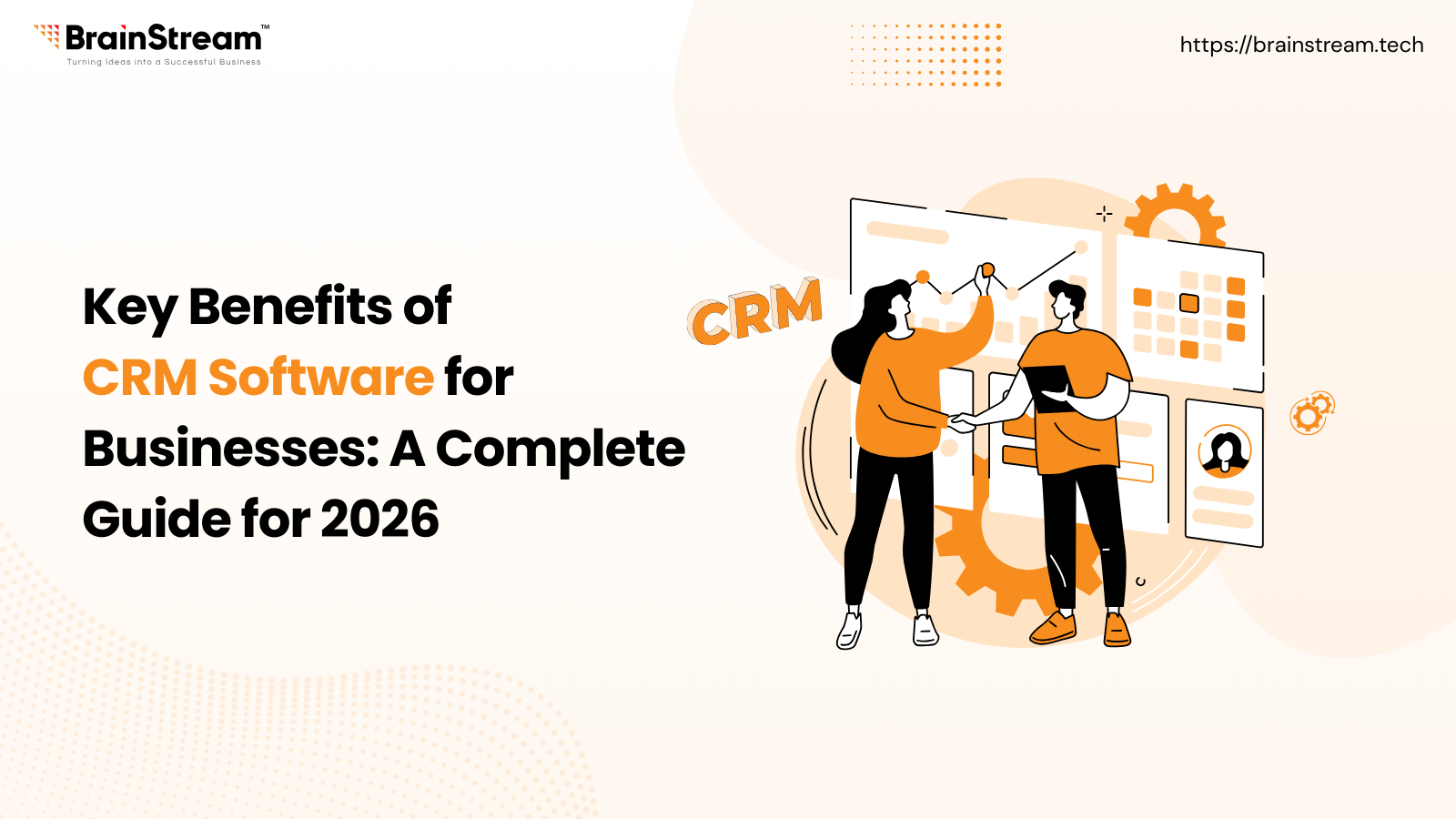
Key Benefits of CRM Software for Businesses: A Complete Guide for 2026
In 2026, businesses face growing competition, higher customer expectations, and rapidly evolving digital markets. Customer Relationship Management (CRM) software has become essential for growth, efficiency, and customer satisfaction. But to truly succeed, businesses must understand not only the benefits of CRM but also the common challenges and how to select the right solution.
This guide is your complete roadmap to CRM software for businesses in 2026, covering benefits, challenges, and selection strategies in one place.
What Is CRM Software?
CRM software is a centralised system that helps businesses manage customer interactions across sales, marketing, and support. Modern CRMs go beyond simple contact management; they offer automation, analytics, AI-driven insights, reporting, and more.
A CRM helps teams deliver personalised experiences, streamline workflows, and make data-driven decisions that drive revenue and growth.
Key Benefits of CRM Software for Businesses
1. Centralised Customer Data
All customer information, contacts, interactions, purchase history, and preferences are stored in one place.
Benefits:
- Improved collaboration across teams
- Accurate and consistent data
- Quick access to customer history
2. Increased Sales Productivity
CRM software automates repetitive tasks and gives sales teams clear visibility into pipelines and leads.
Benefits:
- Lead prioritisation and tracking
- Automated follow-ups
- Shorter sales cycles
- Higher conversion rates
3. Enhanced Customer Experience
CRM allows for personalised communication based on customer behavior and history.
Benefits:
- Timely responses
- Tailored offers
- Consistent experience across all channels
- Higher retention and loyalty
4. Marketing Automation
CRM systems enable segmented campaigns, automated workflows, and campaign tracking.
Benefits:
- Targeted marketing
- Lead nurturing
- Measurable ROI
- Increased engagement
5. Data-Driven Insights
CRM analytics provide dashboards and reports to track performance and forecast growth.
Benefits:
- Identify top-performing products and campaigns
- Monitor sales team efficiency
- Predict customer behaviour
- Informed decision-making
6. Team Collaboration and Workflow Efficiency
A CRM breaks down silos between sales, marketing, and support teams.
Benefits:
- Transparent communication
- Seamless handoffs
- Faster resolution of customer issues
7. Automation Saves Time
CRM software automates repetitive tasks like lead assignment, follow-ups, and ticket routing.
Benefits:
- Reduced operational costs
- Focus on high-value tasks
- Increased productivity
8. Scalability for Growth
CRM grows with your business, from startups to enterprises.
Benefits:
- Support for more users and teams
- Add advanced modules as needed
- Maintain efficiency as business complexity increases
9. Competitive Advantage
Businesses using CRM can respond faster, personalise better, and operate smarter than competitors without CRM.
Benefits:
- Faster decision-making
- Agile operations
- Enhanced customer loyalty
Common CRM Challenges Businesses Face
Even the best CRM can fail if businesses don’t plan correctly. Common challenges include:
- Low User Adoption – Employees avoid using complex systems.
Solution: Provide training and choose a user-friendly CRM. - Poor Data Quality – Duplicate or outdated records reduce value.
Solution: Automate data validation and regular cleaning. - Integration Issues – Disconnected systems create silos.
Solution: Use a CRM with strong integrations for email, ERP, and marketing platforms. - Over-Customisation – Too many features can confuse users.
Solution: Start simple and expand gradually. - High Costs – Licensing, training, and maintenance can add up.
Solution: Align features with business goals and scale gradually. - Data Security & Compliance – Sensitive customer data must be protected.
Solution: Ensure encryption, backups, and GDPR/HIPAA compliance. - Unrealistic Expectations – CRM cannot fix broken processes on its own.
Solution: Combine CRM with proper workflows and training.
How to Choose the Right CRM for Your Business?
To maximise CRM benefits and avoid challenges, follow these steps:
1. Define Your Business Goals
Identify what you want from CRM: sales growth, marketing automation, better support, or analytics.
2. Understand Your Needs
Map CRM features to your sales, marketing, and support workflows. Include mobile access, integrations, and industry requirements.
3. Evaluate Ease of Use
Choose an intuitive platform that your team can adopt quickly.
4. Consider Customisation
Ensure the CRM can adapt to your business processes without unnecessary complexity.
5. Check Integration Capabilities
Make sure your CRM works with your email, ERP, marketing tools, and other essential systems.
6. Analyse Reporting & Analytics
Look for real-time dashboards, KPIs, and forecasting tools.
7. Assess Scalability
Choose a platform that can grow as your business expands.
8. Prioritise Security & Compliance
Check encryption, backups, and regulatory compliance features.
9. Review Pricing & ROI
Compare plans, hidden costs, and evaluate potential business value.
10. Try Before You Buy
Use free trials or demos to validate usability and features.
Why CRM Software Is Essential in 2026
In 2026, CRM software is no longer just a sales tool; it’s a business growth platform. With AI-driven insights, automation, and real-time analytics, CRM helps businesses stay customer-centric, agile, and competitive in a fast-evolving digital landscape.
Conclusion
CRM software delivers measurable value across every business function, from sales and marketing to customer support and leadership. By centralising data, automating workflows, and enhancing customer experiences, CRM enables businesses to grow smarter and faster.
If your business aims to scale, improve customer relationships, and make data-driven decisions, investing in the right CRM software in 2026 is not just beneficial; it’s essential.

Manish Khilwani
Author
Co-Founder at BrainStream Technolabs, he focuses on building people-first, scalable eCommerce and digital products that help brands grow with clarity and innovation.
Table of contents
BLOGS
Learn & Grow with Us
Get the latest updates on trends and strategies that shape the business world. Our insights are here to keep you informed and inspired.
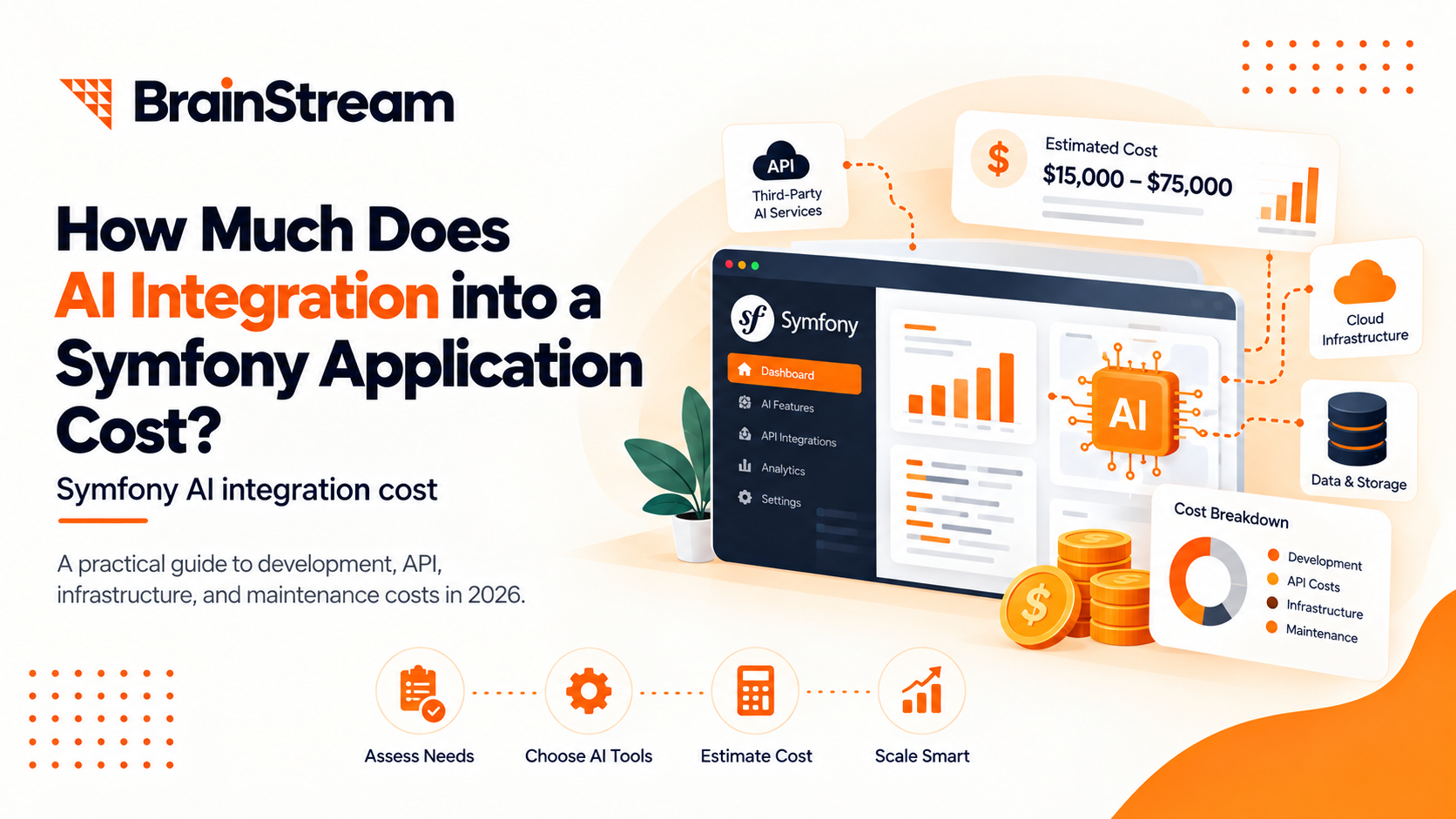
How Much Does AI Integration into a Symfony Application Cost in 2026?
Adding artificial intelligence to your Symfony application can improve customer…
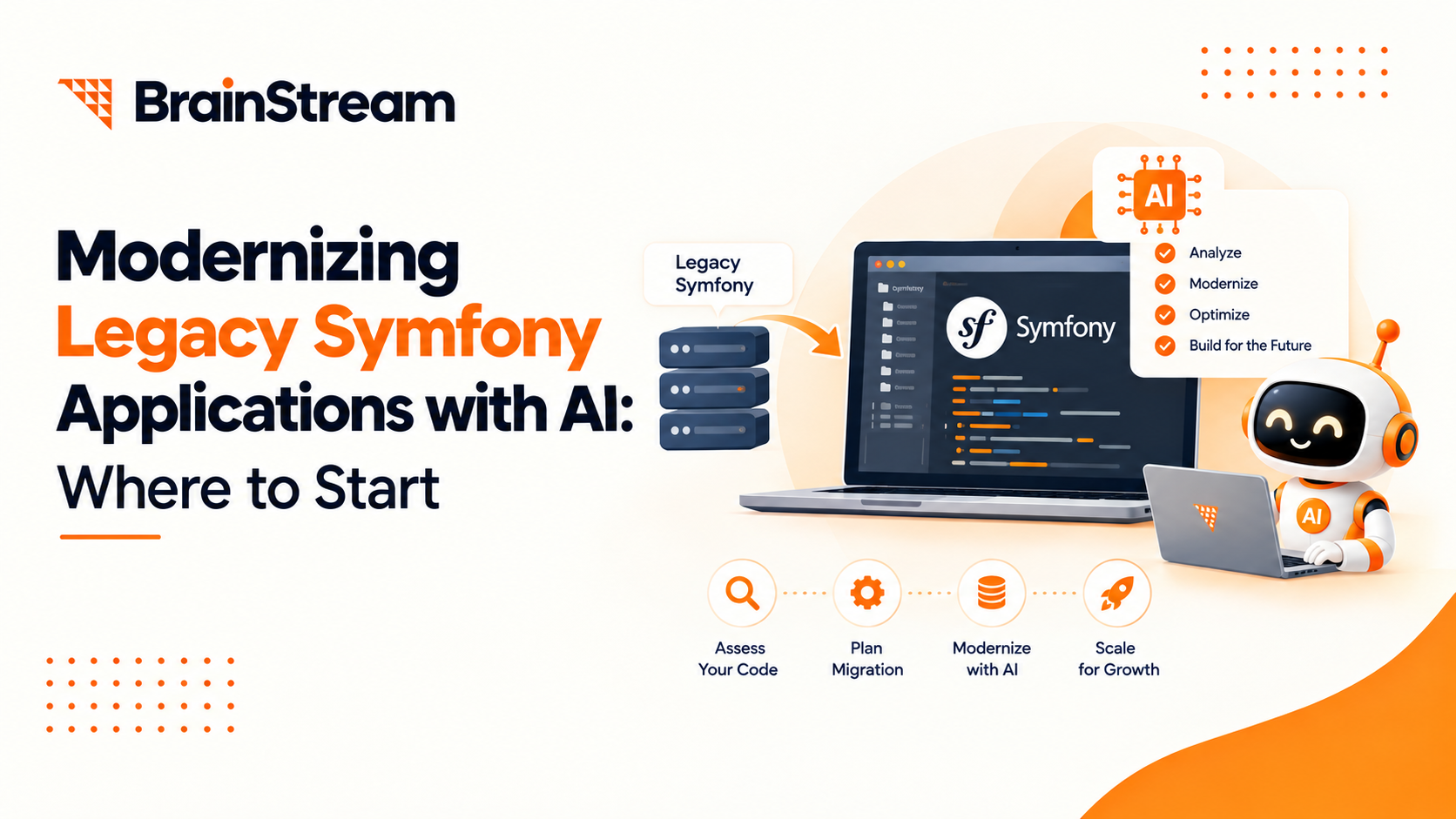
Modernizing Legacy Symfony Applications with AI: Where to Start
Your Symfony application still runs your business. However, adding features…
Agentic Commerce in 2026: How AI Agents Are Changing Online Shopping
Online shopping is entering a new phase. For years, shoppers…
Top 7 Must-Have Bagisto Extensions to Improve Your eCommerce Store in 2026
Running an online store takes more than adding products and…