How to Choose the Right Software Development Company for Your Business?
Choosing the right software development company is one of the most important business decisions you can make.
Whether you need a custom business application, an eCommerce platform, a SaaS product, or an AI-powered solution, the success of your project depends on the team you hire.
Unfortunately, many businesses focus only on price. They select the cheapest option and expect great results. However, software development is much more than writing code.
A reliable development partner understands your business goals, recommends the right technology, and builds software that supports long-term growth.
The wrong choice, on the other hand, can lead to missed deadlines, budget overruns, security issues, and poor user experiences.
So, how do you choose the right software development company?
This guide explains the key factors every business should consider before starting a software development project.
Why Choosing the Right Software Development Company Matters
Software is a long-term investment.
The company you choose will influence your project’s quality, scalability, and future success.
A good development partner doesn’t simply build software.
Instead, they help you:
- Understand business requirements
- Select the right technology stack
- Build scalable solutions
- Improve security
- Reduce development risks
- Plan future growth
Therefore, selecting the right company should never be based on cost alone.
Define Your Business Goals First
Before contacting any software development company, identify your business objectives.
Ask yourself questions like:
- What problem am I trying to solve?
- Who will use the software?
- What features are essential?
- What is my budget?
- What are my long-term business goals?
Clear requirements help developers recommend the best solution.
Additionally, they reduce misunderstandings during development.
Look for Relevant Industry Experience
Not every software development company has experience in every industry.
A company that builds eCommerce websites may not have expertise in healthcare software or SaaS platforms.
Review their previous projects carefully.
Look for experience in industries such as:
- Healthcare
- Retail
- Manufacturing
- Finance
- Logistics
- Education
- SaaS
- eCommerce
Industry knowledge helps developers understand your challenges faster.
As a result, projects move more efficiently.
Review Their Technical Expertise
Technology changes quickly.
Your development partner should understand modern frameworks, cloud platforms, and emerging technologies.
For example, they should have expertise in:
Custom Software Development
Businesses often require software built specifically for their operations.
A skilled development company creates flexible solutions instead of forcing businesses to adapt to generic software.
Cloud Technologies
Cloud infrastructure improves scalability and performance.
Look for experience with platforms such as AWS, Microsoft Azure, or Google Cloud.
Artificial Intelligence
AI is becoming part of many modern applications.
Companies with AI expertise can help automate workflows and improve business processes.
eCommerce Development
If you plan to sell online, choose developers experienced with platforms like Shopify, Shopware, or other enterprise eCommerce solutions.
Evaluate Their Development Process
A structured development process reduces project risks.
Ask how they manage projects.
Reliable software companies usually follow these stages:
Discovery and Planning
The team understands your business requirements.
They also identify project goals and potential challenges.
Design
Designers create user-friendly interfaces and application workflows.
Development
Developers build the software using modern coding practices.
Testing
Quality assurance teams test functionality, security, and performance.
Deployment
The application is launched successfully.
Ongoing Support
After launch, the company continues providing updates and maintenance.
A transparent process improves communication and project visibility.
Check Client Reviews and Case Studies
Client feedback provides valuable insights.
Read reviews on platforms like:
- Clutch
- Google Reviews
- GoodFirms
Also, review case studies on the company’s website.
Look for projects similar to yours.
Pay attention to:
- Business challenges
- Technology used
- Results achieved
Strong case studies demonstrate real-world expertise.
Assess Communication and Transparency
Poor communication is one of the biggest reasons software projects fail.
Choose a company that communicates clearly.
During your initial conversations, notice whether they:
- Ask detailed questions
- Explain technical concepts simply
- Provide realistic timelines
- Discuss potential risks
- Respond quickly
Good communication builds trust throughout the project.
Understand Their Approach to Scalability
Your software should grow with your business.
Ask potential development partners:
- Can the application handle more users?
- Will it support future features?
- Is cloud infrastructure included?
- Can third-party systems be integrated?
Scalable software saves both time and money in the future.
Prioritize Security and Compliance
Cybersecurity is more important than ever.
Businesses collect customer information, payment details, and sensitive business data.
Your software development company should implement:
- Secure authentication
- Data encryption
- Role-based access control
- Secure APIs
- Regular security testing
If your business operates in regulated industries such as healthcare or finance, ask about compliance standards like HIPAA or GDPR.
Compare Value Instead of Price
Many businesses make the mistake of selecting the lowest-priced proposal.
However, cheaper software often leads to higher long-term costs.
Instead of focusing only on pricing, compare:
| Evaluation Factor | What to Look For |
|---|---|
| Experience | Relevant industry expertise |
| Technical Skills | Modern technologies and frameworks |
| Communication | Clear and transparent communication |
| Scalability | Future-ready architecture |
| Security | Strong security practices |
| Support | Long-term maintenance and updates |
| Portfolio | Successful client projects |
| Pricing | Value rather than the lowest cost |
The best software development company delivers long-term business value.
Questions to Ask Before Hiring a Software Development Company
Before signing a contract, ask these questions:
- Have you completed similar projects?
- Which technologies do you recommend and why?
- How do you estimate project costs?
- Who will manage the project?
- How often will we receive updates?
- What happens after launch?
- Do you provide ongoing maintenance?
- How do you ensure software security?
- Can the software scale as our business grows?
These questions help you evaluate both technical expertise and business understanding.
Common Mistakes Businesses Should Avoid
Choosing Based Only on Price
Low-cost development often creates expensive problems later.
Always evaluate quality first.
Ignoring Technical Expertise
Every technology has strengths and limitations.
Choose a partner with experience in your required technology stack.
Skipping Portfolio Reviews
Past work reflects future capabilities.
Review previous projects carefully.
Overlooking Post-Launch Support
Software requires continuous improvements.
Choose a company that offers long-term maintenance.
Not Defining Project Requirements
Unclear goals create confusion and delays.
Document your requirements before development begins.
Why a Technology Partner Is Better Than Just a Vendor
The best software development companies do more than deliver code.
They become long-term technology partners.
A strategic partner helps you:
- Build a technology roadmap
- Improve software architecture
- Reduce technical debt
- Adopt cloud technologies
- Integrate AI solutions
- Scale your business
As your business grows, your technology partner continues supporting innovation and digital transformation.
Conclusion
Choosing the right software development company is about much more than comparing prices.
The ideal partner understands your business goals, recommends the right technology, and builds software designed for long-term success.
By evaluating experience, technical capabilities, communication, security practices, and scalability, you can reduce project risks and make a confident decision.
Remember, software is an investment in your business.
The right development partner will help you innovate faster, improve customer experiences, and stay competitive in a rapidly changing digital world.
FAQs
How do I choose the right software development company?
Look for industry experience, technical expertise, transparent communication, strong client reviews, and a proven development process.
What should I ask before hiring a software development company?
Ask about previous projects, technologies, security practices, project management, timelines, maintenance, and scalability.
Should I choose the cheapest software development company?
Not necessarily. Focus on long-term value, quality, and expertise rather than the lowest price.
Why is scalability important in software development?
Scalable software supports future business growth without requiring major redevelopment.
Do software development companies provide support after launch?
Most professional companies offer maintenance, updates, security improvements, and technical support after deployment.

Manish Khilwani
Author
Co-Founder at BrainStream Technolabs, he focuses on building people-first, scalable eCommerce and digital products that help brands grow with clarity and innovation.
Table of contents
BLOGS
Learn & Grow with Us
Get the latest updates on trends and strategies that shape the business world. Our insights are here to keep you informed and inspired.
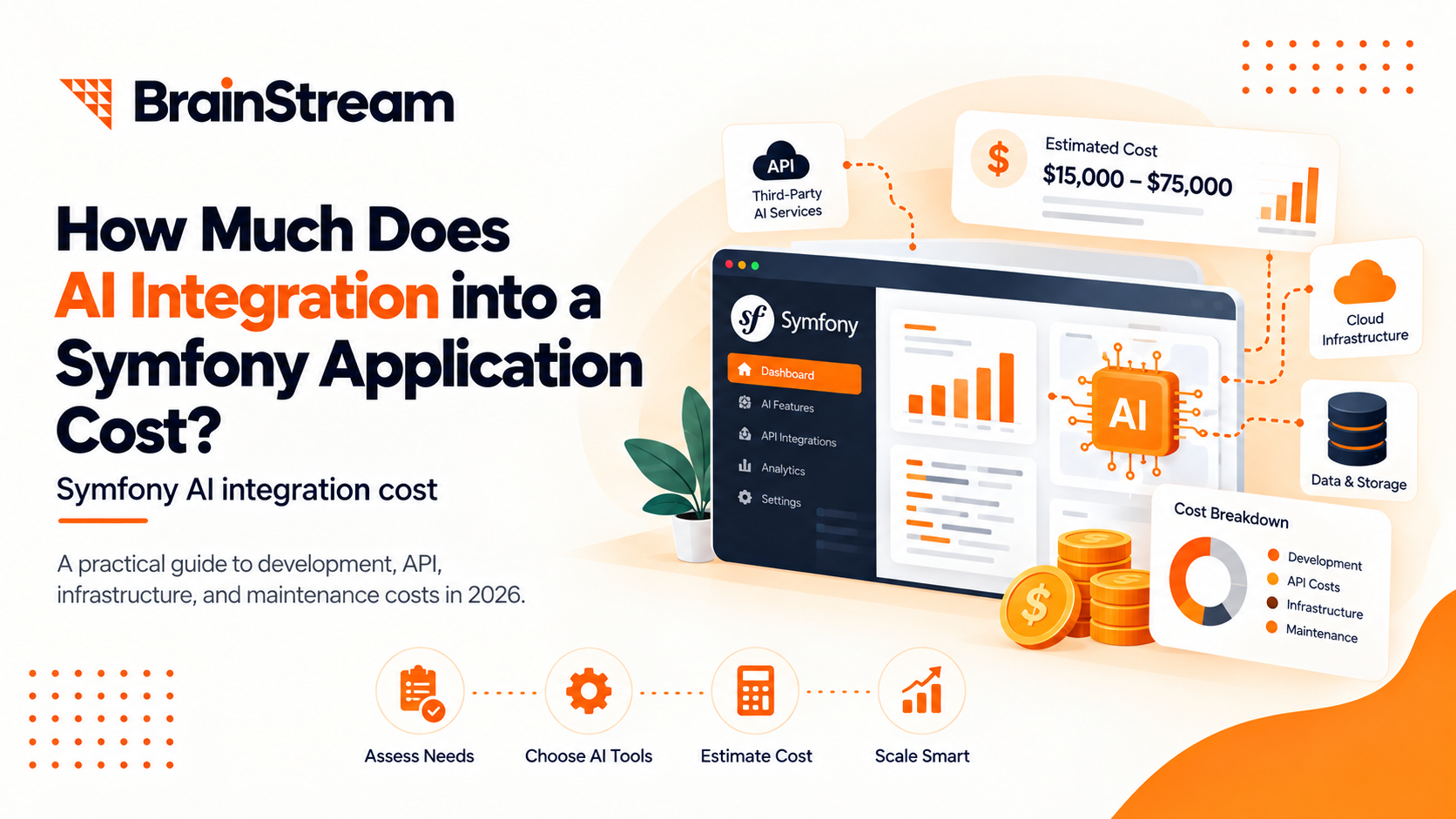
How Much Does AI Integration into a Symfony Application Cost in 2026?
Adding artificial intelligence to your Symfony application can improve customer…
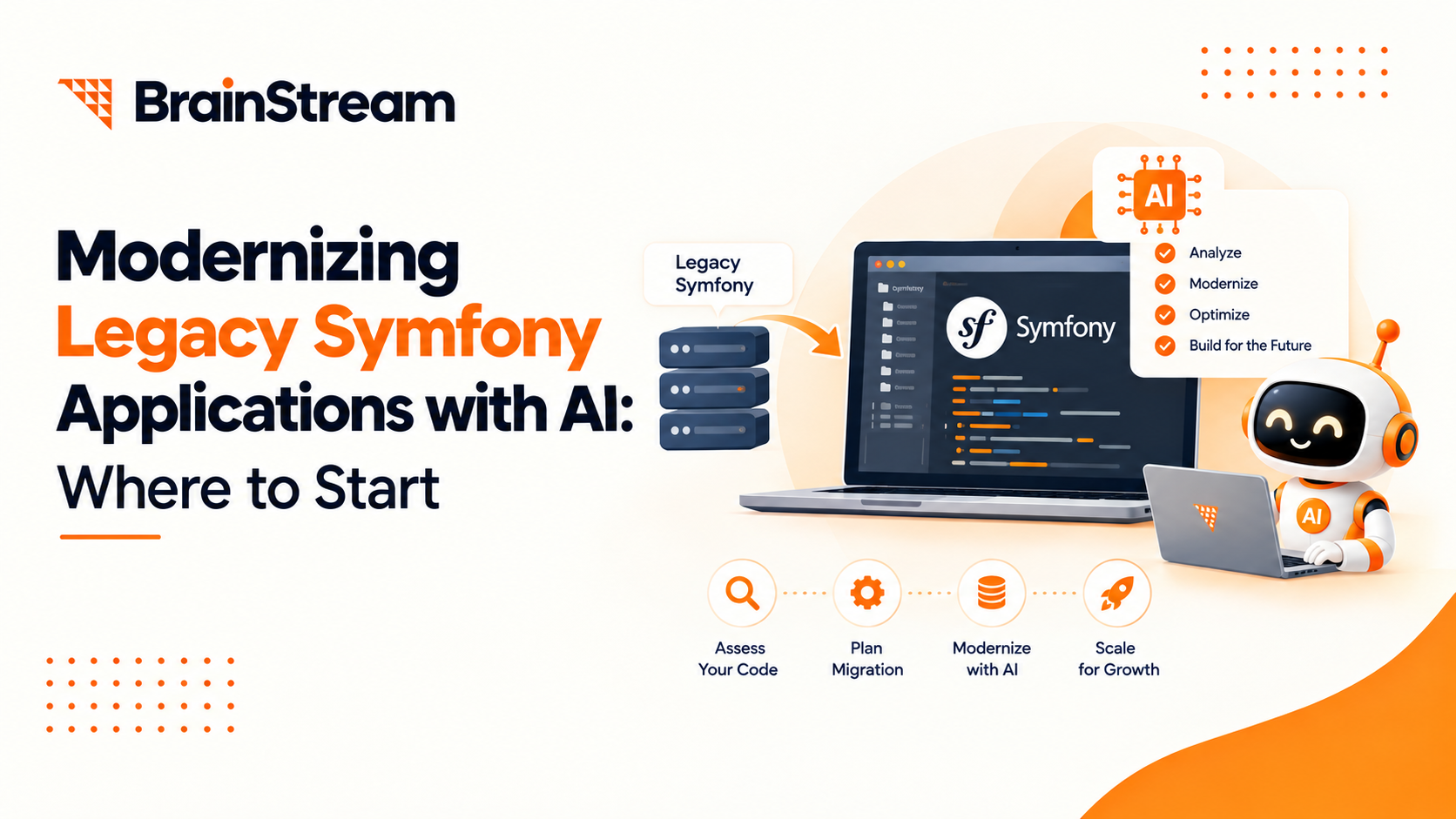
Modernizing Legacy Symfony Applications with AI: Where to Start
Your Symfony application still runs your business. However, adding features…
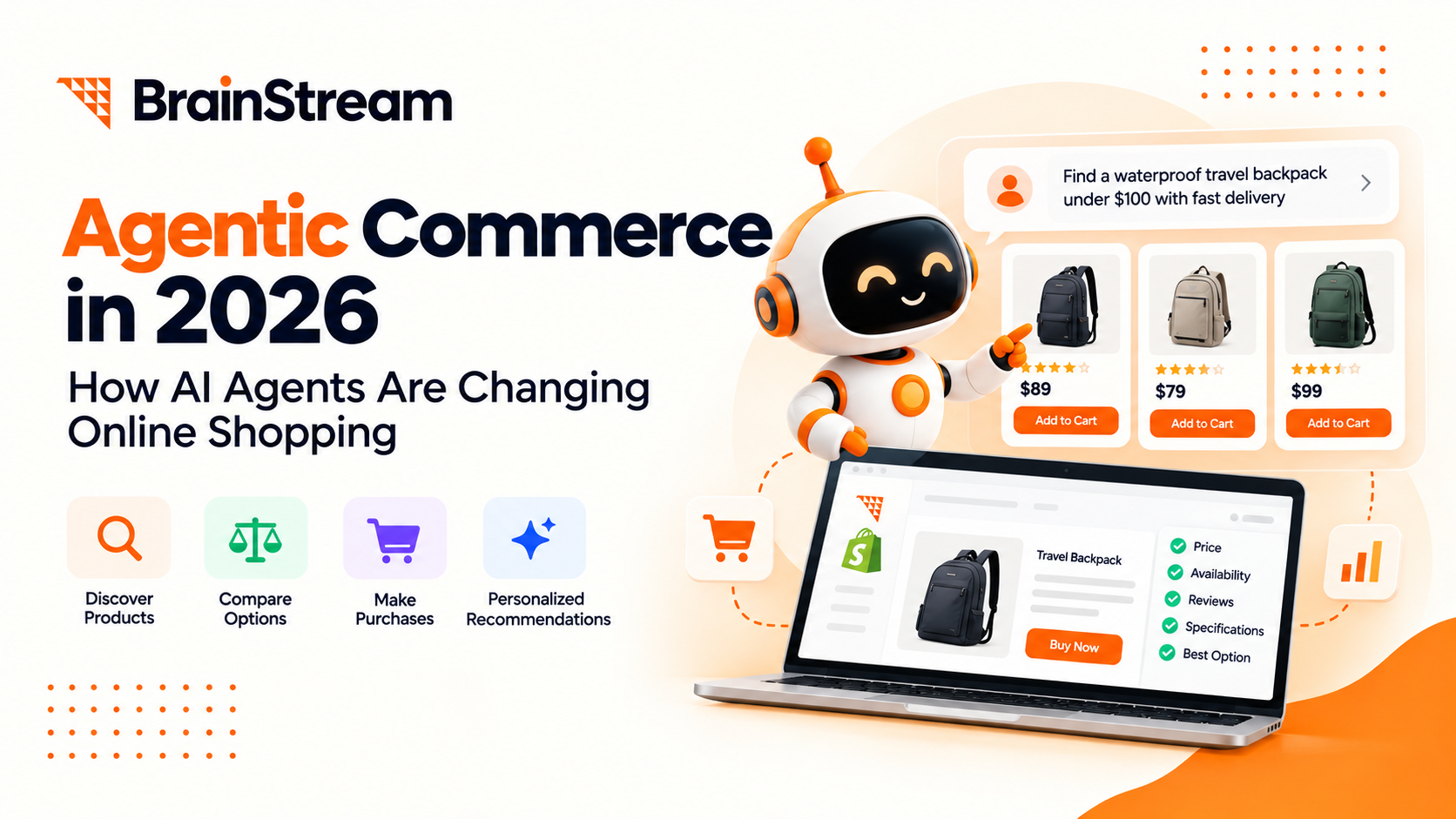
Agentic Commerce in 2026: How AI Agents Are Changing Online Shopping
Online shopping is entering a new phase. For years, shoppers…
Top 7 Must-Have Bagisto Extensions to Improve Your eCommerce Store in 2026
Running an online store takes more than adding products and…