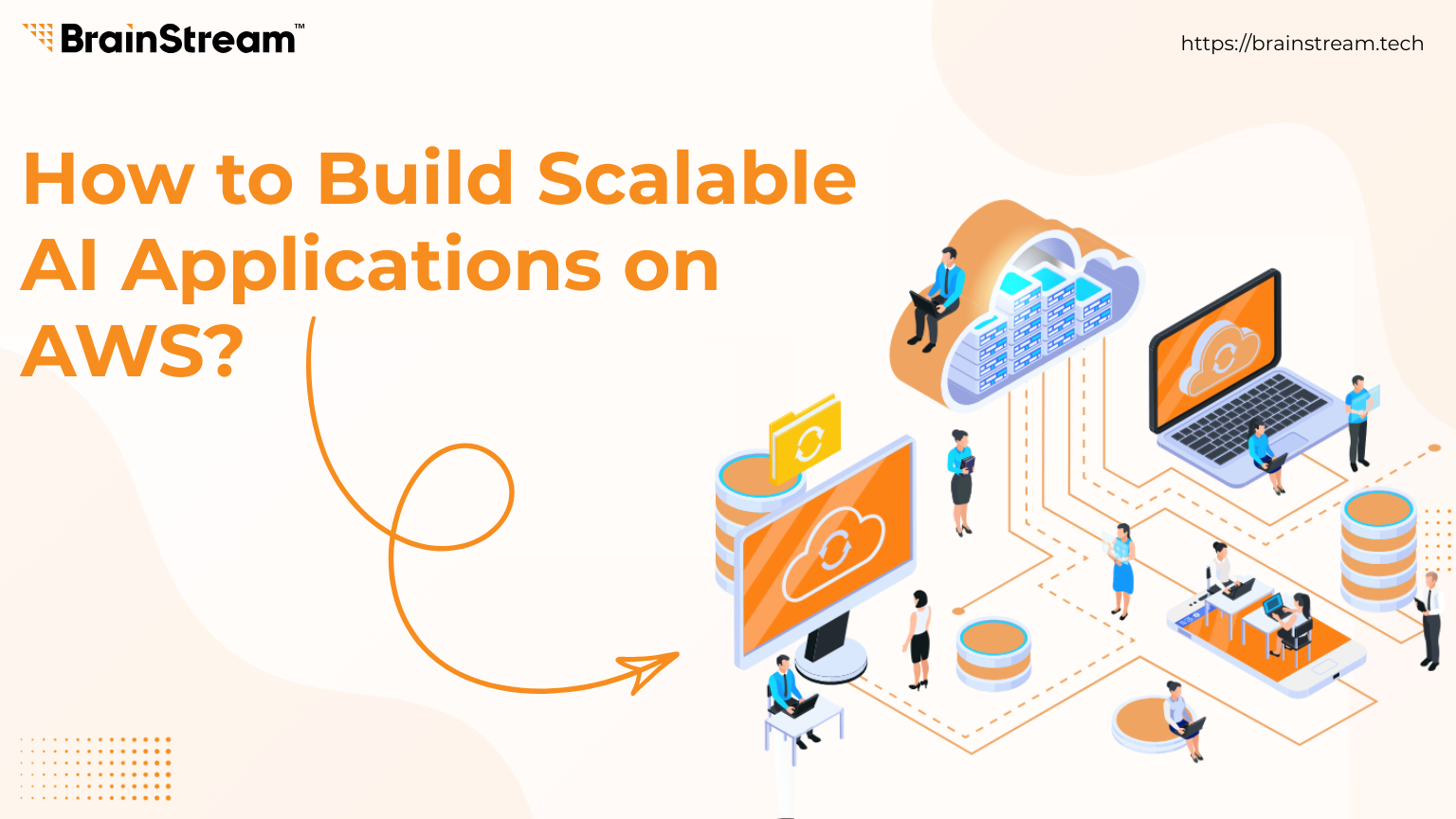
How to Build Scalable AI Applications on AWS?
Artificial intelligence is changing modern software development. Today, businesses use AI to automate operations, improve customer experiences, and analyze large amounts of data. However, building AI applications is not enough anymore. Companies also need systems that can scale smoothly as users and workloads grow.
This is where AWS becomes important.
Amazon Web Services provides powerful cloud infrastructure for building and scaling AI-powered applications. From startups to enterprises, businesses rely on AWS because it offers flexibility, security, and advanced AI services.
In this guide, you will learn how to build scalable AI applications on AWS, which AWS services to use, and the best practices for long-term success.
Why Scalability Matters in AI Applications?
AI applications process huge amounts of data. Additionally, many AI systems handle real-time requests from thousands of users.
Without scalable infrastructure, businesses may face:
- Slow response times
- System crashes
- High operational costs
- Poor user experiences
For example, an AI chatbot may work well with 100 users. However, performance can drop quickly when traffic increases to 100,000 users.
Therefore, scalability is essential for modern AI systems.
Scalable AI applications help businesses:
- Handle growing workloads
- Improve performance
- Reduce downtime
- Optimize cloud costs
- Deliver better customer experiences
Why Businesses Choose AWS for AI Development
AWS is one of the most popular cloud platforms for AI development. It offers a complete ecosystem for machine learning, storage, analytics, and application deployment.
Businesses choose AWS because it provides:
- Global cloud infrastructure
- High availability
- Flexible pricing
- Strong security features
- Scalable computing resources
Additionally, AWS supports both traditional machine learning and generative AI development.
Many companies use AWS to build:
- AI chatbots
- Recommendation engines
- Predictive analytics systems
- Intelligent SaaS platforms
- Computer vision applications
Because of this, AWS remains a leading platform for enterprise AI applications.
Core Components of Scalable AI Architecture on AWS
Building scalable AI applications requires more than just AI models. Businesses also need strong cloud architecture.
Let’s look at the main components.
Data Storage Layer
AI systems depend heavily on data. Therefore, businesses need secure and scalable storage solutions.
AWS offers:
- Amazon S3 for object storage
- Amazon RDS for relational databases
- DynamoDB for high-speed NoSQL storage
These services help businesses manage large datasets efficiently.
Additionally, scalable storage improves AI model performance and reliability.
AI Model Training Infrastructure
AI model training requires significant computing power.
AWS provides services like:
- Amazon SageMaker
- EC2 GPU instances
- AWS Trainium
These tools help developers train machine learning models faster.
Moreover, businesses can scale computing resources based on project requirements.
API and Backend Architecture
Most AI applications connect through APIs.
Businesses often use:
- Amazon API Gateway
- AWS Lambda
- ECS or Kubernetes
This architecture improves flexibility and simplifies application scaling.
Serverless services also reduce infrastructure management tasks.
Real-Time Processing
Modern AI applications often process data in real time.
For example:
- Fraud detection systems
- AI recommendation engines
- Smart analytics platforms
AWS services like Kinesis and Lambda help businesses process streaming data efficiently.
As a result, applications respond faster and improve user experiences.
Monitoring and Security
AI applications require continuous monitoring.
AWS provides:
- CloudWatch for monitoring
- IAM for access control
- GuardDuty for threat detection
These services improve security and system reliability.
Meanwhile, monitoring tools help businesses identify performance issues early.
Best AWS Services for AI Applications
Here are the most useful AWS services for scalable AI development.
| AWS Service | Purpose |
|---|---|
| Amazon SageMaker | Machine learning model development |
| AWS Lambda | Serverless execution |
| Amazon EC2 | Scalable compute infrastructure |
| Amazon S3 | Data storage |
| Amazon Bedrock | Generative AI applications |
| API Gateway | API management |
| DynamoDB | High-performance database |
| CloudWatch | Monitoring and analytics |
These services work together to create scalable AI ecosystems.
Step-by-Step Process to Build Scalable AI Applications on AWS
Step 1: Define the AI Use Case
Start with a clear business problem.
For example:
- Customer support automation
- Product recommendations
- Fraud detection
- Predictive analytics
Without clear goals, AI projects often fail.
Therefore, businesses should identify measurable objectives early.
Step 2: Choose the Right AI Model
Different AI models solve different problems.
Businesses may use:
- Machine learning models
- Natural language processing
- Computer vision
- Generative AI systems
Choosing the right model improves accuracy and scalability.
Step 3: Design Scalable Cloud Architecture
Cloud architecture directly affects application performance.
Best practices include:
- Using microservices
- Separating workloads
- Implementing auto scaling
- Using managed AWS services
This approach improves flexibility and reduces downtime.
Step 4: Train and Deploy AI Models
AWS SageMaker simplifies model training and deployment.
Businesses can:
- Train models faster
- Deploy APIs easily
- Monitor model performance
- Scale infrastructure automatically
Additionally, containerization improves deployment consistency.
Step 5: Optimize Application Performance
AI applications require regular optimization.
Businesses should monitor:
- API latency
- Infrastructure usage
- Model accuracy
- Response times
Continuous optimization improves scalability and cost efficiency.
Common Challenges in Scaling AI Applications
Even with AWS, businesses may face challenges.
High Infrastructure Costs
AI workloads can become expensive.
However, businesses can reduce costs by:
- Using auto scaling
- Choosing serverless architecture
- Optimizing workloads
Data Processing Complexity
Large datasets require proper management.
Without clean and structured data, AI performance decreases.
Therefore, businesses should invest in strong data pipelines.
Security and Compliance
AI systems often process sensitive information.
Businesses must ensure:
- Data encryption
- Access management
- Compliance monitoring
AWS provides strong security tools for these requirements.
Best Practices for Building AI Applications on AWS
Use Microservices Architecture
Microservices improve scalability and flexibility.
Additionally, businesses can update services independently.
Implement Auto Scaling
Traffic can change rapidly.
Auto scaling helps applications handle traffic spikes automatically.
Use Managed AWS Services
Managed services reduce operational complexity.
As a result, development teams can focus more on innovation.
Monitor Continuously
Monitoring improves:
- Performance
- Reliability
- Security
- Cost optimization
Therefore, businesses should track system health regularly.
Industries Using AI Applications on AWS
Many industries now rely on AWS-powered AI systems.
Ecommerce
Businesses use AI for:
- Personalized recommendations
- Smart search
- Inventory forecasting
Companies offering scalable ecommerce platforms often combine AI with Shopware Development Services to improve customer experiences.
Healthcare
Healthcare organizations use AI for:
- Predictive diagnostics
- Patient analytics
- Workflow automation
Fintech
Financial companies use AI for:
- Fraud detection
- Risk analysis
- Predictive modeling
SaaS Platforms
SaaS companies use AI to:
- Improve automation
- Enhance analytics
- Personalize user experiences
The Future of AI Applications on AWS
AI adoption continues growing rapidly. Businesses now need cloud-native systems that support scalability, automation, and real-time intelligence.
AWS continues expanding its AI ecosystem with:
- Generative AI tools
- AI infrastructure services
- Advanced analytics
- Machine learning platforms
Meanwhile, businesses increasingly invest in Brainstream Technolabs for AI consulting, scalable software development, and cloud architecture planning.
The future of AI development will focus heavily on:
- AI agents
- Intelligent automation
- Multi-model AI systems
- Enterprise AI transformation
Because of this, scalable AI architecture will become a major competitive advantage.
Conclusion
Building scalable AI applications requires strong infrastructure, smart architecture, and reliable cloud services.
AWS helps businesses develop AI-powered systems that handle growth efficiently while improving performance and security.
From startups to enterprises, organizations now rely on scalable AI applications to automate operations, improve customer experiences, and drive innovation.
However, success depends on proper planning, cloud architecture, and continuous optimization.
Businesses that invest in scalable AI infrastructure today will be better prepared for the future of intelligent software development.
FAQs
Why should businesses use AWS for AI applications?
AWS provides scalable infrastructure, AI services, strong security, and flexible cloud resources for AI development.
Which AWS service is best for machine learning?
Amazon SageMaker is one of the best AWS services for machine learning model development and deployment.
Can startups build AI applications on AWS?
Yes. AWS offers flexible pricing and scalable infrastructure, making it suitable for startups and growing businesses.
What is the biggest challenge in AI scalability?
Managing infrastructure costs, processing large datasets, and maintaining performance are common challenges.

Manish Khilwani
Author
Co-Founder at BrainStream Technolabs, he focuses on building people-first, scalable eCommerce and digital products that help brands grow with clarity and innovation.
Table of contents
BLOGS
Learn & Grow with Us
Get the latest updates on trends and strategies that shape the business world. Our insights are here to keep you informed and inspired.
How Much Does AI Integration into a Symfony Application Cost in 2026?
Adding artificial intelligence to your Symfony application can improve customer…
Modernizing Legacy Symfony Applications with AI: Where to Start
Your Symfony application still runs your business. However, adding features…
Agentic Commerce in 2026: How AI Agents Are Changing Online Shopping
Online shopping is entering a new phase. For years, shoppers…
Top 7 Must-Have Bagisto Extensions to Improve Your eCommerce Store in 2026
Running an online store takes more than adding products and…