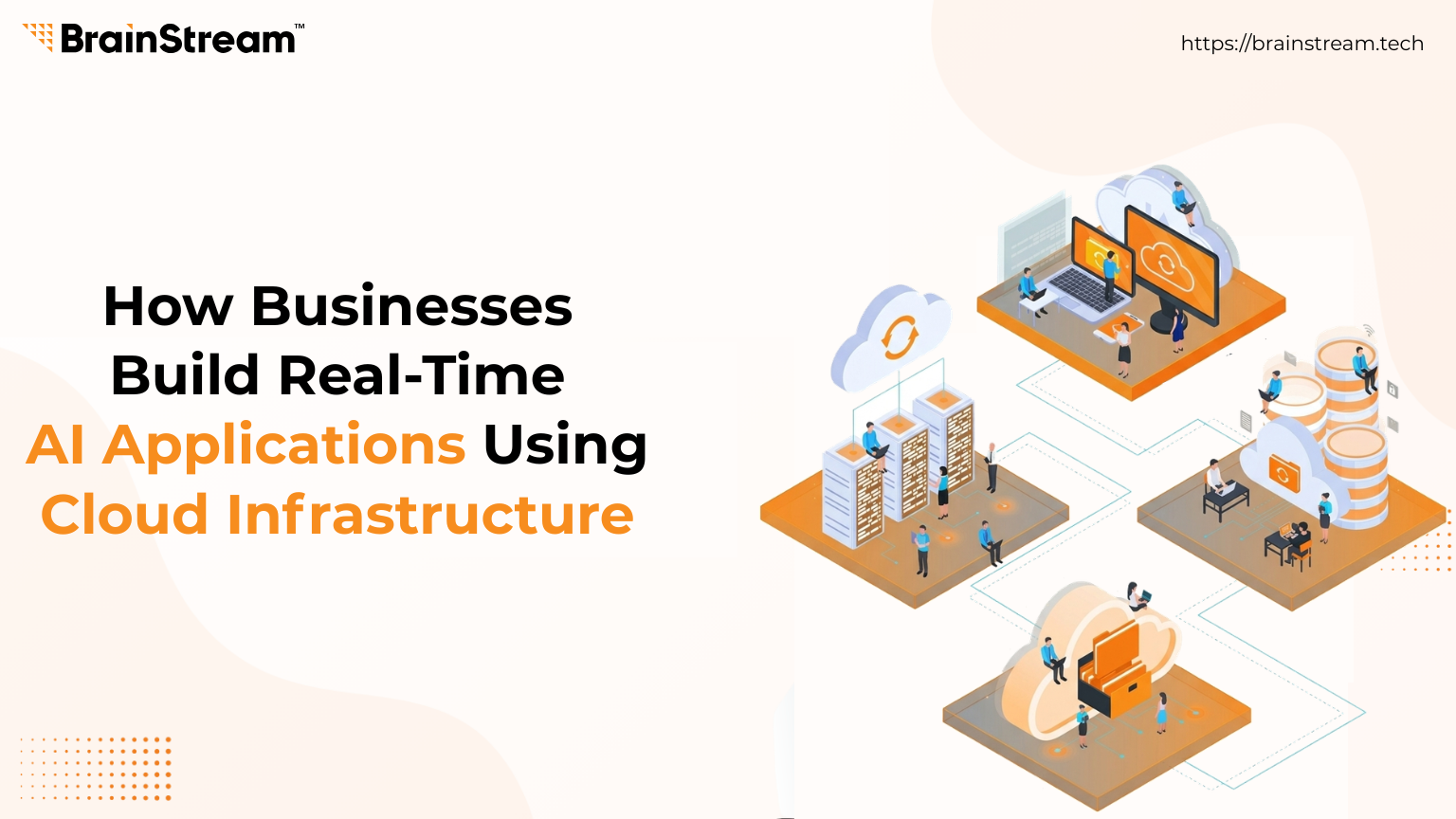
How Businesses Build Real-Time AI Applications Using Cloud Infrastructure?
Artificial intelligence is changing how modern businesses operate. However, AI applications today need more than just smart algorithms. They also need speed, scalability, and real-time processing.
Customers now expect instant responses. Businesses must process data quickly, automate workflows, and deliver intelligent experiences without delays. Because of this, companies are heavily investing in real-time AI applications powered by cloud infrastructure.
From AI chatbots and fraud detection systems to recommendation engines and predictive analytics platforms, real-time AI is becoming essential across industries.
However, building these applications is not simple.
Businesses need scalable infrastructure, reliable cloud architecture, fast data processing, and AI integration strategies that support continuous performance.
This is where cloud infrastructure becomes critical.
Cloud platforms help businesses build AI applications that can scale efficiently, process data instantly, and handle large workloads without performance issues.
In this guide, you will learn:
- What real-time AI applications are
- Why cloud infrastructure matters for AI
- How businesses build scalable AI systems
- Key technologies used in AI infrastructure
- Common challenges and best practices
Let’s begin.
What Are Real-Time AI Applications?
Real-time AI applications are systems that process data instantly and respond immediately to user actions or operational events.
Unlike traditional software systems, real-time AI applications continuously analyze incoming data and make intelligent decisions within seconds.
These applications often support:
- Customer interactions
- Fraud detection
- Predictive analytics
- AI chatbots
- Recommendation engines
- Smart automation workflows
For example, an ecommerce platform may use real-time AI to recommend products while customers browse the website. Similarly, banking platforms use AI systems to detect suspicious transactions instantly.
Because of this, businesses improve customer experiences and operational efficiency.
Why Cloud Infrastructure Matters for AI Applications?
AI applications require massive computing power and continuous data processing.
Traditional on-premise infrastructure often struggles to handle:
- Large AI workloads
- Real-time analytics
- Dynamic scaling
- High-performance computing
Meanwhile, cloud infrastructure provides flexibility and scalability.
Cloud platforms allow businesses to:
- Scale resources instantly
- Process large datasets
- Deploy AI models quickly
- Improve system reliability
- Reduce infrastructure costs
As a result, businesses can build faster and more scalable AI applications.
How Businesses Build Real-Time AI Applications?
Building real-time AI systems requires a structured approach.
Let’s understand the process step by step.
Step 1: Collecting Real-Time Data
Every AI application depends on data.
Businesses collect real-time data from multiple sources such as:
- Mobile applications
- Websites
- IoT devices
- APIs
- Customer interactions
- Cloud databases
This data continuously flows into the AI system for processing.
For example, a logistics company may collect live vehicle tracking data to optimize delivery routes instantly.
Because of this, businesses gain real-time operational visibility.
Step 2: Using Cloud-Based Data Processing
Once data is collected, businesses process it using cloud infrastructure.
Cloud platforms like AWS, Azure, and Google Cloud help businesses handle:
- High-speed data processing
- Scalable storage
- AI model execution
- Real-time analytics
Additionally, cloud-native technologies improve system reliability and scalability.
Businesses often use:
- Kubernetes
- Docker containers
- Serverless computing
- Microservices architecture
These technologies help AI applications scale efficiently during high workloads.
Step 3: Training AI Models
AI models learn from historical and real-time data.
Businesses train models using:
- Machine learning algorithms
- Deep learning frameworks
- Natural language processing systems
The training process helps AI systems identify patterns, predict outcomes, and automate decisions.
For example, streaming platforms train recommendation engines based on user behavior and viewing history.
As a result, users receive more personalized experiences.
Step 4: Deploying AI Models in the Cloud
After training, businesses deploy AI models using scalable cloud environments.
Cloud infrastructure allows companies to:
- Run AI models globally
- Reduce latency
- Improve availability
- Handle traffic spikes
Meanwhile, DevOps pipelines help automate deployment and monitoring processes.
This improves operational efficiency significantly.
Step 5: Monitoring and Optimizing Performance
Real-time AI applications require continuous monitoring.
Businesses track:
- Response times
- AI accuracy
- Infrastructure performance
- User engagement
- Resource utilization
Monitoring tools help identify bottlenecks before they impact users.
Because of this, businesses maintain stable and reliable AI systems.
Benefits of Real-Time AI Applications
Real-time AI applications provide several business advantages.
Faster Decision-Making
AI systems analyze data instantly and deliver quick insights.
As a result, businesses respond to opportunities and risks faster.
Better Customer Experience
Real-time personalization improves engagement and satisfaction.
Meanwhile, instant responses create smoother digital experiences.
Improved Scalability
Cloud infrastructure allows businesses to scale AI applications efficiently during growing demand.
Reduced Operational Costs
Cloud-native AI systems optimize resource usage and reduce infrastructure expenses.
Stronger Automation
AI applications automate repetitive workflows and improve operational efficiency.
Common Challenges Businesses Face
Although real-time AI offers major advantages, businesses still face technical challenges.
Infrastructure Complexity
AI systems require scalable and reliable infrastructure.
Without proper architecture, businesses may experience:
- Performance issues
- Downtime
- High operational costs
Data Security and Compliance
Real-time AI applications process sensitive business and customer data.
Therefore, companies must focus on:
- Encryption
- Access management
- Security monitoring
- Compliance regulations
AI Model Accuracy
Poor-quality data can reduce AI performance.
Businesses must continuously optimize AI models to maintain accuracy and reliability.
Best Practices for Building Real-Time AI Applications
Businesses should follow a strategic approach for successful AI implementation.
Start With Clear Business Goals
Focus on solving specific operational or customer challenges first.
This improves implementation success.
Use Scalable Cloud Infrastructure
Cloud-native environments improve:
- Performance
- Scalability
- Reliability
- Cost optimization
Prioritize Security
AI systems must include strong cybersecurity measures and compliance strategies.
Continuously Monitor AI Systems
Regular monitoring improves:
- AI accuracy
- Infrastructure efficiency
- User experience
- Operational stability
The Future of Real-Time AI Applications
Real-time AI will continue growing rapidly over the next few years.
Businesses are already integrating AI into:
- Enterprise software
- Ecommerce platforms
- Healthcare systems
- Financial applications
- Logistics operations
Meanwhile, technologies like generative AI and AI agents are becoming more advanced.
Because of this, future AI applications will become:
- More autonomous
- More intelligent
- More personalized
- More scalable
Companies investing in scalable cloud-based AI infrastructure today will likely gain strong competitive advantages in the future.
Conclusion
Real-time AI applications are transforming modern business operations.
From intelligent automation and predictive analytics to personalized customer experiences, AI systems now help businesses operate faster and more efficiently.
However, successful AI implementation requires scalable cloud infrastructure, strong security, and continuous optimization.
Businesses that invest in cloud-based AI infrastructure today will be better prepared for the future of intelligent digital transformation.
FAQs
What are real-time AI applications?
Real-time AI applications process data instantly and respond immediately using artificial intelligence and cloud infrastructure.
Why is cloud infrastructure important for AI applications?
Cloud infrastructure provides scalability, high-performance computing, and reliable deployment environments for AI systems.
Which cloud platforms are best for AI development?
Popular cloud platforms include AWS, Microsoft Azure, and Google Cloud Platform.
How do businesses scale AI applications?
Businesses scale AI applications using cloud-native technologies like Kubernetes, microservices, serverless computing, and AI automation tools.

Manish Khilwani
Author
Co-Founder at BrainStream Technolabs, he focuses on building people-first, scalable eCommerce and digital products that help brands grow with clarity and innovation.
Table of contents
BLOGS
Learn & Grow with Us
Get the latest updates on trends and strategies that shape the business world. Our insights are here to keep you informed and inspired.
How Much Does AI Integration into a Symfony Application Cost in 2026?
Adding artificial intelligence to your Symfony application can improve customer…
Modernizing Legacy Symfony Applications with AI: Where to Start
Your Symfony application still runs your business. However, adding features…

Agentic Commerce in 2026: How AI Agents Are Changing Online Shopping
Online shopping is entering a new phase. For years, shoppers…
Top 7 Must-Have Bagisto Extensions to Improve Your eCommerce Store in 2026
Running an online store takes more than adding products and…