










Summary:
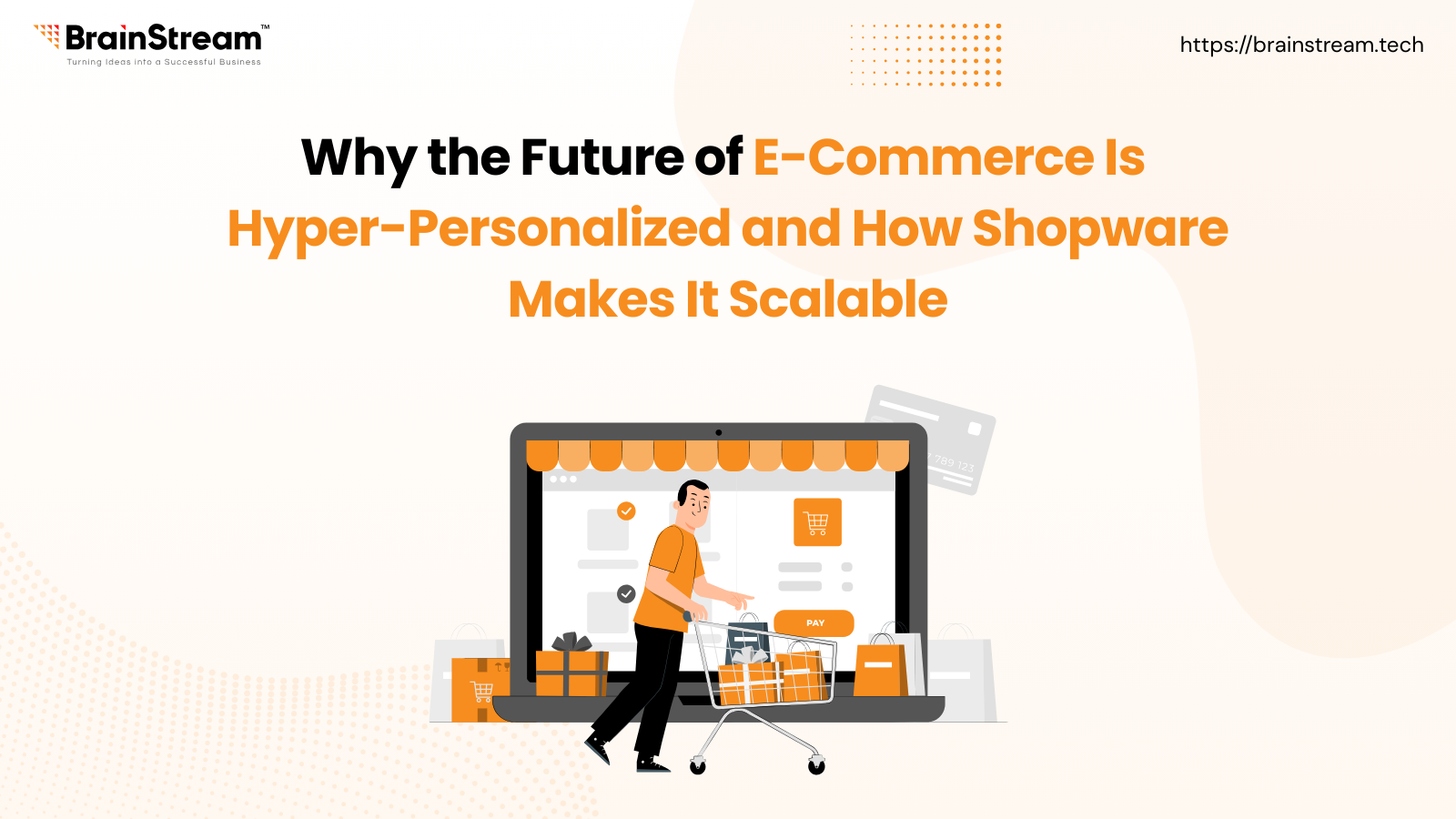
Hyper-personalization is becoming essential in modern e-commerce as customers expect experiences tailored to their behavior, preferences, and intent. Shopware makes this scalable through rule-based personalization, automated workflows, AI-powered recommendations, and strong B2B capabilities.
December 26, 2025
E-commerce has entered a new phase. Customers no longer compare your store only with competitors; they compare it with the best experience they’ve had anywhere online.
Showing the same homepage, the same offers, and the same product suggestions to every visitor is no longer effective.
This is why hyper-personalization is shaping the future of e-commerce.
Hyper-personalization means designing an online store that adapts in real time, based on who the customer is, how they behave, and what they are likely to do next.
Shopware 6 is built for this shift. Its flexible architecture, automation tools, and AI-ready ecosystem make hyper-personalization not only possible but scalable.
What Hyper-Personalization Really Means (Beyond Basic Personalization)
Traditional personalization might show:
- Recommended products
- A generic discount
- Recently viewed items
Hyper-personalization goes much deeper.
It combines:
- Real-time customer behavior
- Purchase history and intent
- Context (location, device, time)
- Automation and AI-driven decisions
The result?
Every visitor experiences a different version of the same store, tailored to their needs.
Why Traditional E-Commerce Models Are Breaking
Most e-commerce platforms still rely on static logic:
- Same navigation for all users
- Same pricing strategy
- Same promotional content
This creates three major problems:
- Low engagement – customers don’t feel understood
- Missed revenue – irrelevant offers don’t convert
- Poor retention – shoppers don’t return
Hyper-personalization addresses these challenges by making the store customer-centric rather than product-centric.
How Shopware Is Designed for Hyper-Personalized Commerce
Shopware’s biggest strength is its rule-based and event-driven architecture, which allows personalization at every touchpoint.
Let’s look at how this works in practice.
Rule Builder: Real-Time Store Customization
Shopware’s Rule Builder allows you to create logic based on customer attributes and behavior.
You can personalize:
- Homepage banners
- Product visibility
- Pricing and promotions
- Shipping and payment options
Example use cases:
- Show premium products to returning customers
- Offer location-specific promotions
- Display different prices for B2B and B2C users
Everything happens automatically, without hard-coding or manual updates.
Flow Builder: Automated, Personalized Customer Journeys
Hyper-personalization at scale is impossible without automation.
Shopware’s Flow Builder enables workflows triggered by real customer actions, such as:
- Account creation
- Order completion
- Cart abandonment
- Repeat purchases
These flows can:
- Send personalized emails
- Trigger exclusive offers
- Update customer segmentation in real time
This ensures every customer journey feels intentional and relevant.
AI-Driven Product Discovery and Recommendations
Modern customers expect stores to “understand” what they want.
Shopware integrates seamlessly with AI-powered recommendation engines that analyze:
- Browsing patterns
- Purchase behavior
- Similar customer journeys
This enables:
- Smarter cross-selling and upselling
- Higher average order value
- Faster product discovery
Instead of pushing products, the store guides decisions naturally.
B2B Hyper-Personalization: Where Shopware Truly Stands Out
B2B e-commerce requires a significantly higher level of personalisation.
Shopware’s B2B capabilities allow:
- Customer-specific pricing
- Individual catalogs
- Role-based permissions
- Bulk ordering and approval workflows
For B2B buyers, this removes friction and builds long-term trust.
The result is not just better UX, but stronger business relationships.
Hyper-Personalization Across the Full Customer Lifecycle
Shopware enables personalization at every stage:
- First Visit: Location-aware content and product suggestions
- Returning Visitor: Personalized homepage and recommendations
- Active Customer: Targeted offers and automated follow-ups
- Loyal Buyer: Exclusive pricing and premium experiences
Each interaction builds on previous data, making the experience smarter over time.
Business Impact: Why Hyper-Personalization Delivers ROI
1. Higher Conversion Rates
Relevant products and offers reduce decision friction.
2. Increased Average Order Value
Personalized recommendations drive natural upsells.
3. Stronger Customer Loyalty
Customers return to stores that feel tailored to them.
4. Smarter Marketing Operations
Automation reduces manual work while increasing precision.
Building a Future-Proof Shopware Store
Hyper-personalization is not a one-time feature — it’s a long-term strategy.
Shopware’s modular architecture allows businesses to:
- Start with rule-based personalization
- Add automation workflows
- Scale with AI-powered intelligence
This makes your store adaptable to future customer expectations.
Conclusion
The future of e-commerce belongs to brands that treat every customer as unique.
With Shopware, hyper-personalization becomes a scalable, data-driven, and automated process — not a complex technical challenge.
By delivering relevant experiences at the right moment, businesses can increase revenue, loyalty, and long-term growth.
FAQs
1. What is hyper-personalization in e-commerce?
Hyper-personalization uses real-time data, automation, and AI to tailor the shopping experience for each customer.
2. How does Shopware support hyper-personalization?
Shopware offers Rule Builder, Flow Builder, AI integrations, and B2B features to personalize every customer journey.
3. Is hyper-personalization suitable for B2B e-commerce?
Yes. Shopware’s B2B features enable customer-specific pricing, catalogs, and workflows.
4. Does hyper-personalization increase sales?
Yes. Personalized experiences improve conversions, order value, and customer retention.

Manish Khilwani 

Co-Founder at BrainStream Technolabs, he focuses on building people-first, scalable eCommerce and digital products that help brands grow with clarity and innovation.
Share :


Related Blog
Shopware
Shopware Community Day 2026: The Ultimate Global Event for the Shopware Ecosystem
Shopware Community Day 2026 (SCD 2026) is more than just an ecommerce conference; it is the most important annual event for the global Shopware community. From extension partners to merchants and technology innovators, SCD 2026 brings together everyone building, scaling,...
Shopware
Shopware Gateways: A Flexible Way to Extend Shopware
A Shopware gateway acts as a dedicated communication layer between a Shopware store and external App servers. Each gateway is designed for a specific integration area, such as checkout processes, customer context handling, or in-app purchases, while relying on a...
Shopware
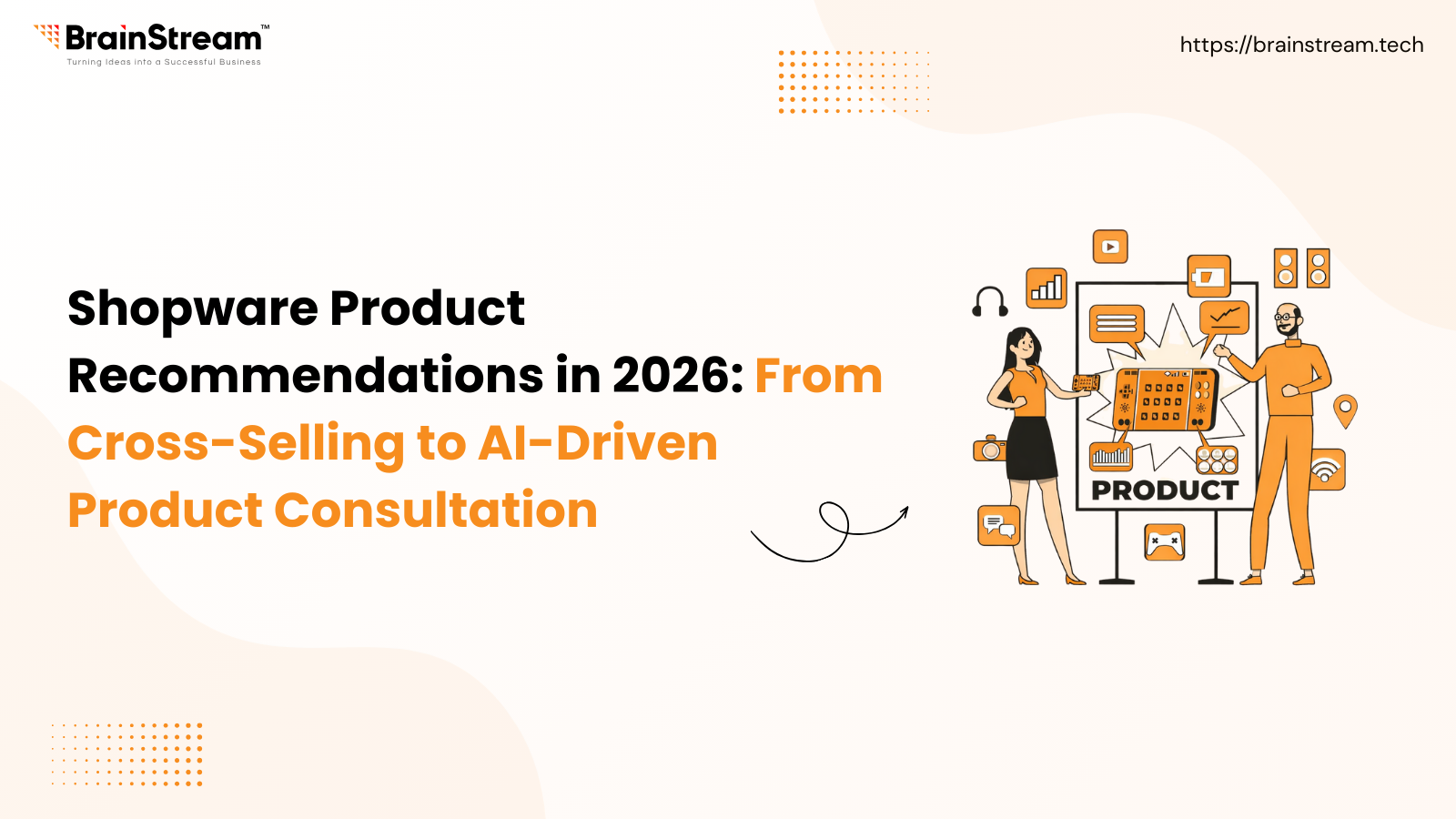
Shopware Product Recommendations in 2026: From Cross-Selling to AI-Driven Product Consultation
In 2026, simple product sliders and static cross-sell recommendations aren’t enough. Today’s customers expect personalized guidance, and AI-based product consultation turns your Shopware store into a real advisor, driving higher conversions and better customer satisfaction. Standard Shopware cross-selling shows products,...


Keep up-to-date with our newsletter.
Sign up for our newsletter to receive weekly updates and news directly to your inbox.