












Summary:
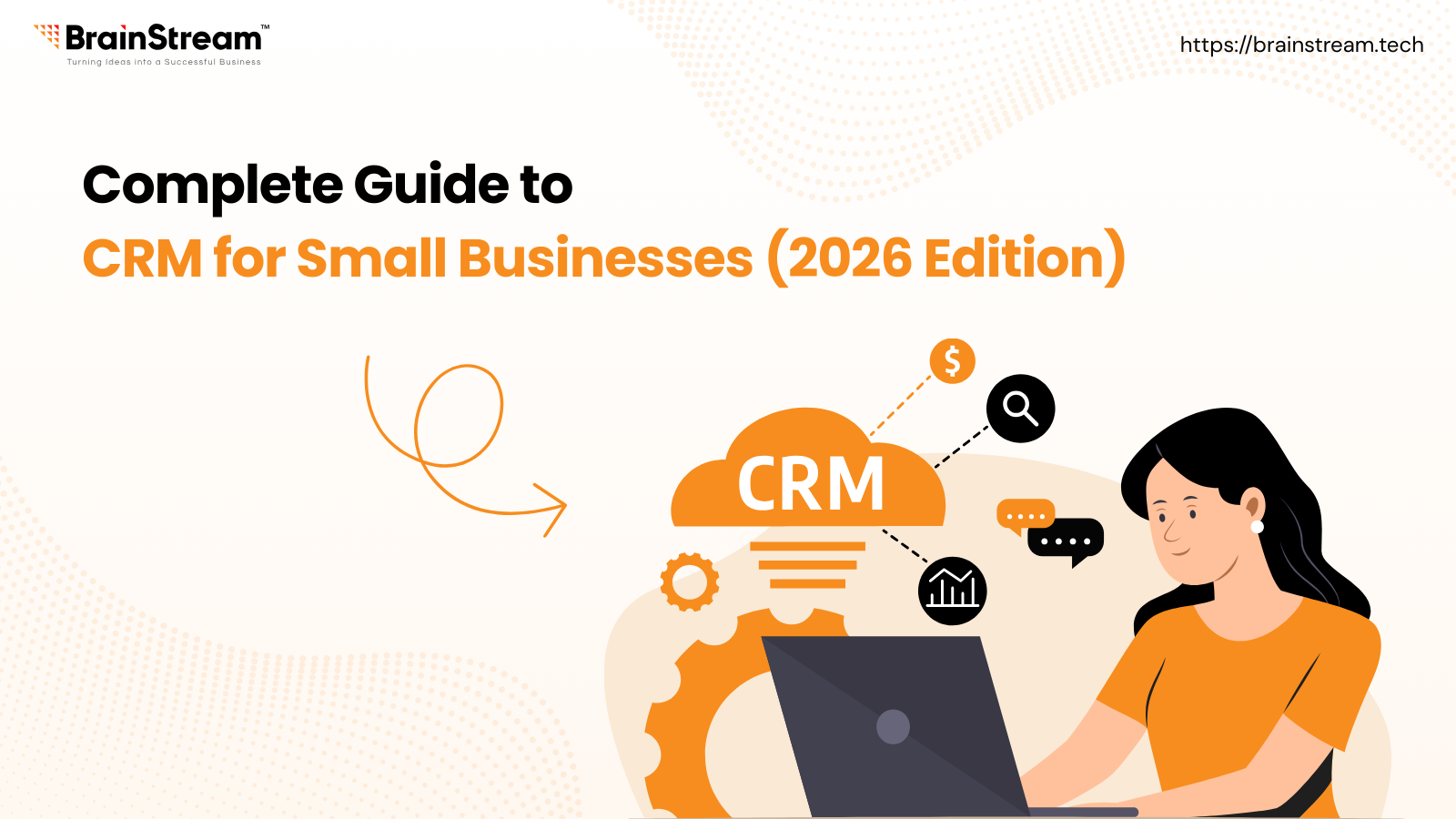
CRM software helps small businesses manage customers, automate sales, and improve relationships. This 2026 guide explains CRM features, benefits, trends, and how to choose the best CRM to grow faster with less effort.
January 2, 2026
Running a small business in 2026 is no easy task. Customers expect prompt responses, personalised offers, and seamless communication across email, WhatsApp, social media, and websites. Managing everything manually wastes time and money.
This is exactly why CRM software for small businesses has become a must-have growth tool.
A CRM helps you manage customers, close more deals, and build long-term relationships, without increasing your workload.
What Is CRM for Small Businesses?
CRM (Customer Relationship Management) software helps small businesses store customer data, track conversations, manage sales, and automate follow-ups from one dashboard.
Instead of using spreadsheets, notes, and multiple apps, CRM gives you one clean system to handle everything.
Think of CRM as your digital sales and customer manager.
Why Small Businesses Need CRM in 2026
Customer behavior has changed. People compare brands, read reviews, and expect instant responses.
Without CRM, small businesses lose leads, forget follow-ups, and miss revenue opportunities.
With CRM software, you can:
- Track every customer interaction
- Respond faster to inquiries
- Send personalized messages
- Build trust and loyalty
CRM helps small businesses compete with big brands smartly.
Key Features of CRM Software for Small Businesses
A good small business CRM should be simple, powerful, and affordable.
Contact & Lead Management
Store all customer details in one place. Know who your customers are and how they interact with your business.
Sales Pipeline Tracking
Track leads from first contact to deal closure. Never miss a sales opportunity again.
Automated Follow-Ups
Set reminders and automations so no lead goes cold.
Email, SMS & WhatsApp Integration
Talk to customers on the channels they prefer directly from your CRM.
Marketing Automation
Send offers, newsletters, and promotions automatically.
Customer Support Tools
Manage customer queries, complaints, and tickets professionally.
Reports & Analytics
See what’s working and what’s not with clear, easy-to-read reports.
Benefits of CRM for Small Businesses
CRM software doesn’t just organize data, it drives growth.
Increase Sales
Better follow-ups and customer tracking lead to higher conversions.
Save Time
Automation reduces manual work and daily stress.
Improve Customer Relationships
Personalized communication builds trust and loyalty.
Better Marketing Results
Target the right customers with the right message.
Professional Business Image
Even a small team looks organized and reliable.
Best CRM Software for Small Businesses in 2026
Here are some popular and trusted CRM tools:
HubSpot CRM – Best for startups and beginners
Zoho CRM – Affordable and highly customizable
Freshsales – Great for sales-focused teams
Pipedrive – Simple and visual sales tracking
Salesforce Starter – Powerful and scalable
Each tool offers different features, pricing, and integrations. Choose based on your business goals.
How to Choose the Right CRM for Your Business
Before selecting a CRM, ask yourself:
- Do I need sales, marketing, or support features?
- How easy is it for my team to use?
- Does it integrate with my existing tools?
- Is it affordable as my business grows?
Always try a free demo or trial before making a decision.
CRM Trends Small Businesses Should Watch in 2026
CRM technology is evolving fast.
In 2026, small businesses are adopting:
- AI-powered sales predictions
- WhatsApp & social media CRM
- Personalized customer journeys
- Mobile-first CRM tools
Early adoption gives you a competitive edge.
Final Words
CRM is no longer optional for small businesses.
The right CRM software helps you sell more, retain customers, and grow faster without complexity.
If you want to scale your small business in 2026, CRM is the smartest investment you can make.
FAQ
1. What is CRM software for small businesses?
CRM software helps small businesses store customer data, track sales, manage communication, and automate follow-ups from one centralized platform.
2. Why do small businesses need CRM in 2026?
Small businesses need CRM to manage growing customer data, improve response time, personalize communication, and compete with larger brands.
3. Is CRM software expensive for small businesses?
No. Many CRM tools offer free plans or affordable pricing designed specifically for small businesses.
4. Which CRM is best for small businesses?
Popular CRM options include HubSpot, Zoho CRM, Freshsales, Pipedrive, and Salesforce Starter, depending on business needs and budget.
5. Can CRM improve sales for small businesses?
Yes. CRM improves follow-ups, customer tracking, and lead management, helping small businesses close more deals faster.
6. Does CRM work for service-based small businesses?
Absolutely. CRM is useful for service providers, consultants, agencies, and freelancers to manage clients and automate communication.
7. How long does it take to implement CRM?
Most cloud-based CRM systems can be set up within a few hours or days, depending on customization.

Manish Khilwani 

Co-Founder at BrainStream Technolabs, he focuses on building people-first, scalable eCommerce and digital products that help brands grow with clarity and innovation.
Share :


Related Blog
CRM
How to Migrate Data From One CRM to Another: Step-by-Step Guide & Best Practices
Switching CRMs is a big decision for any business. Whether you’re upgrading for better automation, scalability, or reporting, one challenge remains the same: CRM data migration. Migrating data from one CRM to another is not just about exporting and importing...
CRM
Best WhatsApp CRM Software in 2026: Top Providers Compared by Features, Pricing & Use Cases
WhatsApp is no longer just a messaging app, it’s one of the most powerful customer communication channels for businesses in 2026. From lead generation and sales follow-ups to customer support and retention, WhatsApp is where customers expect fast, personalized responses....
CRM
CRM Software for Travel Agencies: Features, Benefits & Best Solutions in 2026
The travel industry in 2026 is more competitive than ever. Customers expect instant responses, personalized travel experiences, smooth bookings, and continuous support across email, WhatsApp, calls, and social media. Yet many travel agencies still rely on spreadsheets, manual follow-ups, and...


Keep up-to-date with our newsletter.
Sign up for our newsletter to receive weekly updates and news directly to your inbox.