











Top 5 Proven Seasonal Discount Tactics to Boost Your eCommerce Sales

Every eCommerce brand looks forward to seasonal spikes in sales. However, reducing prices simply because competitors are doing the same can quickly lead to a pricing war, where margins shrink and no one truly benefits.

Seasonal discount pricing, when planned thoughtfully, does much more than increase short-term revenue. It helps attract hesitant buyers, build repeat customers, and move inventory efficiently without damaging your brand value.

The difference lies in strategy, not spontaneous discounts.

In this guide, we’ll cover:

  • What seasonal discount pricing is and its key types
  • Why seasonal pricing strategies work so well in eCommerce
  • How to build an effective seasonal discount plan
  • Best practices for Shopify store owners
  • Real-world examples of seasonal discount strategies

Let’s get started.
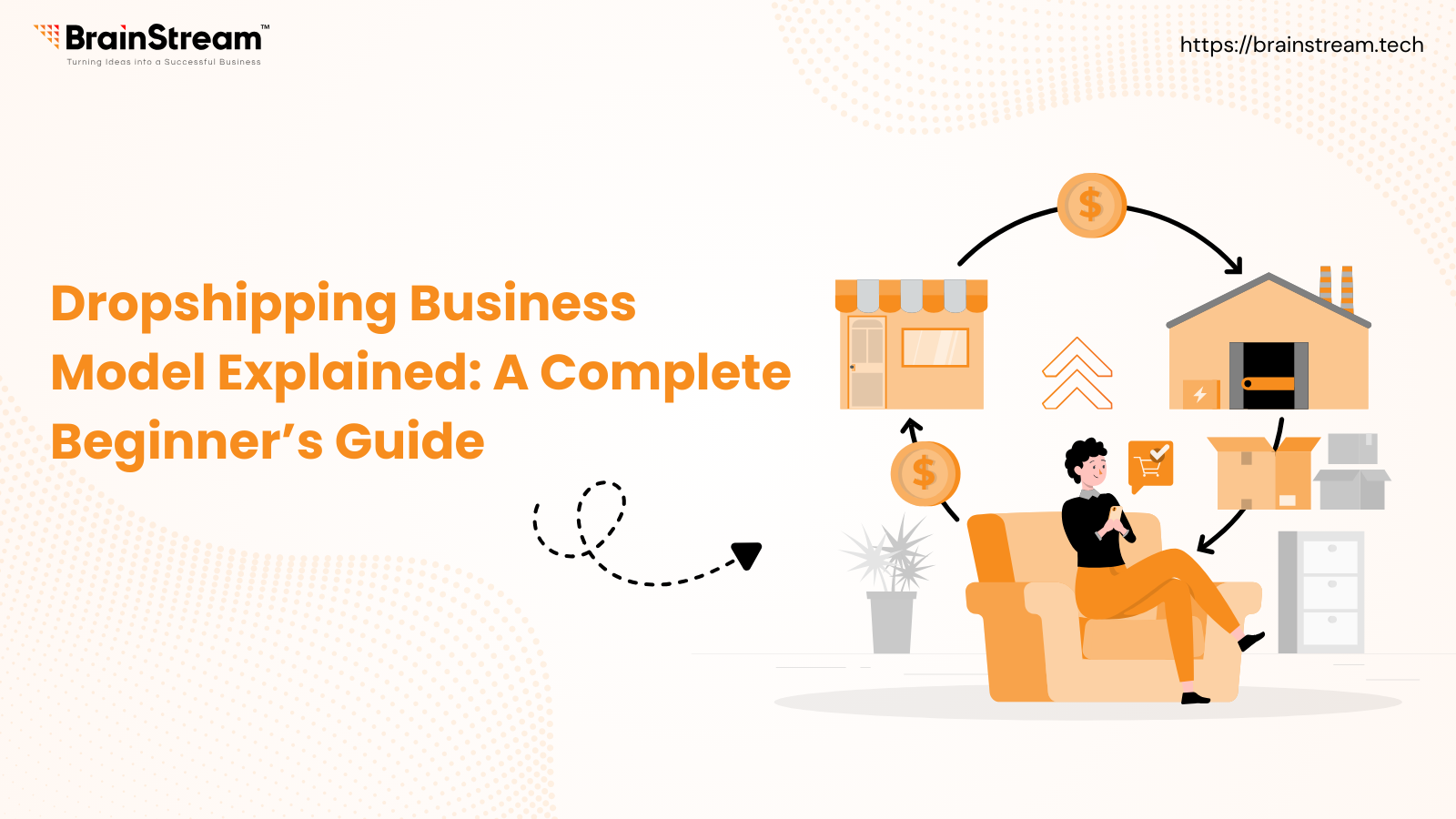
Dropshipping Business Model Explained: A Complete Beginner’s Guide

Welcome to this easy-to-understand guide on dropshipping, a popular and flexible way to start an online business without following traditional retail methods.

In the digital age, dropshipping allows you to launch an eCommerce store without stocking or handling products yourself. This makes it an ideal option for entrepreneurs who want to start with a low investment and fewer operational responsibilities.

Because there is no need to purchase inventory in advance, dropshipping significantly lowers startup costs and reduces financial risk, while offering the freedom to manage your business from anywhere.

This guide is designed for beginners as well as digital marketers who want to explore new eCommerce opportunities. It is based on practical knowledge and industry insights to help you understand market trends and build a scalable online store.

Our goal is to share clear, reliable information that helps you confidently step into the world of dropshipping and grow in today’s competitive online marketplace.

In this guide, you will learn:

  • What dropshipping is and why it has become a popular eCommerce model
  • Different types of dropshipping and their advantages
  • Simple steps to start and grow your dropshipping store
  • Practical tips, tools, and strategies to handle common challenges

B2B Magento to OroCommerce Migration

The transition from Magento to OroCommerce represents a strategic shift that delivers measurable improvements in operational efficiency, system scalability, and overall cost management for B2B organisations. Our migration practice has evolved over several years, with each project revealing new insights into the technical and business benefits of this platform change.

Organisations that initially struggle with Magento’s architectural complexity and maintenance costs discover that OroCommerce offers a more streamlined approach, typically reducing total cost of ownership by 40-60%. The performance gains are particularly notable, and the native B2B functionality eliminates the need for extensive custom development work.

The methodology outlined in this guide shows our hands-on experience across diverse project environments. Our portfolio covers small-scale operations with limited product catalogues as well as enterprise-level implementations managing large SKU inventories. The migration approach has been refined through successful implementations involving Magento 2.4.8 and the OroCommerce 6.1 platform.

Prerequisites

  • Server with PHP 8.4, PostgreSQL 15, and sufficient resources for OroCommerce requirements
  • Full backups of the Magento database, configurations, and media files
  • Proficiency in SQL, PHP scripting, and REST API handling
  • Understanding of EAV (Entity-Attribute-Value) data structures in Magento

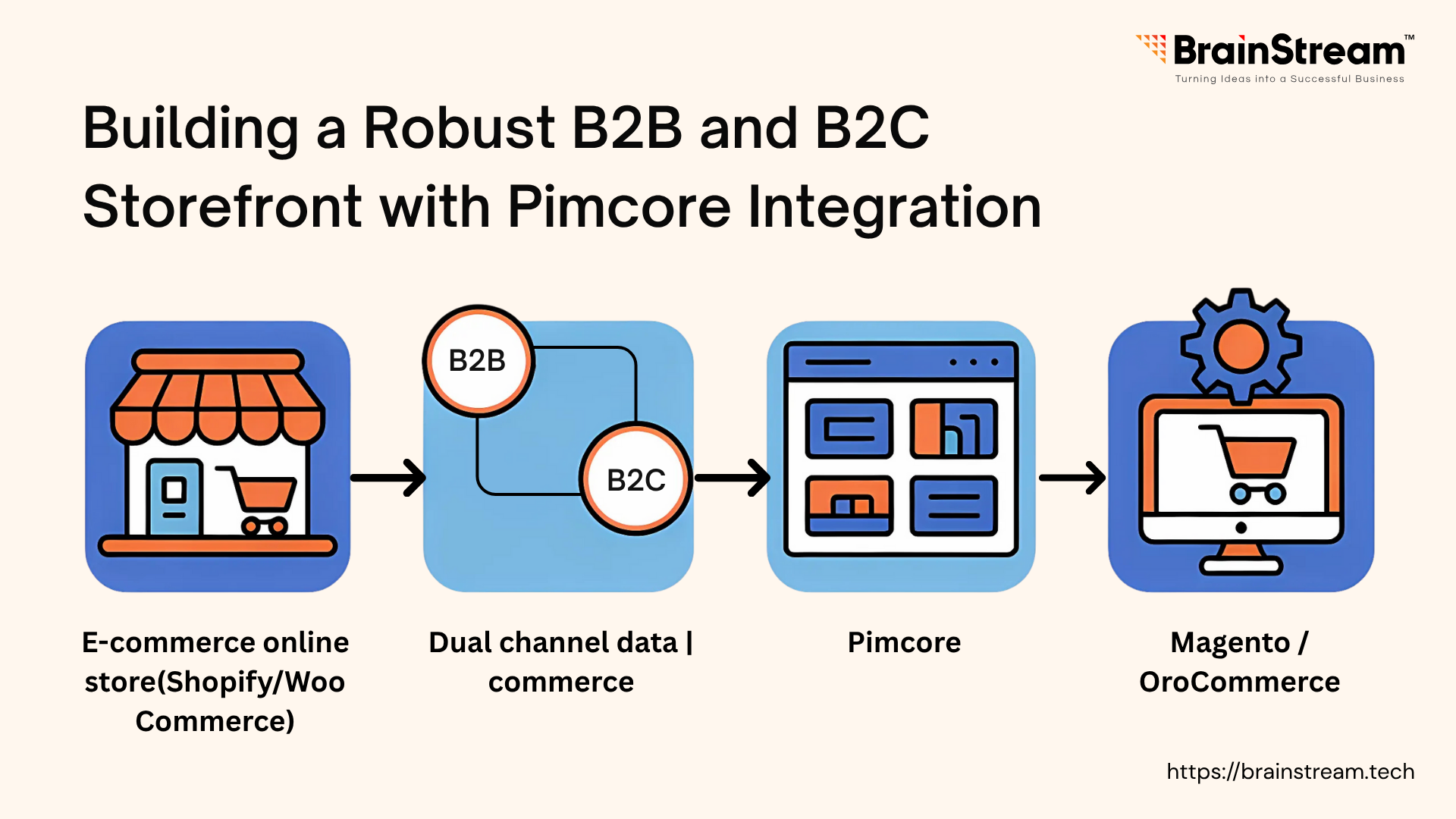
Building a Robust B2B and B2C Storefront with Pimcore Integration

Pimcore combines several essential tools into one platform: Product Information Management (PIM), Digital Asset Management (DAM), Content Management (CMS), and e-commerce functionality. This open-source solution helps businesses manage their product data and digital assets from a central location.

Many companies struggle with scattered product information across different systems. Pimcore solves this by providing a single source of truth for all product data, whether you’re selling to businesses (B2B) or consumers (B2C).

The platform handles large product catalogs well and doesn’t lock you into proprietary systems. Since it’s open-source, you can modify it to fit your specific needs and integrate it with your existing tools.

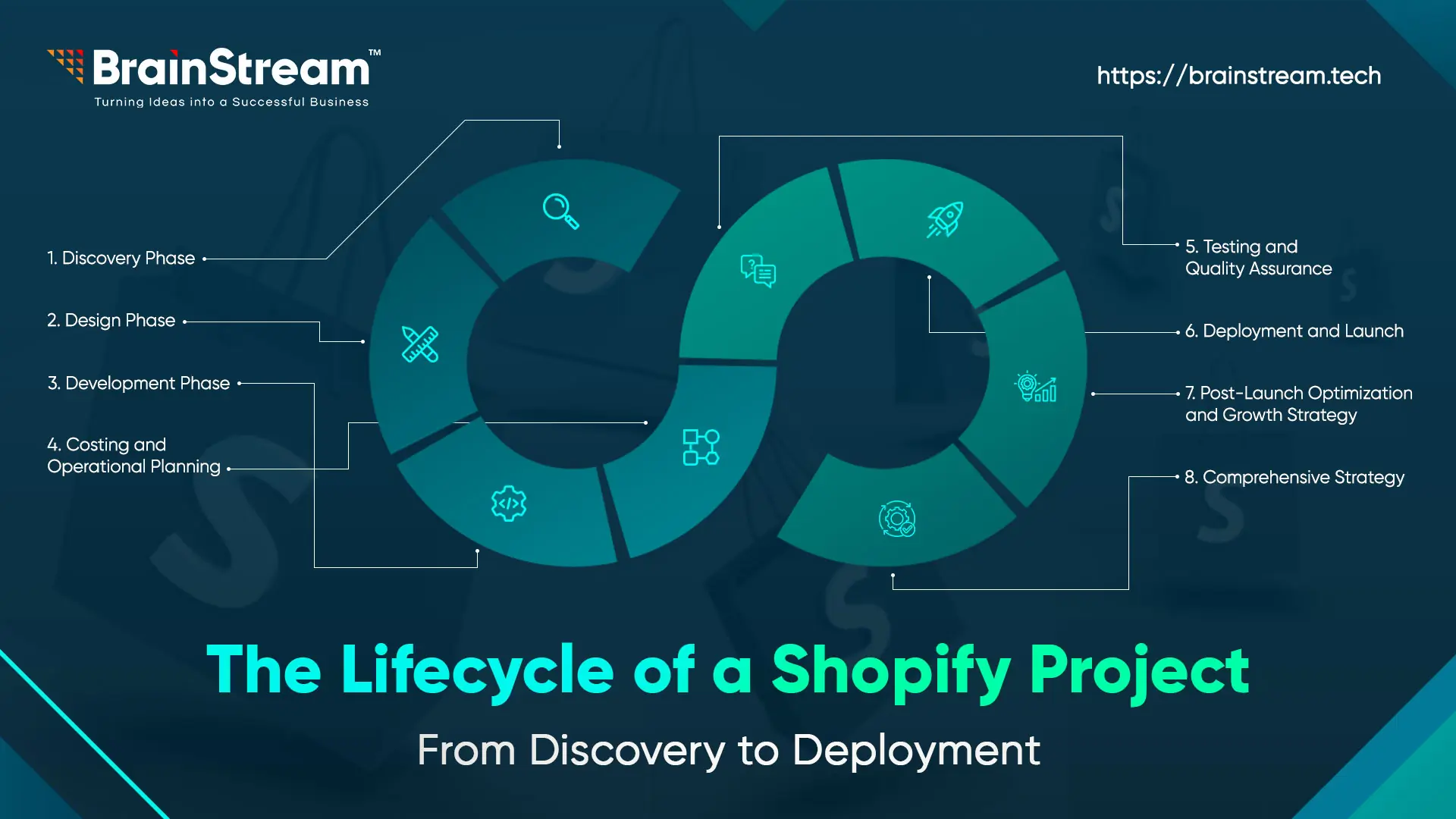
The Lifecycle of a Shopify Project: From Discovery to Deployment

Launching a successful Shopify store is not just about picking a theme and uploading products. It’s a structured process involving technical, financial, operational, and marketing decisions that affect performance and growth. This article outlines each critical stage of a Shopify project lifecycle — from initial discovery to final deployment — while considering real-world business factors like costing, logistics, and post-launch scaling.

Supercharge Your Shopify Store with Free Apps 

In the ever-evolving world of e-commerce, having the right tools can significantly improve your store’s performance, user experience, and conversion rates. Brainstream Technolabs offers a suite of powerful, free Shopify apps designed to address critical touchpoints in the customer journey—from engagement and product discovery to instant support and promotional urgency.

Let’s explore four popular apps and discover how they can elevate your store’s success.

How to Choose the Right Payment Gateway for Your Business?

Picking the right payment gateway can make or break your business. Whether you’re running an online store, offering subscription services, or expanding your brick-and-mortar shop to the web, having a seamless and secure way to accept payments is essential.

But with so many choices out there, how do you find the perfect fit? In this guide, we’ll break it down and help you navigate the key factors to consider when choosing a payment gateway for your business.

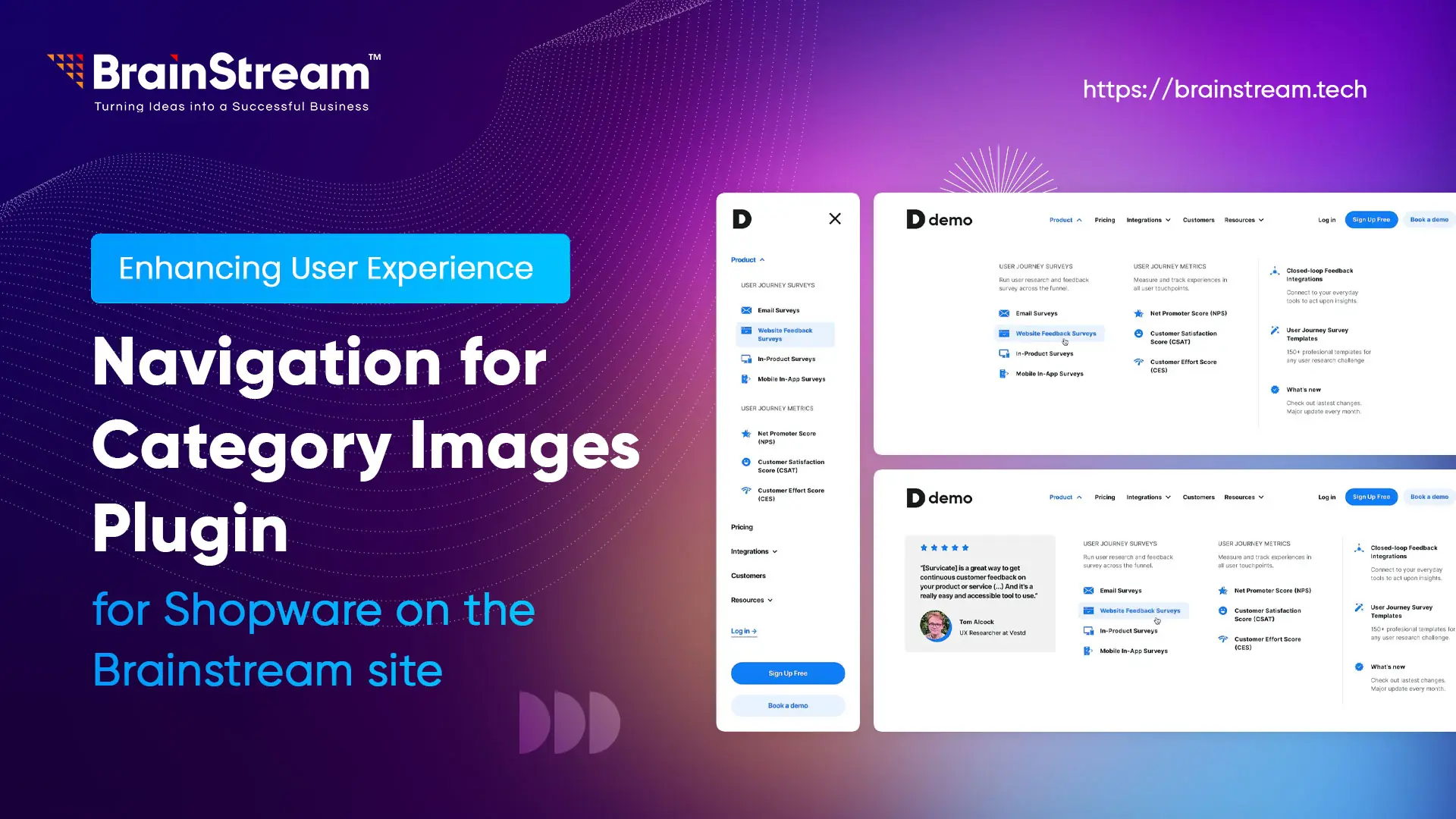
Enhancing User Experience with the “Navigation for Category Images” Plugin for Shopware

In today’s digital world, where e-commerce is booming, customers have become increasingly picky. They want a seamless, visually appealing experience that not only makes shopping easier but also keeps them engaged. The expectation is clear: if a website doesn’t look good and function intuitively, visitors will move on. This means that online store owners must continually rethink their website design, user interface, and overall shopping experience to stay ahead of the curve.

At Brainstream, we understand this need for a modern, intuitive shopping experience. We’ve seen how critical good user interface (UI) design is in converting visitors into customers. And like many developers, we’ve also noticed the recurring challenge that online stores face—navigation. It’s an essential element of any e-commerce platform, yet it often remains static, text-heavy, and uninspiring. So, we set out to solve this problem with one simple goal in mind: to create a more visually dynamic and user-friendly navigation system for Shopware store owners.

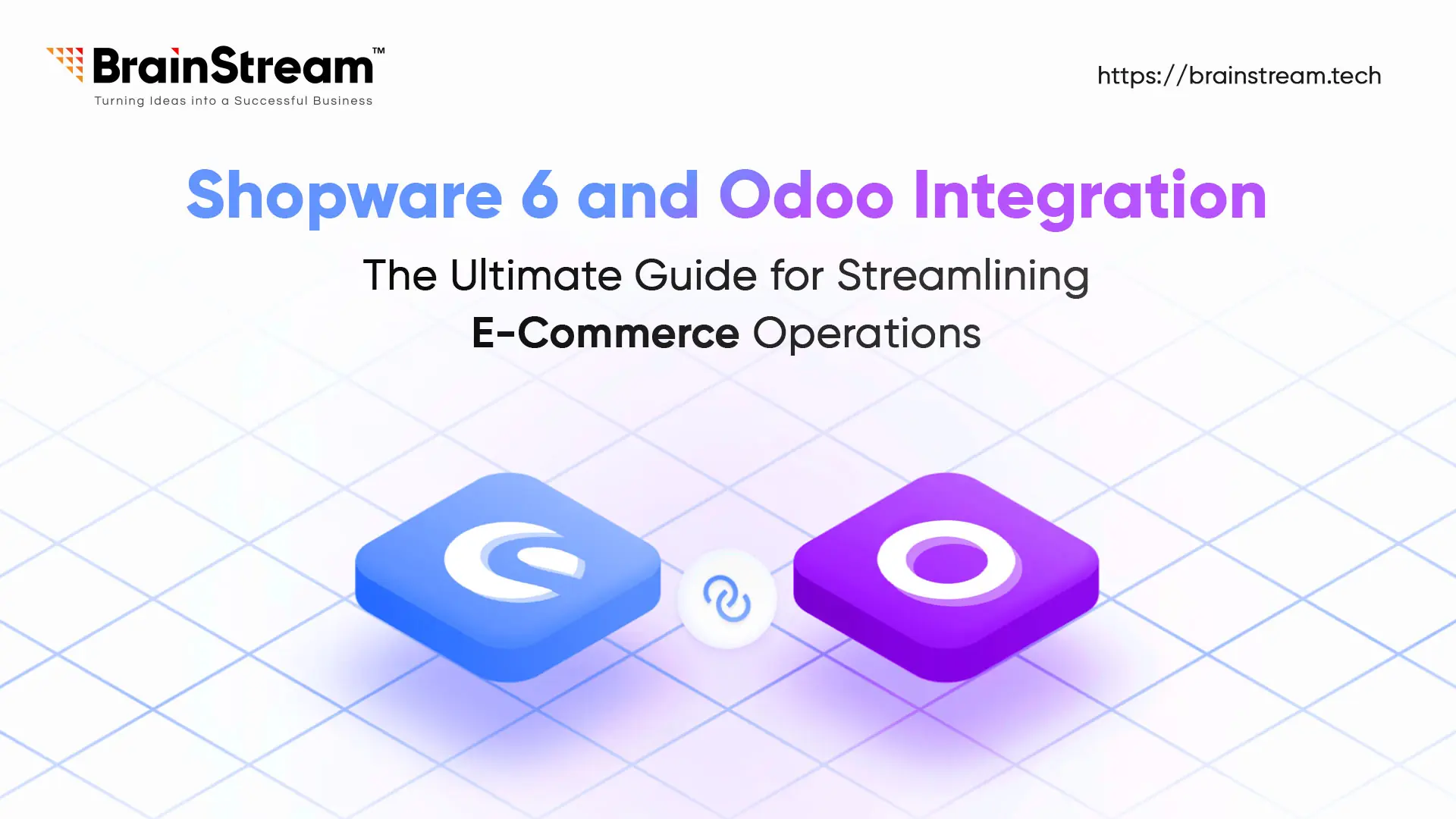
Shopware 6 and Odoo Integration: The Ultimate Guide for Streamlining E-Commerce Operations

In today’s fast-paced digital world, managing an e-commerce store requires more than just a platform to showcase products. You need seamless integration between different systems to handle orders, accounting, and customer relationships. Shopware 6, one of the leading open-source e-commerce platforms, and Odoo, a powerful ERP solution, are two tools that can help you manage your business efficiently. When combined, they can unlock the potential for a fully integrated, streamlined workflow.

We will explore how Shopware 6 and Odoo integration can transform your business processes, providing a step-by-step guide to get started with this powerful combination.