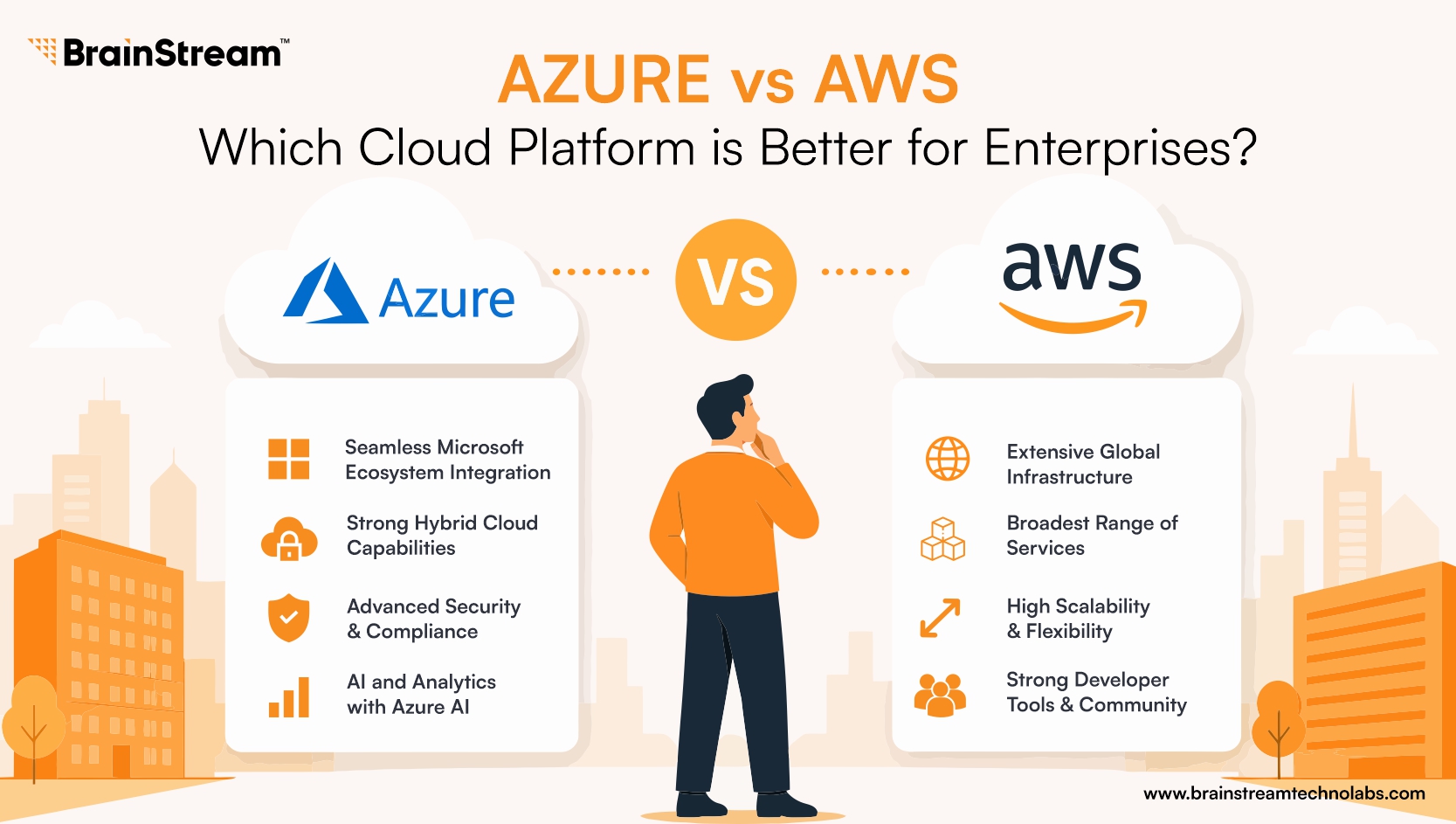
Azure vs AWS: Which Cloud Platform Is Better for Enterprises?
Cloud computing has become a critical part of modern business operations. Enterprises rely on cloud platforms to improve scalability, reduce infrastructure costs, enhance security, and accelerate digital transformation.
However, choosing the right cloud platform is not always easy.
For most organizations, the decision often comes down to two industry leaders: Amazon Web Services (AWS) and Microsoft Azure.
Both platforms offer a wide range of cloud services. Both support enterprise workloads. Both continue to invest heavily in innovation.
So, which platform is better for enterprises?
The answer depends on your business goals, existing technology ecosystem, compliance requirements, and long-term cloud strategy.
In this guide, we will compare Azure and AWS across key areas to help enterprises make an informed decision.
Understanding AWS and Azure
Before comparing the platforms, let’s look at what each offers.
What Is AWS?
Amazon Web Services (AWS) is the world’s largest cloud computing platform.
Launched in 2006, AWS provides hundreds of cloud services, including:
- Computing
- Storage
- Networking
- Databases
- Artificial Intelligence
- Machine Learning
- Analytics
- Security
AWS serves startups, enterprises, and government organizations worldwide.
What Is Microsoft Azure?
Microsoft Azure is Microsoft’s cloud computing platform.
Azure supports businesses with services such as:
- Virtual machines
- Databases
- Networking
- AI and analytics
- DevOps tools
- Hybrid cloud solutions
Azure integrates closely with Microsoft’s enterprise products, making it popular among organizations already using Microsoft technologies.
Azure vs AWS: Quick Comparison
| Feature | AWS | Azure |
|---|---|---|
| Market Presence | Largest cloud provider | Second-largest cloud provider |
| Global Infrastructure | Extensive | Extensive |
| Hybrid Cloud Capabilities | Strong | Excellent |
| Microsoft Integration | Limited | Native |
| AI and Machine Learning | Advanced | Advanced |
| Enterprise Adoption | Very High | Very High |
| Pricing Flexibility | Strong | Strong |
| Developer Ecosystem | Extensive | Extensive |
Both platforms are highly capable. However, specific strengths may make one platform a better fit for your business.
Infrastructure and Global Reach
Infrastructure availability is a key factor for enterprises operating across multiple regions.
AWS Infrastructure
AWS offers one of the largest global cloud networks.
Benefits include:
- Numerous availability zones
- Global data centers
- Low-latency performance
- Strong disaster recovery options
As a result, AWS supports businesses with worldwide operations effectively.
Azure Infrastructure
Azure also maintains a large global presence.
Additionally, Microsoft continues to expand its cloud footprint to support enterprise customers.
Azure is particularly strong in regions where Microsoft enterprise products already have a significant presence.
Winner: AWS
AWS maintains a slight advantage in overall global infrastructure scale and service availability.
Hybrid Cloud Capabilities
Many enterprises are not ready to move everything to the cloud.
Instead, they operate hybrid environments that combine on-premises systems with cloud infrastructure.
Azure Hybrid Cloud
Azure is widely recognized for its hybrid cloud capabilities.
Solutions such as:
- Azure Arc
- Azure Stack
- Microsoft System Center
Allow businesses to manage hybrid environments efficiently.
Because of its Microsoft ecosystem integration, Azure often becomes the preferred choice for hybrid deployments.
AWS Hybrid Cloud
AWS also supports hybrid environments through:
- AWS Outposts
- Storage Gateway
- Direct Connect
These solutions work well, but Azure’s hybrid cloud experience is generally more mature.
Winner: Azure
Azure is often the preferred option for enterprises with hybrid infrastructure requirements.
Enterprise Integration
Technology integration plays a major role in enterprise cloud adoption.
Azure Integration Advantages
Many enterprises already use:
- Microsoft 365
- Windows Server
- Active Directory
- SQL Server
- Power Platform
Azure integrates naturally with these products.
Therefore, migration and management become easier.
AWS Integration Advantages
AWS supports a wide variety of third-party tools and platforms.
It offers flexibility for organizations with diverse technology stacks.
However, businesses heavily invested in Microsoft technologies may find Azure easier to manage.
Winner: Azure
For Microsoft-centric enterprises, Azure offers a clear advantage.
Security and Compliance
Security remains a top priority for enterprises.
Fortunately, both cloud providers invest heavily in security.
AWS Security Features
AWS provides:
- Identity and access management
- Data encryption
- Threat detection
- Compliance certifications
- Security monitoring tools
Azure Security Features
Azure offers:
- Microsoft Defender
- Azure Security Center
- Identity management solutions
- Compliance tools
- Threat intelligence capabilities
Because Microsoft has extensive enterprise security experience, Azure often appeals to organizations with strict compliance requirements.
Winner: Tie
Both platforms provide enterprise-grade security and compliance capabilities.
AI and Machine Learning Services
Artificial Intelligence is becoming a major focus for enterprises.
AWS AI Services
AWS offers services such as:
- Amazon SageMaker
- Rekognition
- Comprehend
- Lex
These tools support advanced AI and machine learning projects.
Azure AI Services
Azure provides:
- Azure AI Studio
- Cognitive Services
- Azure Machine Learning
- OpenAI integrations
Azure has gained significant attention due to its close relationship with OpenAI technologies.
Winner: Azure (for Generative AI)
For enterprises exploring generative AI initiatives, Azure currently offers strong advantages through its AI ecosystem.
Pricing and Cost Management
Cloud costs can quickly increase without proper management.
AWS Pricing
AWS offers:
- Pay-as-you-go pricing
- Reserved instances
- Savings plans
- Cost optimization tools
Azure Pricing
Azure provides:
- Flexible pricing models
- Reserved capacity
- Cost management tools
- Hybrid-use benefits
Organizations already using Microsoft licensing programs often receive additional cost advantages on Azure.
Winner: Depends on Existing Investments
Azure may offer better value for Microsoft-focused businesses, while AWS can be cost-effective for cloud-native organizations.
Which Platform Is Better for Different Enterprise Scenarios?
Choose Azure If:
- Organization uses Microsoft technologies extensively.
- Require strong hybrid cloud capabilities.
- Want seamless integration with Microsoft products.
- Exploring AI initiatives using Microsoft’s ecosystem.
Choose AWS If:
- Need the broadest range of cloud services.
- Operate globally at scale.
- Want maximum flexibility across technology stacks.
- Prioritize cloud-native development.
Common Mistakes Enterprises Make When Choosing a Cloud Platform
Focusing Only on Price
The cheapest option is not always the best long-term solution.
Ignoring Existing Infrastructure
Technology compatibility should influence cloud decisions.
Underestimating Migration Complexity
Cloud migration requires planning, testing, and governance.
Neglecting Long-Term Growth Plans
Choose a platform that supports future business objectives, not just current requirements.
How Cloud Consulting Helps Enterprises Choose the Right Platform?
Selecting a cloud platform involves more than comparing features.
Businesses must evaluate:
- Infrastructure requirements
- Security needs
- Compliance obligations
- AI initiatives
- Cost management goals
This is why many enterprises work with cloud consulting experts and technology advisors.
Professional guidance helps organizations make informed decisions and reduce migration risks.
Conclusion
Both AWS and Azure are powerful cloud platforms capable of supporting enterprise workloads.
AWS remains a leader in cloud innovation, global infrastructure, and service breadth. Meanwhile, Azure offers exceptional enterprise integration, hybrid cloud capabilities, and growing AI advantages.
The right choice depends on your business objectives, existing technology investments, and future growth plans.
Before making a decision, enterprises should evaluate their infrastructure, security requirements, compliance needs, and digital transformation goals.
With the right cloud strategy, either platform can become a strong foundation for long-term business success.
FAQs
Is Azure better than AWS for enterprises?
It depends on business requirements. Azure often excels in Microsoft-centric environments, while AWS provides broader cloud service options.
Which platform is more secure?
Both AWS and Azure offer enterprise-grade security and compliance capabilities.
Is Azure cheaper than AWS?
Pricing varies by workload, usage patterns, and existing licensing agreements.
Which cloud platform is better for AI?
Both are strong choices. However, Azure currently offers notable advantages through its AI ecosystem and OpenAI integrations.
Can enterprises use both AWS and Azure?
Yes. Many organizations adopt a multi-cloud strategy to leverage the strengths of both platforms.

Manish Khilwani
Author
Co-Founder at BrainStream Technolabs, he focuses on building people-first, scalable eCommerce and digital products that help brands grow with clarity and innovation.
Table of contents
BLOGS
Learn & Grow with Us
Get the latest updates on trends and strategies that shape the business world. Our insights are here to keep you informed and inspired.
How Much Does AI Integration into a Symfony Application Cost in 2026?
Adding artificial intelligence to your Symfony application can improve customer…
Modernizing Legacy Symfony Applications with AI: Where to Start
Your Symfony application still runs your business. However, adding features…

Agentic Commerce in 2026: How AI Agents Are Changing Online Shopping
Online shopping is entering a new phase. For years, shoppers…

Top 7 Must-Have Bagisto Extensions to Improve Your eCommerce Store in 2026
Running an online store takes more than adding products and…