AI Chatbots in Healthcare: Benefits and Use Cases That Are Transforming Patient Care
AI Chatbots in Healthcare are changing faster than ever. Patients now expect quick answers, easy appointment booking, and support at any time of the day. At the same time, hospitals and clinics face staff shortages, rising costs, and increasing patient demands.
This is where AI Chatbots in Healthcare make a real difference.
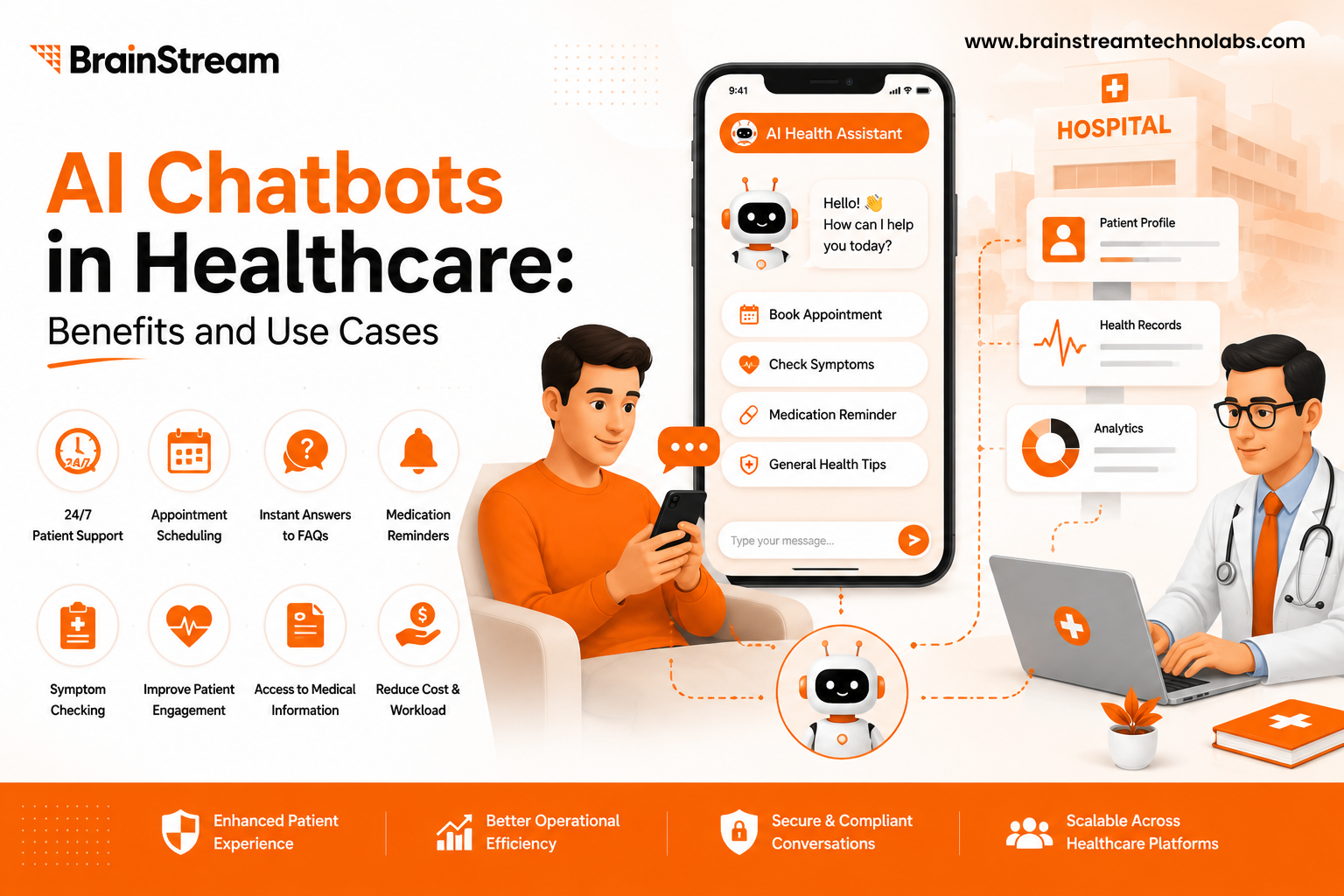
These intelligent virtual assistants help patients get instant support while reducing the workload for healthcare teams. They answer common questions, schedule appointments, send medication reminders, and even assist with symptom checks.
However, AI chatbots are not replacing doctors. Instead, they support healthcare professionals by handling repetitive tasks and improving patient communication.
In this guide, you will learn how AI chatbots work, their biggest benefits, real-world use cases, challenges, and what the future holds.
What Are AI Chatbots in Healthcare?
AI Chatbots in Healthcare are software applications that use artificial intelligence, machine learning, and natural language processing (NLP) to communicate with patients through text or voice.
Unlike traditional chatbots that follow fixed scripts, AI-powered chatbots understand user intent and provide more natural responses.
For example, a patient may ask:
“I’ve had a headache for three days. What should I do?”
Instead of offering a generic reply, an AI chatbot asks follow-up questions and recommends appropriate next steps based on available medical guidelines.
Although these chatbots provide useful information, they should never replace professional medical advice.
How AI Chatbots Work
Modern healthcare chatbots combine several AI technologies.
Natural Language Processing (NLP)
NLP helps the chatbot understand everyday language.
Patients do not need to use medical terms. Instead, they can ask questions naturally.
Machine Learning
Machine learning improves chatbot responses over time.
As more people interact with the system, it learns how to answer questions more accurately.
Healthcare Knowledge Base
Most healthcare chatbots connect with trusted medical databases and hospital systems.
As a result, they provide relevant information based on approved resources.
Electronic Health Record (EHR) Integration
Some advanced chatbots connect with patient records.
Therefore, they can personalize reminders, appointments, and follow-up care.
Key Benefits of AI Chatbots in Healthcare
Healthcare organizations continue to adopt AI because it delivers measurable value.
Here are the biggest benefits.
1. 24/7 Patient Support
Patients often need help outside normal office hours.
AI chatbots answer common questions at any time.
This improves patient satisfaction while reducing unnecessary phone calls.
2. Faster Appointment Scheduling
Booking appointments manually takes time.
Instead, chatbots can:
- Schedule appointments
- Cancel visits
- Reschedule appointments
- Send confirmations
- Provide clinic directions
Consequently, front-desk staff can focus on more important tasks.
3. Reduced Administrative Work
Healthcare workers spend many hours answering repetitive questions.
AI chatbots automate requests like:
- Office hours
- Insurance information
- Billing questions
- Prescription refill requests
- Doctor availability
As a result, staff productivity improves.
4. Better Patient Engagement
Patients often forget appointments or medications.
Chatbots send:
- Medication reminders
- Follow-up notifications
- Vaccination reminders
- Wellness tips
Therefore, patients stay more involved in their healthcare journey.
5. Lower Healthcare Costs
Automation reduces operational expenses.
Hospitals can manage more patient requests without hiring additional support staff.
This creates long-term cost savings.
6. Improved Access to Healthcare
Many rural communities have limited healthcare access.
AI chatbots help patients receive basic guidance before visiting a clinic.
Meanwhile, healthcare providers can prioritize urgent cases.
Common Use Cases of AI Chatbots in Healthcare
Healthcare organizations use AI chatbots in many practical ways.
Symptom Checking
Patients answer a series of questions.
The chatbot then suggests possible next steps.
For example:
- Visit the emergency room
- Schedule a doctor’s appointment
- Monitor symptoms at home
Although helpful, chatbot recommendations should not replace medical diagnosis.
Appointment Management
Patients can:
- Book appointments
- Receive reminders
- Cancel visits
- Join telehealth sessions
This creates a smoother patient experience.
Medication Reminders
Many patients forget daily medications.
AI chatbots send timely reminders and encourage better treatment adherence.
As a result, patient outcomes often improve.
Mental Health Support
Mental health chatbots provide emotional support between therapy sessions.
They can help users:
- Practice breathing exercises
- Track moods
- Learn coping techniques
- Reduce stress
However, severe mental health emergencies always require professional care.
Chronic Disease Management
Patients with long-term conditions need ongoing monitoring.
Chatbots help people manage:
- Diabetes
- High blood pressure
- Asthma
- Heart disease
They also remind patients to check important health measurements regularly.
Insurance and Billing Assistance
Medical billing often confuses patients.
AI chatbots answer common insurance questions and explain billing processes in simple language.
This reduces frustration for both patients and staff.
Real-World Examples of AI Chatbots in Healthcare
Many healthcare providers already use AI chatbots successfully.
| Use Case | How AI Helps |
|---|---|
| Hospitals | Appointment scheduling |
| Clinics | Patient follow-up |
| Pharmacies | Medication reminders |
| Telemedicine | Virtual patient screening |
| Insurance providers | Claims support |
| Wellness apps | Daily health coaching |
These examples show how AI supports healthcare without replacing medical professionals.
Step-by-Step Guide to Implement AI Chatbots in Healthcare
Organizations should follow a structured approach.
Step 1: Identify Patient Needs
Start by understanding the most common patient questions.
Look for repetitive support requests.
Step 2: Choose the Right AI Platform
Select a chatbot platform that supports healthcare compliance and secure data handling.
Step 3: Integrate Existing Systems
Connect the chatbot with:
- Appointment software
- Electronic Health Records
- Patient portals
- CRM systems
This creates a better user experience.
Step 4: Train the Chatbot
Use real patient conversations to improve chatbot accuracy.
Continue updating the knowledge base regularly.
Step 5: Monitor Performance
Track important metrics such as:
- Response time
- Patient satisfaction
- Conversation completion rate
- Appointment bookings
- Support ticket reduction
Continuous improvement delivers better results.
Challenges of AI Chatbots in Healthcare
Although AI offers many benefits, organizations should understand the challenges.
Data Privacy
Healthcare data is highly sensitive.
Organizations must follow regulations like HIPAA to protect patient information.
Limited Medical Judgment
AI cannot replace experienced doctors.
Complex medical decisions still require human expertise.
Accuracy
Incorrect responses may create confusion.
Therefore, healthcare organizations should regularly review chatbot performance.
User Trust
Some patients prefer speaking with healthcare professionals.
Offering both chatbot and human support builds greater confidence.
Best Practices for Successful AI Chatbots
Healthcare providers should follow these recommendations.
- Keep conversations simple.
- Protect patient privacy.
- Use trusted medical information.
- Allow easy transfer to human staff.
- Update chatbot knowledge regularly.
- Test responses before deployment.
- Monitor patient feedback continuously.
These practices improve both safety and user satisfaction.
The Future of AI Chatbots in Healthcare
AI technology continues to improve every year.
Future healthcare chatbots may offer:
- Better voice conversations
- More personalized health recommendations
- Remote patient monitoring
- Wearable device integration
- Predictive healthcare insights
- Multilingual patient support
Additionally, generative AI will help create even more natural conversations while supporting healthcare professionals.
The future looks promising as AI becomes a trusted assistant across the healthcare industry.
Common Mistakes to Avoid
Organizations sometimes make avoidable mistakes when implementing AI chatbots.
Avoid these common issues:
- Expecting AI to replace doctors
- Ignoring patient privacy requirements
- Using outdated medical information
- Failing to update chatbot knowledge
- Making conversations overly complex
- Not providing access to human support
Addressing these challenges early leads to better patient experiences.
Conclusion
AI Chatbots in Healthcare are changing how patients interact with healthcare providers. They improve communication, automate routine tasks, and provide support around the clock.
Although AI cannot replace medical professionals, it serves as a valuable assistant that enhances patient experiences and increases operational efficiency.
Healthcare organizations that adopt AI responsibly can improve patient satisfaction, reduce costs, and streamline daily operations. As AI technology continues to evolve, chatbots will play an even bigger role in delivering accessible, personalized, and efficient healthcare services.
FAQs
Are AI chatbots safe for healthcare?
Yes. They are generally safe when built with strong security measures and accurate medical information. However, healthcare providers should supervise their use.
Can AI chatbots diagnose diseases?
No. AI chatbots can suggest possible next steps based on symptoms, but only licensed healthcare professionals can diagnose medical conditions.
Do AI chatbots replace doctors?
No. They support doctors by handling routine tasks and improving patient communication.
What are the biggest benefits of AI chatbots in healthcare?
The main benefits include faster patient support, lower administrative work, appointment scheduling, medication reminders, and improved patient engagement.
Are AI healthcare chatbots expensive?
Costs vary depending on features and integration needs. However, many organizations recover their investment through increased efficiency and reduced operational costs.

Manish Khilwani
Author
Co-Founder at BrainStream Technolabs, he focuses on building people-first, scalable eCommerce and digital products that help brands grow with clarity and innovation.
Table of contents
BLOGS
Learn & Grow with Us
Get the latest updates on trends and strategies that shape the business world. Our insights are here to keep you informed and inspired.
How Much Does AI Integration into a Symfony Application Cost in 2026?
Adding artificial intelligence to your Symfony application can improve customer…
Modernizing Legacy Symfony Applications with AI: Where to Start
Your Symfony application still runs your business. However, adding features…
Agentic Commerce in 2026: How AI Agents Are Changing Online Shopping
Online shopping is entering a new phase. For years, shoppers…
Top 7 Must-Have Bagisto Extensions to Improve Your eCommerce Store in 2026
Running an online store takes more than adding products and…