










Summary:
The Shopify POS App enables retailers to manage online and in-store sales from a single platform. This guide covers Shopify POS features, benefits, popular integrations, and a detailed comparison with other POS systems to help businesses select the right solution in 2026.
January 21, 2026
In today’s retail world, integrating in-store and online sales is a game-changer. Whether you’re running a brick-and-mortar store, a pop-up stand, or an omnichannel business, having a point-of-sale system that syncs seamlessly with your online store is essential.
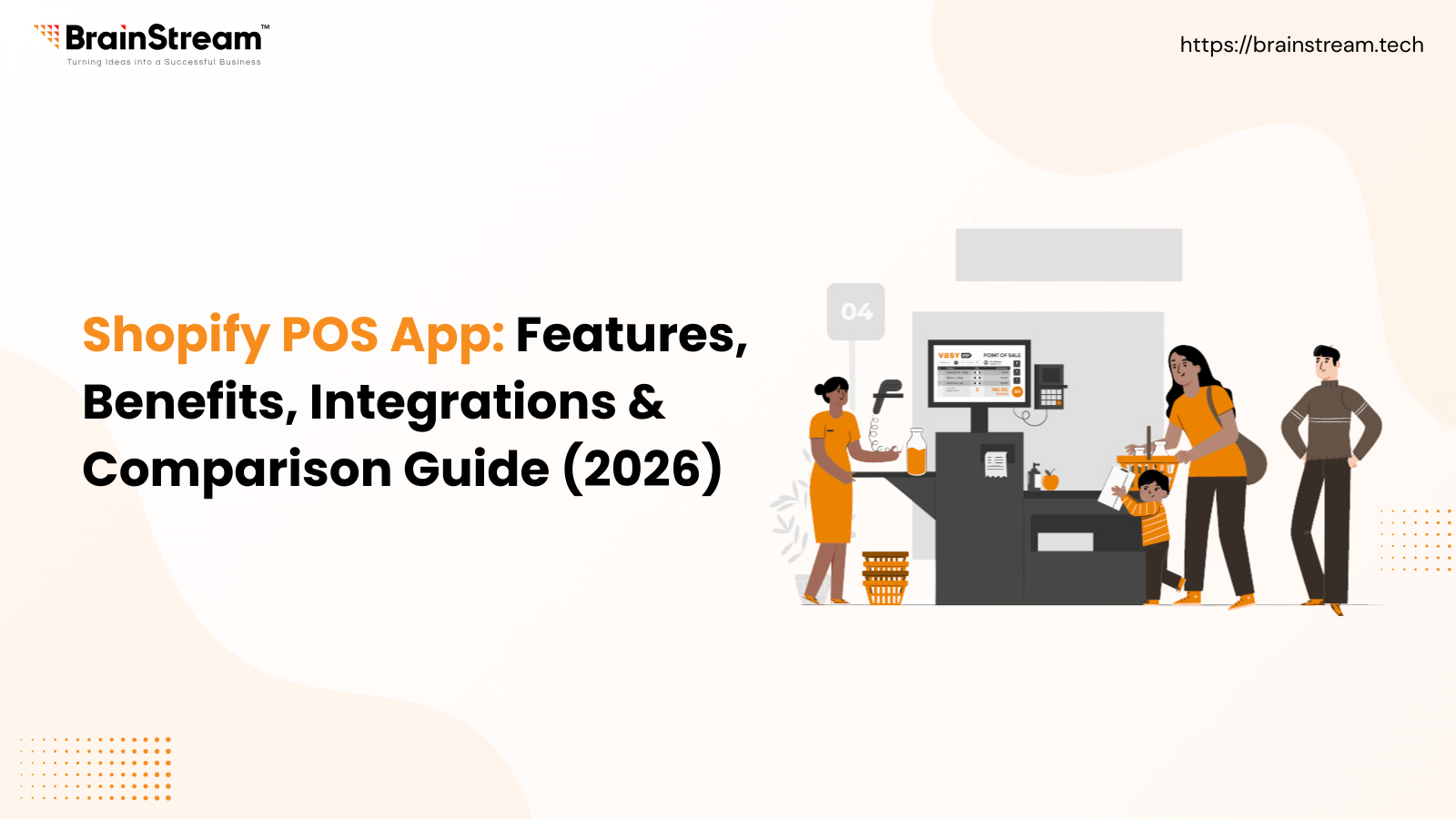
Shopify POS (Point of Sale) is a powerful app that lets merchants manage in-person sales and online store operations from a unified dashboard. Built to work seamlessly with the Shopify eCommerce platform, this POS solution helps streamline sales, inventory, customer data, and reporting in real-time across every sales channel.
In this guide, we’ll explore what Shopify POS is, the standout features it offers, the key benefits for retailers, and some top integrations to enhance your retail operations in 2026.
What Is Shopify POS?
Shopify POS is a point-of-sale application designed to bring your online Shopify store and physical retail locations onto one platform. It lets you accept in-store payments, sync your inventory, manage customers, and view sales analytics, all while keeping everything updated across all channels.
This means whether someone purchases online, at your physical store, or at an event, your inventory and customer profiles stay accurate and unified. You can track orders, accept multiple payment methods, handle returns, and offer local pickup or delivery directly using the Shopify POS system.
Powerful Features of the Shopify POS App
1. Unified Customer Data
When customers purchase, whether online or in-store, Shopify POS automatically captures and updates their profiles. This includes contact details, purchase history, and shopping preferences. Using this data, you can craft personalized promotions and offers that boost engagement and loyalty.
2. Omnichannel Selling
Shopify POS keeps your online store and physical outlets connected. Customers can buy online and pick up in store, return items at any location, or browse inventory across channels. This flexibility leads to better user experience and higher customer satisfaction.
3. Real-Time Inventory Management
Inventory levels update automatically whenever a sale is made, regardless of where the sale takes place. This prevents overselling, helps manage stock across multiple locations, and triggers low-stock alerts so you never run out unexpectedly.
4. Customizable Interface
The POS home screen is customizable, allowing your team to pin frequently used functions, discounts, and high-selling products for faster checkouts. This saves time and enhances in-store efficiency.
5. Seamless Payments
Shopify POS supports multiple payment methods, from contactless and card payments to digital wallets. Transactions are processed smoothly, and funds are directly deposited into your business account, all without third-party gatekeepers.
6. Multi-Location Management
Whether you manage one outlet or many, Shopify POS lets you control inventory, sales, and customer data centrally. This makes scaling your business simpler and more efficient.
7. Smart Product Suggestions
The app can recommend complementary products during checkout based on customer behaviour and purchase history, helping you boost upsells and cross-sells.
8. Detailed Analytics
Shopify POS includes sales reports, product performance stats, staff performance data, and trend insights. These analytics help you make informed decisions to improve sales and optimize operations.
9. Offline Mode
Even without internet access, the Shopify POS app continues to work. Offline sales automatically sync once your connection is restored, ensuring no lost transactions.
10. Advanced Discounts and Staff Controls
Design custom discounts, schedule promotional offers, assign staff roles, and track permissions all from within the POS system.
Benefits of Using Shopify POS for Retail
Boosted Efficiency
By centralizing sales, inventory, and customer data in one system, Shopify POS reduces manual work and errors, letting you focus on growing your retail operation.
Personalized Customer Experience
Auto-generated customer profiles make it easier to tailor offers and provide recommendations that improve customer loyalty and repeat purchases.
Faster, Frictionless Checkout
Multiple payment acceptance options, mobile compatibility, and saved cart capabilities speed up the checkout process, increasing conversions and reducing queues.
Smart Inventory Control
Real-time stock updates and cross-location tracking allow you to avoid stockouts, improve cash flow, and fulfil orders more efficiently.
Data-Driven Decisions
With built-in analytics and reporting, you get insights into sales trends, product performance, and customer behaviour — helping you make business decisions with confidence.
Better Staff Management
Assign roles, monitor performance, and optimize your team’s workflow directly from the POS platform.
Top Shopify POS App Integrations
To elevate your Shopify POS experience, you can integrate additional tools that enhance sales and engagement:
LoyaltyLion
A loyalty rewards app that lets you create VIP tiers and encourage repeat purchases with rewards points and offers.
TapMango
Combines SMS, email marketing, rewards, and branded apps to deepen customer engagement, ideal for physical retail stores.
Smile.io
Focuses on reward points and referral incentives to drive customer retention.
ConnectPOS
A robust interface for multi-location retailers, offering advanced receipts, tax handling, payment options, and more.
Rise.ai
Enhances gift card and store credit functionality, helping you boost conversions and create thoughtful customer incentives.
Sesami
Perfect for appointment-based retail or personal services, makes scheduling seamless with POS system integration.
(Integrations are based on popular tools often recommended alongside Shopify POS to expand functionality.)
Shopify POS App vs. Other POS Systems
| Feature | Shopify POS App | Other POS Systems |
| Omnichannel Selling | Fully integrated with the Shopify online store | Limited or requires third-party tools |
| Inventory Sync | Real-time sync across online & offline channels | Often manual or delayed sync |
| Customer Profiles | Unified customer data (online + in-store) | Separate customer records |
| Ease of Use | Beginner-friendly, intuitive interface | Often complex with a learning curve |
| Setup Time | Quick setup with minimal configuration | Longer setup and onboarding |
| Payment Options | Multiple payment methods + Shopify Payments | Depends on the provider, often limited |
| Scalability | Easily scales with business growth | Scaling may require upgrades or migration |
| Reporting & Analytics | Centralized reports across all channels | Fragmented reporting |
| Integrations | Large Shopify App Store ecosystem | Limited or costly integrations |
| Cost Efficiency | Affordable with Shopify plans | Can be expensive with add-ons |
| Best For | Shopify-based and omnichannel businesses | Standalone physical stores |
Conclusion
Shopify POS bridges the gap between online and in-store selling, giving retailers a holistic platform to manage sales, inventory, customers, and operations in one place. With features like omnichannel selling, real-time syncing, advanced analytics, and a customizable interface, it’s an ideal choice for modern retail businesses aiming to unify their commerce channels and boost operational efficiency.
Whether you’re a small boutique, a multi-location retailer, or an omnichannel brand, Shopify POS helps you deliver seamless shopping experiences while optimizing business performance, making it a smart investment for 2026 and beyond.

FAQ
1: What is the Shopify POS App?
The Shopify POS App is a point-of-sale system that allows retailers to sell in physical locations while staying fully connected to their Shopify online store, with real-time syncing of inventory, orders, and customer data.
2: How is Shopify POS different from other POS systems?
Shopify POS is built for omnichannel selling, offering seamless integration between online and offline stores, unified customer profiles, and real-time inventory updates, features often missing in traditional POS systems.
3: Is Shopify POS suitable for small and growing businesses?
Yes, Shopify POS is ideal for small and growing businesses due to its easy setup, scalable infrastructure, and ability to support multiple store locations.
4: Does Shopify POS work without an internet connection?
Yes, Shopify POS includes an offline mode that allows merchants to continue processing sales when the internet is unavailable. Data syncs automatically once the connection is restored.
5: Can Shopify POS manage multiple store locations?
Yes, Shopify POS supports multi-location management, enabling merchants to control inventory, staff permissions, and sales data from a centralized dashboard.
6: What integrations are available for Shopify POS?
Shopify POS integrates with various apps for loyalty programs, marketing, gift cards, appointments, and advanced POS features through the Shopify App Store.

Sagar 

Sagar is a Shopify developer who enjoys building scalable eCommerce solutions and occasionally writes technical blogs to share practical insights from real-world development experience.
Share :


Related Blog
Shopify
Top 10+ Shopify Wholesale Apps in 2026
Ultimate Guide to the Best B2B & Wholesale Solutions for Your Shopify Store Wholesale functionality allows Shopify merchants to sell products in large quantities, offer tiered pricing, manage business customers, and streamline bulk order workflows, all without running a separate...

Shopify
Beginner’s Guide to Setting Up a Shopify Fashion and Apparel Store in 2026
If you’re a fashion business owner planning to take your brand online, choosing the right eCommerce platform is the foundation of your success. With multiple platforms available, deciding where to build your fashion store can feel overwhelming. However, Shopify continues...

Shopify
A Complete Guide to Headless Shopify: Unlocking the Power of Hydrogen & Oxygen
If you’re exploring Headless Shopify, chances are you’re already facing challenges like limited design flexibility, slow storefront performance, complex third-party integrations, or scalability issues with your existing Shopify setup. Traditional theme-based stores often struggle to keep up with fast-growing businesses...


Keep up-to-date with our newsletter.
Sign up for our newsletter to receive weekly updates and news directly to your inbox.