














Summary:
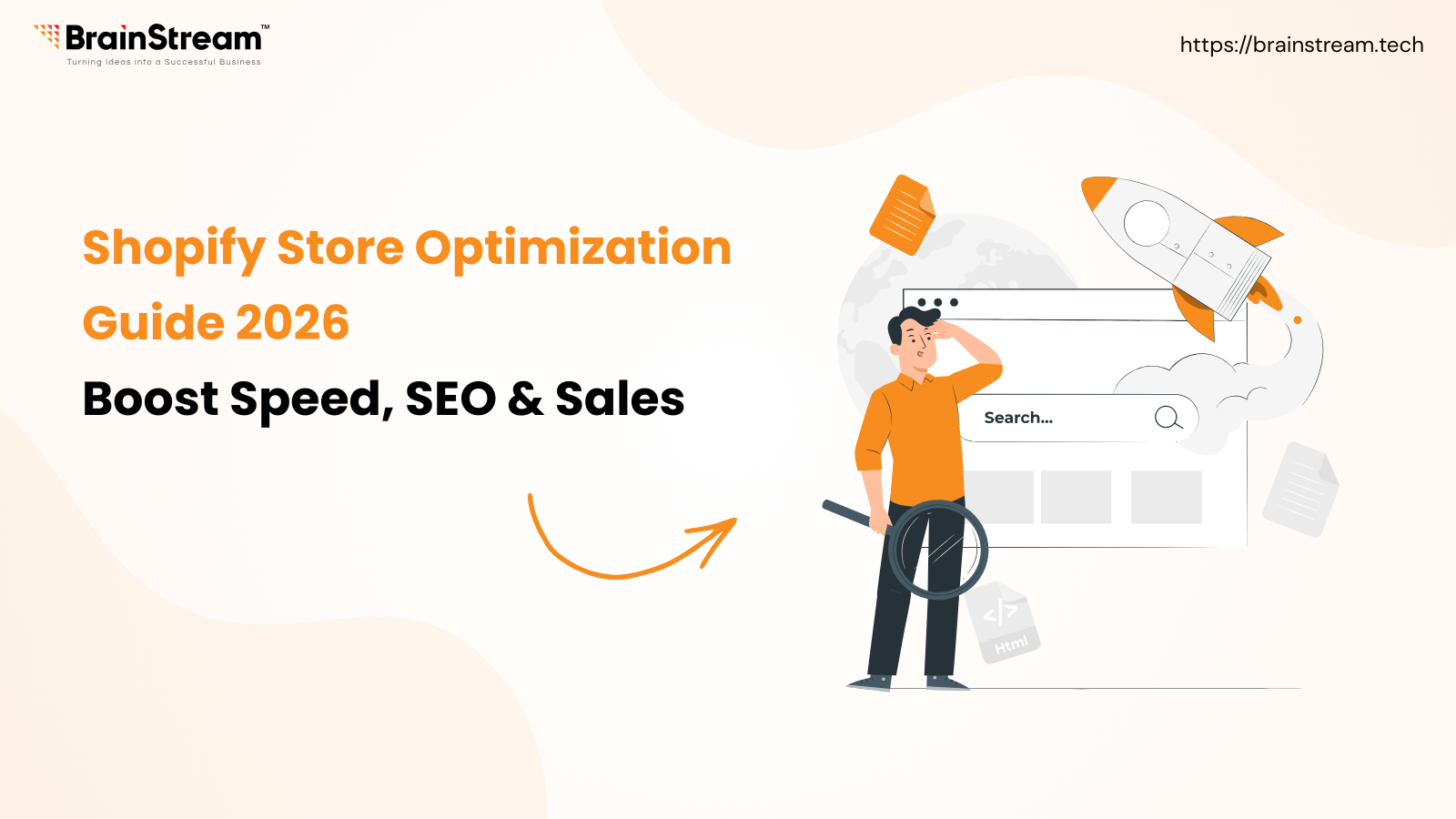
Discover a complete guide to Shopify store optimization in 2026. Improve speed, SEO, conversions, and multi-channel performance using AI, headless Shopify, and advanced growth strategies to maximize traffic and sales.
January 16, 2026
Is your Shopify store struggling with slow loading times, low traffic, or declining conversions? In today’s competitive eCommerce landscape, global online sales are projected to jump from $4.12 trillion in 2024 to $8.5 trillion by 2032. Shopify powers over 10% of the global eCommerce market and nearly 29% of U.S. stores, making store optimization a crucial factor in long-term growth.
This guide covers everything from Shopify speed optimization, SEO enhancements, and conversion strategies to advanced techniques like AI predictive analytics, multi-channel integration, and headless Shopify solutions. By following these strategies, you’ll improve user experience, increase search visibility, and drive sustainable growth.
What is Shopify Store Optimization and Why It Matters
Shopify store optimization is the process of improving your store’s speed, usability, and search engine performance. This involves optimizing images, reducing page load times, enhancing product page SEO, refining checkout flow, and designing intuitive user experiences.
A well-optimized store improves user engagement, keeps visitors longer, and encourages repeat purchases. Even a one-second reduction in page load time can increase conversions by 7–10%, highlighting why store optimization is essential for growth in today’s eCommerce market.
Why Shopify Store Optimization is Critical for Growth
- Higher Search Rankings: Optimized Shopify stores appear higher in search engine results. By targeting relevant keywords, implementing structured data, and maintaining a clean site architecture, your products become more visible to users actively searching for them. High visibility leads to organic traffic, reduces reliance on paid ads, and improves brand authority over time.
- Faster Load Times: Speed is a major factor for conversions and user retention. A slow site frustrates visitors, increasing bounce rates. Optimizing images, compressing scripts, and leveraging caching reduces page load times, ensuring that users can browse and purchase without delays. Fast-loading sites also rank better in Google search, creating a dual benefit.
- Improved User Experience: Seamless navigation, mobile-friendly layouts, and clear product pages make shopping easier. Users are more likely to complete purchases when they can find products quickly and enjoy a smooth, intuitive browsing experience. Enhancing UX also fosters customer loyalty and encourages repeat visits.
- Scalable Growth: Optimization ensures your store can handle high traffic volumes, international expansion, and feature-rich catalogs without slowing down. Scalable stores maintain performance even during seasonal spikes or marketing campaigns, preventing lost sales and server issues.
Shopify SEO Strategies to Increase Organic Traffic
Search Engine Optimization (SEO) ensures your Shopify store is discoverable and drives consistent, high-quality traffic.
Technical SEO
- Site Structure & Navigation: Organize your products into categories and subcategories logically. A clear hierarchy helps search engines index your pages and improves user navigation. For example, grouping products by type or collection allows customers to find what they need quickly.
- URL & Metadata Optimization: Clean, descriptive URLs with relevant keywords improve indexing and click-through rates. Meta titles and descriptions should be optimized for search intent, encouraging users to click while providing accurate information about the page content.
- Sitemaps & Schema Markup: XML sitemaps guide search engines through your store’s structure. Adding schema markup to products, reviews, and pricing enhances search listings with rich snippets, which can increase visibility and click-through rates.
- Mobile Optimization: With mobile-first indexing, responsive design is essential. Mobile users expect smooth navigation, readable text, and fast-loading pages. Mobile optimization also improves Core Web Vitals, positively affecting SEO performance.
On-Page SEO
- Keyword Optimization: Use primary and long-tail keywords naturally in product titles, descriptions, and headings. Focus on solving customer queries to improve relevance and increase search rankings.
- High-Quality Images & Alt Text: Descriptive alt text helps search engines understand images and improves accessibility. Optimized images also reduce load times, enhancing user experience and SEO performance.
- Internal Linking: Linking related products and categories strengthens site architecture, guides users, and distributes link equity across your site, enhancing both SEO and navigation.
Emerging SEO Trends
- Voice Search Optimization: Optimize for conversational search queries. Phrases like “best eco-friendly water bottles near me” help capture emerging voice search traffic.
- AI-Driven Content: Use AI tools to generate unique product descriptions and blog content while maintaining human editing for quality and relevance.
- Core Web Vitals: Focus on LCP, FID, and CLS to improve page speed, interactivity, and visual stability for both SEO and user experience.
Shopify Speed Optimization: Enhance Store Performance
Speed directly impacts conversions, user satisfaction, and search rankings.
- Lightweight, Mobile-First Themes: Choose responsive themes optimized for speed. Avoid themes with unnecessary scripts, animations, or heavy features. Fast themes provide a smoother browsing experience and improve SEO rankings.
- Image Compression & Script Minification: Convert images to modern formats like WebP and compress them using tools like TinyPNG. Minify CSS and JavaScript files to reduce page weight, enhancing load times without sacrificing design quality.
- Limit Third-Party Apps: Each app adds scripts that can slow your store. Retain only essential apps and remove redundant or unused plugins to keep your site fast.
- Lazy Loading: Load images and videos only when visible to the user. This reduces initial page load time and ensures faster first-contentful paint (FCP).
- Content Delivery Network (CDN): Use a CDN like Cloudflare to serve content from servers closest to the user, reducing latency and improving global performance.
- Headless Shopify: Decoupling frontend and backend enhances speed and flexibility. API-driven frontends load only necessary content, providing near-instant page loads even for large catalogs.
Conversion Rate Optimization (CRO) for Shopify
CRO focuses on converting visitors into paying customers.
- Simplify Checkout: Reduce the number of steps, remove unnecessary fields, and enable guest checkout. Streamlining the checkout process reduces cart abandonment and improves conversion rates.
- Clear Call-to-Actions (CTAs): Buttons like “Add to Cart” and “Buy Now” should be prominently visible and easy to click. Effective CTAs guide users toward completing a purchase.
- Trust Signals: Display reviews, ratings, testimonials, secure payment badges, and return policies to reassure buyers. Trust signals increase buyer confidence, particularly for first-time customers.
- Upsell & Cross-Sell: Recommend complementary or higher-value products on product pages and during checkout. These strategies increase average order value and maximize revenue per customer.
AI Predictive Analytics for Shopify Optimization
AI and predictive analytics allow Shopify stores to anticipate customer needs. By analyzing browsing behavior, purchase history, and product preferences, AI can recommend relevant products, optimize pricing dynamically, and forecast inventory demand.
Automated chatbots provide instant customer support, reducing friction during the purchase journey. Dynamic pricing adjusts in real-time based on market trends, inventory levels, and competitor prices, balancing margin and conversion opportunities. Predictive analytics enhances personalization, improves inventory management, and drives higher engagement.
Headless Shopify and API-Level Optimization
Headless Shopify separates the frontend from Shopify’s backend, allowing ultra-fast load times and flexible design. API-level queries fetch only the necessary data, reducing server overhead and improving performance.
Benefits include:
- Lightning-Fast Page Delivery: Pages load in under a second, even with large catalogs.
- Design Flexibility: Customize the frontend independently without affecting backend functionality.
- Scalable Architecture: Easily handle high-traffic events, seasonal spikes, or global expansion without compromising performance.
Multi-Channel Shopify Optimization
Expanding beyond your Shopify store helps capture more sales:
- Social Commerce: Sell on Instagram, Facebook, and TikTok Shops. Seamless integration allows users to purchase without leaving their preferred social platform.
- Marketplaces: Extend your reach with Amazon, eBay, and Etsy. Unified inventory and order management prevent oversells and simplify fulfilment.
- Optimized Product Feeds: Accurate titles, descriptions, and identifiers ensure better visibility in paid ads and marketplace searches.
Multi-channel optimization increases traffic, enhances user engagement, and improves conversion rates across platforms.
Shopify Analytics & Continuous Monitoring
Optimization requires constant measurement and adjustment:
- GA4 & Shopify Reports: Track sales, traffic sources, user behavior, and conversion events to make data-driven decisions.
- Heatmaps & Session Recording: Tools like Hotjar reveal where users drop off or hesitate, guiding UI improvements.
- Core Web Vitals: Monitor LCP, FID, and CLS to maintain high search rankings.
- A/B Testing: Test variations of product pages, landing pages, and CTAs to continuously improve conversions.
Best Shopify Store Optimization Tools, Apps, and Templates
| Tool / App | Purpose | Key Benefits |
| TinyIMG | Image optimization & lazy loading | Reduces load time, improves Core Web Vitals |
| Tapita | Script & theme optimization | Faster performance, better Lighthouse scores |
| SEOAnt | SEO audits & schema implementation | Higher rankings, structured data compliance |
| Booster Theme | Pre-optimized Shopify theme | Lightweight, fast, mobile-friendly |
| Plug in SEO | SEO automation | Detects and fixes SEO issues automatically |
| Avada Suite | Theme & page builder | Custom designs without slowing down site |
Sustainable Shopify Store Optimization
Sustainability builds trust and loyalty:
- Eco-Friendly Hosting & Lightweight Themes: Reduce carbon footprint while improving speed scores.
- Sustainable Packaging & Carbon Offsets: Environmentally conscious practices enhance brand reputation.
- Transparent Supply Chains: Highlighting ethical sourcing increases dwell time and backlinks.
Sustainability not only resonates with eco-conscious buyers but also improves SEO and conversions.
Shopify Growth Hacks for 2026
- Micro-Influencer Collaborations: Smaller influencers drive authentic engagement and conversions.
- Flash Sale Funnels: Limited-time promotions create urgency and boost sales.
- User-Generated Content (UGC) Campaigns: Encourage reviews, social posts, and testimonials for social proof.
- Subscription & Bundling Models: Increase customer lifetime value and retention with recurring orders or bundled offerings.

Conclusion
Shopify store optimization combines speed, SEO, UX, AI analytics, and multi-channel strategy. Implementing these techniques improves traffic, rankings, and conversions. Continuous monitoring, analytics, and adopting the latest tools ensure long-term, scalable growth for your Shopify store.
FAQs
Q1: How can I speed up my Shopify store?
A1: Optimize images, minify scripts, limit apps, use lazy loading, leverage CDNs, and choose lightweight themes.
Q2: How does Shopify SEO improve traffic?
A2: Through technical SEO, on-page optimization, structured data, and trending strategies like AI content and voice search.
Q3: What is CRO in Shopify?
A3: Conversion Rate Optimization improves checkout, navigation, and trust signals to convert visitors into buyers.
Q4: Why use headless Shopify?
A4: Separating frontend and backend boosts speed, design flexibility, and scalability for large stores.

Sagar 

Sagar is a Shopify developer who enjoys building scalable eCommerce solutions and occasionally writes technical blogs to share practical insights from real-world development experience.
Share :


Related Blog
Shopify
Top 10+ Shopify Wholesale Apps in 2026
Ultimate Guide to the Best B2B & Wholesale Solutions for Your Shopify Store Wholesale functionality allows Shopify merchants to sell products in large quantities, offer tiered pricing, manage business customers, and streamline bulk order workflows, all without running a separate...
Shopify
Shopify POS App: Features, Benefits, Integrations & Comparison Guide (2026)
In today’s retail world, integrating in-store and online sales is a game-changer. Whether you’re running a brick-and-mortar store, a pop-up stand, or an omnichannel business, having a point-of-sale system that syncs seamlessly with your online store is essential. Shopify POS...
Shopify
Beginner’s Guide to Setting Up a Shopify Fashion and Apparel Store in 2026
If you’re a fashion business owner planning to take your brand online, choosing the right eCommerce platform is the foundation of your success. With multiple platforms available, deciding where to build your fashion store can feel overwhelming. However, Shopify continues...


Keep up-to-date with our newsletter.
Sign up for our newsletter to receive weekly updates and news directly to your inbox.