















Summary:
Headless Shopify is a modern eCommerce approach that separates the storefront from Shopify’s backend, enabling greater flexibility, faster performance, and seamless scalability. This guide explains how Shopify Hydrogen and Oxygen power headless commerce, their benefits, development process, costs, and future trends to help businesses build high-performing, future-ready online stores.
January 20, 2026
If you’re exploring Headless Shopify, chances are you’re already facing challenges like limited design flexibility, slow storefront performance, complex third-party integrations, or scalability issues with your existing Shopify setup. Traditional theme-based stores often struggle to keep up with fast-growing businesses that demand custom user experiences and omnichannel commerce.
This is where Headless Shopifycomes into play.
In this guide, we’ll walk you through everything you need to know about Headless Shopify, what it is, how it works, why Hydrogen and Oxygen matter, real-world use cases, development steps, cost considerations, and future trends. Let’s dive in.
What Is Headless Shopify?
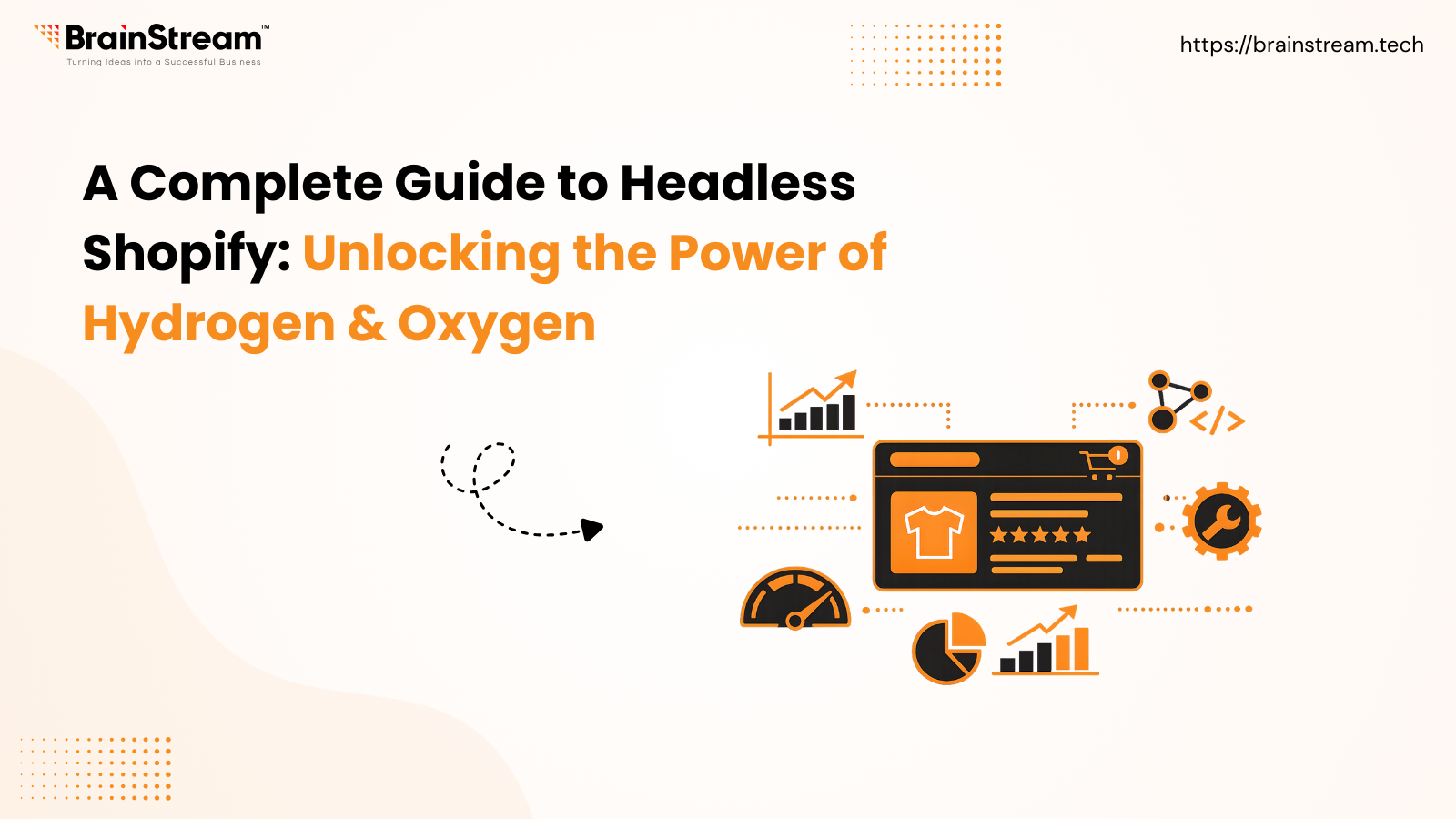
Headless Shopify is an advanced eCommerce architecture where the frontend (storefront)is separated from the backend (commerce engine). Instead of relying on Shopify themes for presentation, developers build a fully custom frontend that communicates with Shopify using APIs.
This approach allows businesses to:
- Design unique shopping experiences
- Improve website speed and performance
- Scale easily across regions and channels
- Integrate best-of-breed tools without restrictions
With Headless Shopify, you continue to benefit from Shopify’s powerful backend, product management, inventory, payments, and checkout, while gaining full control over how customers interact with your brand.
How Headless Shopify Works
The Headless Shopify architecture consists of two main layers:
1. Shopify Backend
Shopify handles:
- Product and inventory management
- Order processing
- Payments and checkout
- Customer data
- Admin and reporting
All commerce operations remain secure and stable within Shopify.
2. Custom Frontend via APIs
The frontend is built using modern frameworks and connects to Shopify through APIs such as:
- Storefront API
- Admin API
This setup enables different customer touchpoints, such as web, mobile apps, kiosks, POS systems, or even voice assistants, to communicate with the same Shopify backend.
Role of Hydrogen and Oxygen in Headless Shopify
Shopify introduced Hydrogenand Oxygenspecifically to simplify headless storefront development.
What Is Shopify Hydrogen?
Hydrogen is a React-based framework designed for building fast, scalable, and SEO-friendly Shopify storefronts. It provides:
- Pre-built commerce components
- Server-side rendering (SSR)
- Easy integration with Shopify APIs
What Is Shopify Oxygen?
Oxygen is Shopify’s global hosting platform for Hydrogen storefronts. It manages:
- Deployment
- Performance optimization
- Security
- Scaling
Together, Hydrogen and Oxygen remove the complexity of infrastructure management, allowing developers to focus on building exceptional user experiences.
Tip: Without Hydrogen and Oxygen, headless development can become expensive, slower, and harder to maintain due to infrastructure, performance, and security challenges.
Real-World Use Cases of Headless Shopify
1. Patta x Tommy Hilfiger
This collaboration required visually rich content, including HD videos and immersive animations. Traditional storefronts struggled with performance.
Solution:
Headless Shopify allowed the team to deliver high-quality visuals without sacrificing site speed, resulting in a seamless shopping experience.
2. Drake Related
Drake consolidated multiple brands under a single digital ecosystem with creative storytelling and dynamic content.
Solution:
Using Headless Shopify, the team synchronised inventory and backend operations while delivering a unique, immersive frontend experience.
3. Nour Hammour
The luxury outerwear brand sought to replicate the in-store experience online, featuring premium visuals, intuitive navigation, and seamless performance.
Solution:
Headless Shopify enabled a highly customised, fast, and visually engaging storefront that aligns with the brand’s luxury positioning.
Key Considerations Before Implementing Headless Shopify
1. Higher Technical Complexity
Managing a custom frontend requires regular maintenance and updates. Both frontend and backend must be optimised continuously.
2. Skilled Development Team
You need developers experienced in:
- Frontend frameworks (React, Hydrogen)
- Shopify APIs
- Performance optimization
Working with a Shopify consulting or development partner can significantly reduce risk.
3. Security Responsibilities
API keys, customer data, and integrations must be protected following best security practices and compliance standards.
4. Increased Initial Investment
Headless Shopify typically costs more upfront than theme-based development, but offers long-term scalability and flexibility.
5. Performance Optimisation
Image optimisation, caching, and minimising API calls are crucial for achieving the best results.
Why Use Hydrogen & Oxygen for Headless Shopify?
1. Maximum Flexibility & Customization
- Build fully custom storefronts
- Personalize experiences for different audiences
- Integrate CMS, CRM, ERP, or DXP platforms easily
2. Enhanced Security
- Shopify-grade backend security
- Secure API communication
- Reduced risk of frontend vulnerabilities
3. Superior Performance & Scalability
- Server-side rendering improves SEO
- Faster page loads
- Handles traffic spikes effortlessly
4. Better Developer Experience
- Pre-built components speed up development
- Strong documentation and community support
- Faster iteration and deployment cycles
Steps to Build a Headless Shopify Store Using Hydrogen &; Oxygen
Step 1: Shopify Store Setup
Create a new Shopify store or use an existing one. Shopify Plus is recommended for advanced headless capabilities.
Step 2: Install Hydrogen CLI
Install the Hydrogen CLI to create and manage Hydrogen projects efficiently.
Step 3: Create a Hydrogen Project
Initialise a new Hydrogen app, which sets up the project structure and required dependencies.
Step 4: Connect Shopify Store
Install the Hydrogen sales channel in Shopify and connect it with your Hydrogen frontend.
Step 5: Develop the Custom Storefront
- Build pages using Hydrogen components
- Customise UI with CSS and JavaScript
- Implement product listings, collections, and checkout
Step 6: Test & Debug
Use Hydrogen’s local development environment to test functionality, performance, and responsiveness.
Step 7: Deploy with Oxygen
Deploy the storefront to Oxygen for optimised hosting, scalability, and performance.
Step 8: Monitor & Optimise
Track analytics, user behaviour, and performance metrics. Continuously optimise for speed and user experience.
Cost of Developing a Headless Shopify Store
The cost depends on:
- Store complexity
- Design customization
- Integrations
- Scalability requirements
Estimated Cost Range:
- Basic headless store: $20,000 – $50,000
- Advanced or enterprise-level store: $50,000 – $150,000+
For accurate pricing, consulting an experienced Shopify development company is recommended.
Future Trends in Headless Shopify
1. Voice Commerce
Customers will browse, add to cart, and checkout using voice commands via smart assistants.
2. IoT Integrations
Smart kiosks, wearables, and connected devices will create seamless shopping experiences.
3. Blockchain for Transparency
Blockchain can enhance transaction security and improve product traceability.
4. AR & VR Shopping
Customers can virtually try products, increasing engagement and reducing returns.
5. AI-Driven Personalisation
AI will enable smarter recommendations, dynamic pricing, and personalised marketing.
Why Choose BrainStream for Headless Shopify Development?
BrainStream is a trusted Shopify development company delivering scalable and innovative headless commerce solutions worldwide.
Key Advantages:
- Experienced Headless Shopify developers
- Expertise in Hydrogen & Oxygen
- Custom, performance-driven storefronts
- End-to-end Shopify consulting and support
Conclusion
Headless Shopify empowers businesses to create fast, flexible, and future-ready eCommerce experiences. With Hydrogen and Oxygen, brands can build high-performance storefronts that scale effortlessly and deliver exceptional customer experiences.
By understanding the benefits, challenges, and best practices, you can confidently adopt headless commerce and stay ahead in a competitive digital landscape.

FAQs
1. What is Headless Shopify?
It’s an architecture where Shopify’s backend is separated from the frontend, enabling greater flexibility and customisation.
2. How does Hydrogen improve storefront performance?
Hydrogen uses server-side rendering and optimised components to enhance speed, SEO, and user experience.
3. What role does Oxygen play?
Oxygen handles hosting, deployment, scalability, and performance optimisation for Hydrogen storefronts.
4. Does Headless Shopify improve site speed?
Yes, it significantly reduces load times and enhances overall customer experience.

Sagar 

Sagar is a Shopify developer who enjoys building scalable eCommerce solutions and occasionally writes technical blogs to share practical insights from real-world development experience.
Share :


Related Blog
Shopify
Top 10+ Shopify Wholesale Apps in 2026
Ultimate Guide to the Best B2B & Wholesale Solutions for Your Shopify Store Wholesale functionality allows Shopify merchants to sell products in large quantities, offer tiered pricing, manage business customers, and streamline bulk order workflows, all without running a separate...
Shopify
Shopify POS App: Features, Benefits, Integrations & Comparison Guide (2026)
In today’s retail world, integrating in-store and online sales is a game-changer. Whether you’re running a brick-and-mortar store, a pop-up stand, or an omnichannel business, having a point-of-sale system that syncs seamlessly with your online store is essential. Shopify POS...

Shopify
Beginner’s Guide to Setting Up a Shopify Fashion and Apparel Store in 2026
If you’re a fashion business owner planning to take your brand online, choosing the right eCommerce platform is the foundation of your success. With multiple platforms available, deciding where to build your fashion store can feel overwhelming. However, Shopify continues...


Keep up-to-date with our newsletter.
Sign up for our newsletter to receive weekly updates and news directly to your inbox.