














Summary:
Shopify B2B allows businesses across industries fashion, beauty, food, electronics, and more, to streamline wholesale operations. From bulk ordering to custom pricing, brands manage B2B and D2C under a single platform, enabling scalable growth and seamless buyer experiences.
December 24, 2025
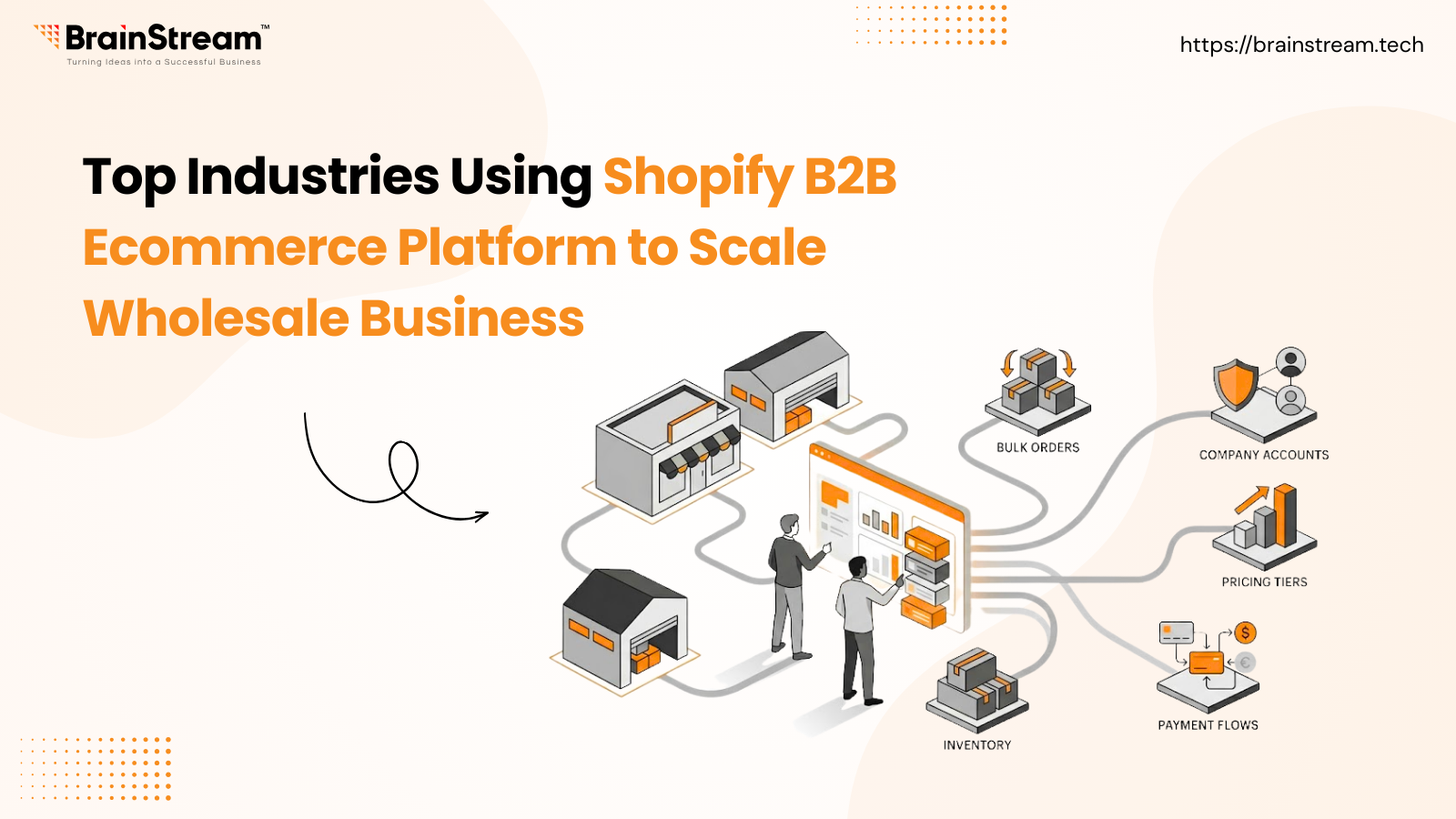
E-commerce is no longer just about selling to individual consumers. The rise of B2B e-commerce has opened new avenues for brands across various industries to streamline wholesale operations, reach more business clients, and scale more quickly. Shopify, with its dedicated B2B platform, enables businesses to manage both direct-to-consumer (D2C) and wholesale sales from a single dashboard.
Whether you are a fashion label, a cosmetics manufacturer, a gourmet food supplier, or a tech retailer, Shopify B2B allows you to handle bulk orders, customise pricing, and automate workflows all without the complexity of managing separate systems.
In this article, we explore the top industries utilising Shopify B2B, the reasons behind their platform choice, and how it’s helping businesses transform their wholesale operations.
The Rise of B2B Ecommerce on Shopify
Traditionally, B2B operations relied on spreadsheets, offline orders, or custom-built platforms. These systems were often cumbersome and fragmented, creating challenges for businesses trying to scale.
With the launch of Shopify B2B, brands can now integrate wholesale and retail sales seamlessly. One central dashboard manages inventory, orders, and pricing for both B2C and B2B buyers. Features like custom catalogs, net payment terms, and tiered pricing make it easier than ever to provide personalized experiences to wholesale clients.
The flexibility and scalability of Shopify B2B are key reasons why more businesses are shifting from manual B2B processes to a modern, automated wholesale ecosystem.
Why Businesses Choose Shopify for B2B
Businesses across industries are adopting Shopify B2B because it provides a complete solution for wholesale operations.
The main advantages include:
- One Platform for All Sales Channels
Shopify allows brands to manage both retail and wholesale sales from a single platform. No need for separate systemseverything from product catalogues to orders is centralised. - Custom Pricing and Buyer Experiences
Brands can offer unique pricing, payment terms, and catalogues for different clients, making it easier to manage distributors, resellers, and enterprise buyers. - Built for Modern B2B Buyers
Wholesale buyers expect the same convenience as regular consumers. Shopify B2B delivers an intuitive, fast, and seamless experience, allowing buyers to log in, view negotiated prices, and reorder anytime. - Shopify Plus for Advanced B2B Features
Larger brands benefit from Shopify Plus, which offers features like company profiles, purchase order management, and workflow automation, streamlining even complex B2B operations.
Top Industries Using Shopify’s B2B Ecommerce Platform
Shopify B2B is versatile enough to support virtually any industry. Here are some of the top industries leveraging Shopify for wholesale success:
1. Fashion and Accessories
Fashion brands were early adopters of Shopify B2B, using it to manage bulk orders for boutiques, department stores, and retail partners. From streetwear labels to luxury designers, Shopify B2B makes wholesale as seamless as D2C.
Example: The Somewhere Co uses Shopify B2B to streamline restocks in Australia, experiencing a 13% year-over-year increase in average B2B order value.
2. Beauty and Cosmetics
Haircare, skincare, and makeup brands often sell to salons, spas, and retail chains. Shopify B2B simplifies recurring orders, wholesale storefronts, and personalised pricing.
Example: AMR Hair & Beauty Supplies saw a 77% rise in B2B average order value after switching to Shopify B2B, serving both professional and retail buyers efficiently.
3. Food and Beverage
Speciality coffee roasters, gourmet snack makers, and beverage suppliers use Shopify B2B to handle bulk orders for cafes, restaurants, and retailers. Features like reorder reminders, subscription-based wholesale, and automated fulfilment help streamline operations.
Example: Deathwish Coffee manages D2C subscriptions and B2B wholesale orders from the same Shopify storefront, simplifying inventory and order management.
4. Consumer Electronics
Electronics brands often manage complex product catalogues, multiple resellers, and tiered pricing. Shopify B2B allows approved retailers to access private storefronts with real-time inventory, custom pricing, and easy reordering.
Example: Staples Canada uses Shopify B2B to serve businesses of all sizes, combining retail and wholesale experiences on one platform.
5. Home Furnishings and Decor
Furniture, lighting, and decor brands often sell to both retail consumers and trade clients like interior designers or property developers. Shopify B2B helps manage these relationships efficiently.
Example: Brooklinen leveraged Shopify B2B to streamline hospitality wholesale orders, providing a personalised, D2C-like experience for trade customers.
6. Sporting Goods and Outdoor Equipment
Brands supplying fitness gear, camping equipment, or sports apparel use Shopify B2B to manage bulk contracts with gyms, speciality shops, and retailers.
Example: Decathlon enables business clients to place bulk orders and request customisations through Shopify B2B, simplifying procurement and fulfilment for large-scale buyers.
Conclusion: The Future of Wholesale with Shopify B2B
B2B commerce is moving toward digital-first, customer-centric experiences, and Shopify is leading the way. Wholesale buyers now expect the same convenience and speed as everyday consumers. Shopify B2B delivers this with automation, personalisation, and global scalability.
From fashion and beauty to electronics, home furnishings, and food, Shopify B2B gives businesses the tools to grow wholesale operations without extra systems or complexity.
Whether you’re a small manufacturer or a global brand, Shopify’s B2B ecommerce platform provides a complete, flexible solution to manage bulk orders, pricing, and customer relationships all from a single, unified platform.

Manish Khilwani 

Co-Founder at BrainStream Technolabs, he focuses on building people-first, scalable eCommerce and digital products that help brands grow with clarity and innovation.
Share :


Related Blog
Shopify
Top 10+ Shopify Wholesale Apps in 2026
Ultimate Guide to the Best B2B & Wholesale Solutions for Your Shopify Store Wholesale functionality allows Shopify merchants to sell products in large quantities, offer tiered pricing, manage business customers, and streamline bulk order workflows, all without running a separate...
Shopify
Shopify POS App: Features, Benefits, Integrations & Comparison Guide (2026)
In today’s retail world, integrating in-store and online sales is a game-changer. Whether you’re running a brick-and-mortar store, a pop-up stand, or an omnichannel business, having a point-of-sale system that syncs seamlessly with your online store is essential. Shopify POS...
Shopify
Beginner’s Guide to Setting Up a Shopify Fashion and Apparel Store in 2026
If you’re a fashion business owner planning to take your brand online, choosing the right eCommerce platform is the foundation of your success. With multiple platforms available, deciding where to build your fashion store can feel overwhelming. However, Shopify continues...


Keep up-to-date with our newsletter.
Sign up for our newsletter to receive weekly updates and news directly to your inbox.