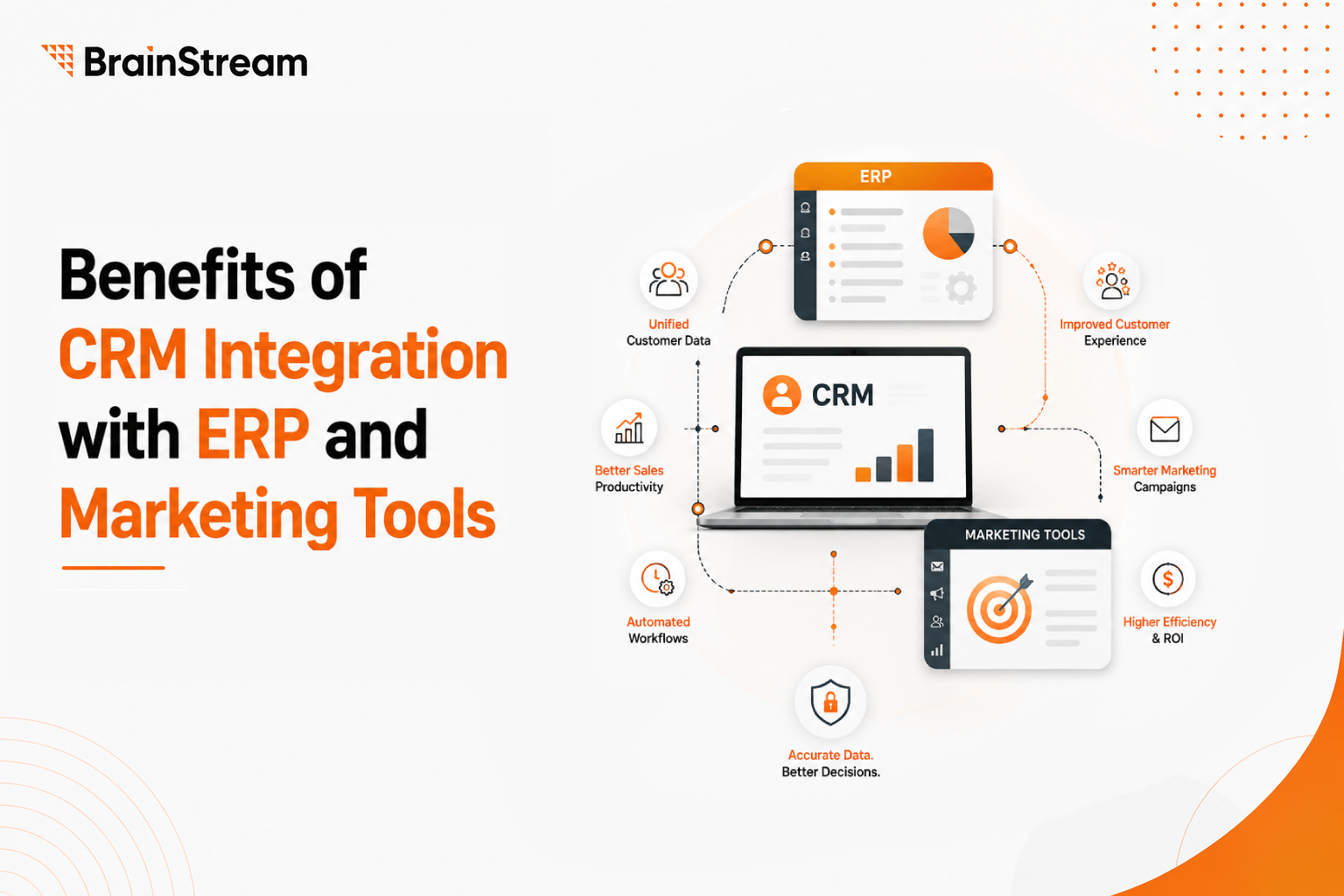
Benefits of CRM Integration with ERP and Marketing Tools
Businesses use multiple software systems to manage sales, operations, inventory, finance, and marketing. While each tool serves an important purpose, managing them separately often leads to data silos, manual work, and communication gaps.
This is where CRM integration with ERP and marketing tools becomes valuable. By connecting these systems, businesses can create a single source of truth, automate workflows, and improve customer experiences.
In this article, you’ll learn the key benefits of CRM integration, how it works, and why it’s a smart investment for growing businesses.
What Is CRM Integration?
CRM (Customer Relationship Management) integration connects your CRM software with other business applications, such as ERP systems and marketing platforms.
Instead of switching between multiple tools, your teams can access accurate, real-time data from one connected system.
Common integrations include:
- ERP software
- Marketing automation platforms
- Email marketing tools
- Accounting software
- Customer support systems
- E-commerce platforms
As a result, departments work together more efficiently.
Why CRM Integration Matters
Many businesses still enter the same information into multiple systems.
This creates problems such as:
- Duplicate records
- Data errors
- Slow processes
- Poor customer experience
- Delayed decision-making
Integrated systems eliminate these challenges and improve productivity.
What Happens When CRM, ERP, and Marketing Tools Work Together?
Each system has a different role.
| System | Purpose |
|---|---|
| CRM | Manages customer relationships, leads, and sales |
| ERP | Handles finance, inventory, purchasing, and operations |
| Marketing Platform | Manages campaigns, email marketing, and customer engagement |
When connected, data flows automatically between systems. This creates a seamless experience for both employees and customers.
Top Benefits of CRM Integration
1. Create a Single Source of Truth
Disconnected systems often contain different customer information.
CRM integration keeps customer records synchronized across all platforms.
Everyone works with the same updated data.
2. Improve Customer Experience
Customers expect businesses to know their history.
With integrated systems, your sales and support teams can instantly access:
- Purchase history
- Support tickets
- Marketing interactions
- Payment status
- Order information
This allows faster and more personalized service.
3. Increase Sales Productivity
Sales teams spend less time searching for information.
Instead, they can focus on building relationships and closing deals.
Automated data sharing reduces manual updates and saves valuable time.
4. Automate Business Processes
Manual data entry often causes delays and mistakes.
CRM integration automates tasks such as:
- Lead assignment
- Contact updates
- Order creation
- Invoice generation
- Follow-up reminders
- Email campaigns
Automation improves efficiency and reduces human error.
5. Better Marketing Campaigns
Marketing teams perform better when they have accurate customer data.
Integrated systems help marketers:
- Segment audiences
- Personalize email campaigns
- Track customer behavior
- Measure campaign performance
- Improve lead nurturing
As a result, businesses achieve higher engagement and better ROI.
6. Improve Inventory Visibility
When CRM connects with ERP, sales teams can view inventory availability in real time.
This helps them:
- Avoid overselling
- Provide accurate delivery estimates
- Improve customer satisfaction
Real-time inventory data supports better decision-making.
7. Faster Reporting
Business leaders often spend hours combining reports from different systems.
CRM integration provides centralized reporting.
You can easily monitor:
- Sales performance
- Marketing ROI
- Customer lifetime value
- Revenue trends
- Inventory status
Better reporting leads to better business decisions.
8. Reduce Data Errors
Duplicate data creates confusion.
Automatic synchronization keeps information accurate across all connected systems.
This improves data quality and reduces costly mistakes.
9. Better Customer Retention
Integrated systems provide a complete customer view.
Businesses can identify:
- Buying patterns
- Customer preferences
- Renewal opportunities
- Upselling possibilities
Personalized communication increases customer loyalty.
10. Scale Your Business More Easily
As your business grows, manual processes become difficult to manage.
Integrated systems automate operations and support future growth without increasing administrative work.
Common CRM Integration Mistakes
Avoid these common mistakes:
- Choosing incompatible software
- Ignoring data quality
- Skipping employee training
- Integrating unnecessary tools
- Forgetting security requirements
- Not planning future scalability
A clear integration strategy ensures better long-term results.
How to Choose the Right CRM Integration Partner?
Before selecting an integration partner, consider these factors:
- Experience with CRM and ERP platforms
- Custom integration capabilities
- API expertise
- Data security practices
- Ongoing support and maintenance
- Proven project portfolio
An experienced partner will design an integration that fits your business needs and supports future growth.
Conclusion
CRM integration with ERP and marketing tools is more than a technical upgrade. It is a strategic investment that helps businesses improve efficiency, enhance customer experiences, and make smarter decisions.
By connecting your systems, you eliminate data silos, automate repetitive tasks, and give your teams access to accurate information in real time.
Whether you’re a growing business or an established enterprise, integrating your CRM with ERP and marketing platforms can help you streamline operations and build stronger customer relationships.
FAQs
What is CRM integration?
CRM integration connects your Customer Relationship Management system with other business applications, such as ERP software, marketing platforms, accounting systems, and eCommerce solutions, to enable seamless data sharing.
Why should businesses integrate CRM with ERP?
Integrating CRM with ERP provides real-time access to customer, inventory, financial, and operational data. This improves collaboration, reduces manual work, and supports better decision-making.
How does CRM integration improve marketing?
CRM integration allows marketing teams to use customer data for personalized campaigns, audience segmentation, lead nurturing, and performance tracking, resulting in higher engagement and better ROI.
Can small businesses benefit from CRM integration?
Yes. Small businesses can automate routine tasks, reduce data entry, improve customer service, and prepare their operations for future growth through CRM integration.
Is CRM integration secure?
Yes, when implemented correctly. A trusted integration partner uses secure APIs, encryption, access controls, and compliance best practices to protect business and customer data.

Manish Khilwani
Author
Co-Founder at BrainStream Technolabs, he focuses on building people-first, scalable eCommerce and digital products that help brands grow with clarity and innovation.
Table of contents
BLOGS
Learn & Grow with Us
Get the latest updates on trends and strategies that shape the business world. Our insights are here to keep you informed and inspired.
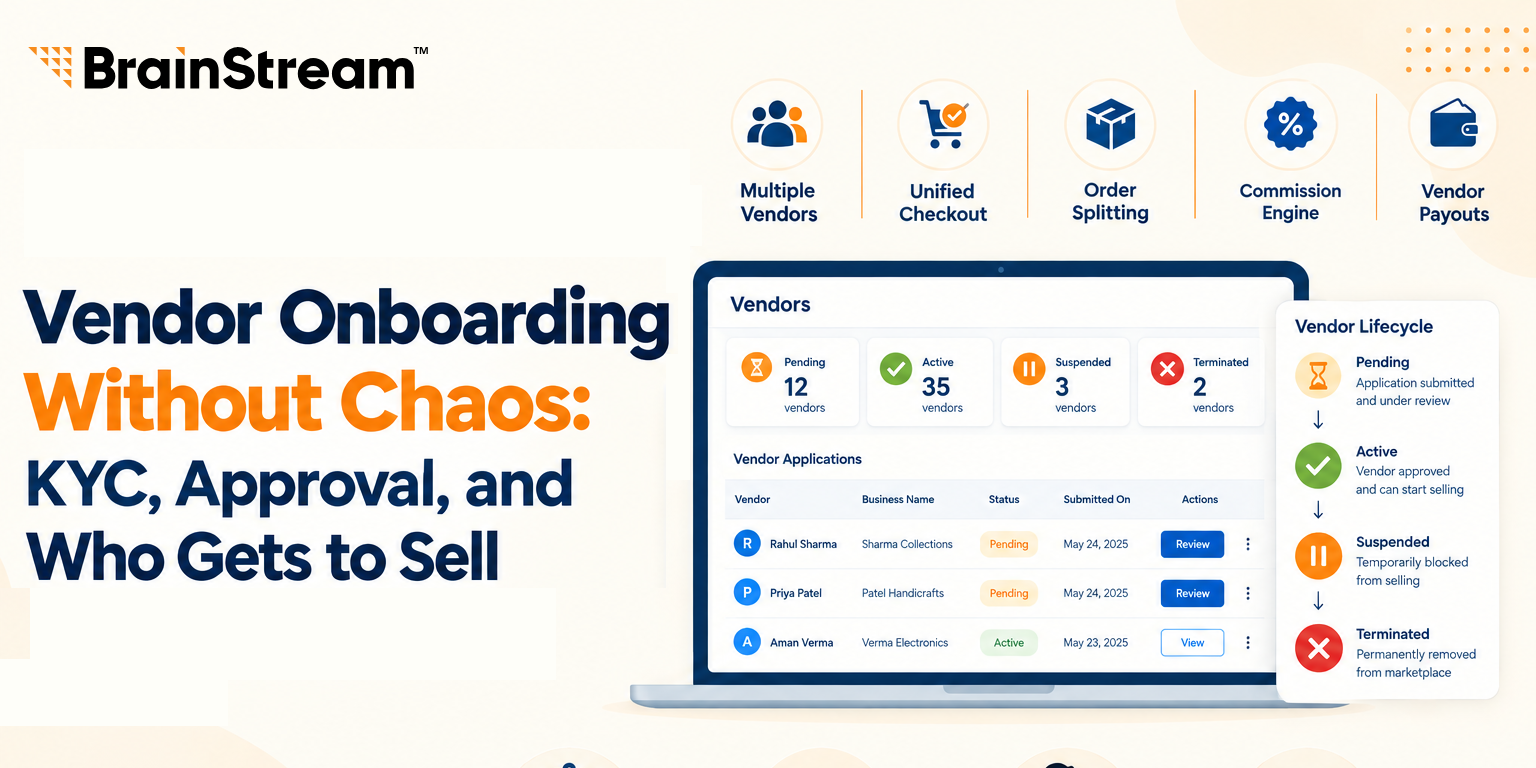
Vendor Onboarding Without Chaos: KYC, Approval, and Who Gets to Sell
Anyone can fill out a vendor signup form. That’s the…

How to Sync Shopify and Odoo Exactly When You Want Using Manual and Scheduled Sync?
A step-by-step look at the OdooStream features that put you…

Shopware 6 Migration: 10 Technical Issues That Can Break Your Store
Migrating an ecommerce store to Shopware 6 can improve performance,…
Top 10 WordPress Development Companies in India in 2026 – What Sets Them Apart
Finding the right WordPress partner can feel overwhelming. There are…