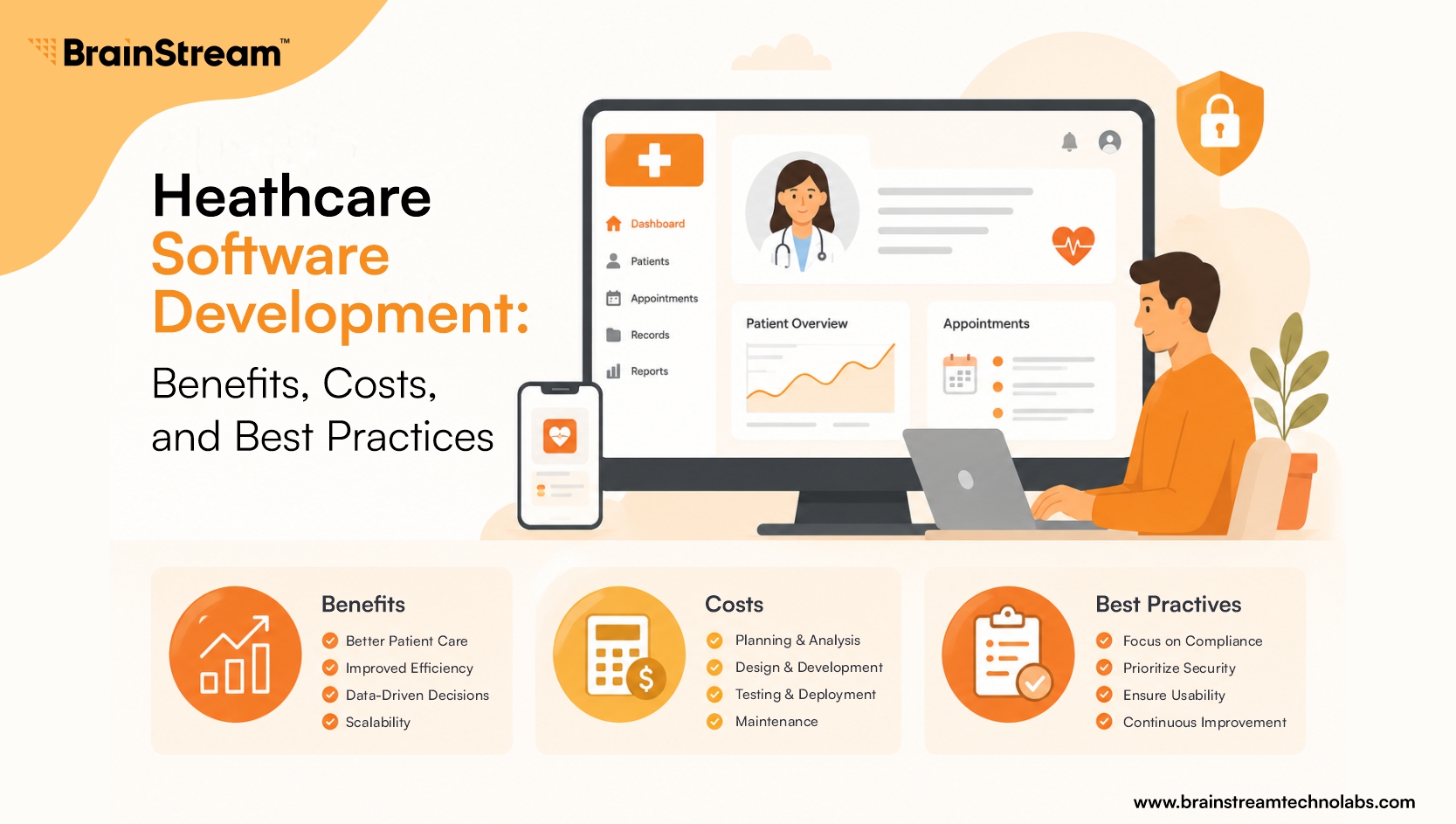
Healthcare Software Development: Benefits, Costs, and Best Practices
Technology is changing the healthcare industry faster than ever before.
Healthcare providers now rely on digital solutions to improve patient care, streamline operations, and manage data more effectively. From telemedicine platforms to electronic health records, software has become an essential part of modern healthcare.
However, developing healthcare software is not as simple as building a standard business application.
Healthcare organizations must consider security, compliance, scalability, and user experience. At the same time, they need solutions that support both healthcare professionals and patients.
This is where healthcare software development becomes important.
In this guide, we will explore the benefits, costs, and best practices of healthcare software development. We will also discuss the key factors businesses should consider before starting a healthcare software project.
What Is Healthcare Software Development?
Healthcare software development is the process of designing, building, testing, and maintaining digital solutions for the healthcare industry.
These solutions help healthcare organizations improve efficiency, patient care, and data management.
Common examples include:
- Electronic Health Record (EHR) systems
- Telemedicine applications
- Healthcare mobile apps
- Patient portals
- Hospital management systems
- Remote patient monitoring platforms
- Healthcare CRM solutions
- Medical billing software
Today, healthcare software plays a critical role in improving both operational performance and patient experiences.
Why Is Healthcare Software Development Growing?
Healthcare organizations face increasing pressure to deliver better services while controlling costs.
At the same time, patients expect faster and more convenient healthcare experiences.
As a result, healthcare providers are investing heavily in digital transformation initiatives.
Several factors are driving this growth:
- Increased demand for telehealth
- Growing use of mobile healthcare apps
- Adoption of cloud technologies
- Expansion of remote patient monitoring
- Rising focus on data-driven healthcare
Therefore, healthcare software development continues to be a major investment area across the industry.
Key Benefits of Healthcare Software Development
Improved Patient Care
One of the biggest advantages of healthcare software is better patient care.
Healthcare professionals can access patient information quickly and make informed decisions.
For example, doctors can review medical records, test results, and treatment histories in one place.
As a result, patients receive more accurate and timely care.
Enhanced Operational Efficiency
Manual processes often slow down healthcare operations.
Healthcare software automates routine tasks such as:
- Appointment scheduling
- Billing
- Record management
- Prescription tracking
Consequently, healthcare teams spend less time on administrative work and more time caring for patients.
Better Data Management
Healthcare organizations generate large amounts of data every day.
Managing this information manually can be difficult and error-prone.
Modern healthcare software centralizes data and improves accessibility.
Additionally, it helps organizations maintain accurate records and improve decision-making.
Increased Patient Engagement
Patients want easy access to healthcare services.
Healthcare applications provide features such as:
- Online appointment booking
- Secure messaging
- Digital health records
- Medication reminders
These features improve communication and increase patient satisfaction.
Improved Compliance and Security
Healthcare organizations must protect sensitive patient information.
Custom healthcare software can include advanced security features that support regulatory compliance.
This helps reduce risks associated with data breaches and unauthorized access.
Types of Healthcare Software Solutions
Healthcare organizations invest in different types of software depending on their needs.
Electronic Health Record (EHR) Systems
EHR systems help healthcare providers manage patient information digitally.
Benefits include:
- Faster access to records
- Improved care coordination
- Reduced paperwork
Telemedicine Platforms
Telemedicine software allows healthcare professionals to provide virtual consultations.
These platforms have become increasingly popular because they improve accessibility and convenience.
Healthcare Mobile Applications
Mobile healthcare apps help patients manage their health from anywhere.
Popular features include:
- Appointment scheduling
- Medication tracking
- Health monitoring
Hospital Management Systems
Hospital management software helps healthcare organizations streamline operations.
These systems often manage:
- Patient registration
- Billing
- Inventory
- Staff scheduling
Remote Patient Monitoring Solutions
Remote monitoring platforms collect health data from connected devices.
Healthcare providers can track patient conditions without requiring in-person visits.
Healthcare Software Development Costs
One of the most common questions businesses ask is:
How much does healthcare software development cost?
The answer depends on several factors.
Project Complexity
Simple healthcare applications typically cost less than enterprise-grade systems.
For example:
| Project Type | Estimated Cost Range |
|---|---|
| Basic Healthcare App | $20,000 – $50,000 |
| Telemedicine Platform | $50,000 – $150,000 |
| EHR System | $100,000 – $500,000+ |
| Healthcare SaaS Platform | $75,000 – $300,000+ |
These estimates vary based on features and business requirements.
Security and Compliance Requirements
Healthcare software requires strong security controls.
Compliance requirements can increase development costs because additional safeguards must be implemented.
These may include:
- Data encryption
- Access controls
- Audit logging
- Secure authentication
However, these investments are essential.
Integration Requirements
Many healthcare organizations use existing systems.
Integrating new software with:
- EHR platforms
- Billing systems
- Insurance systems
- Third-party healthcare tools
can increase project complexity and cost.
Development Team Expertise
Experienced healthcare software developers often command higher rates.
However, their expertise helps reduce risks and improve project quality.
Therefore, choosing the right development partner is critical. These estimates vary based on features and business requirements.
Best Practices for Healthcare Software Development
Successful healthcare projects follow proven best practices.
Prioritize Security From Day One
Security should never be an afterthought.
Organizations should implement:
- Encryption
- Multi-factor authentication
- Secure APIs
- Access management controls
Strong security protects patient data and supports compliance efforts.
Focus on User Experience
Healthcare software serves multiple user groups.
These may include:
- Doctors
- Nurses
- Administrators
- Patients
Therefore, applications should be easy to use and navigate.
A poor user experience can reduce adoption rates.
Build for Scalability
Healthcare organizations continue to grow and evolve.
Software should support increasing users, data volumes, and new features.
Cloud-based architectures often provide the flexibility needed for future growth.
Ensure Regulatory Compliance
Healthcare regulations vary by region.
Organizations should understand applicable compliance requirements before development begins.
Regular audits and security reviews help maintain compliance over time.
Conduct Thorough Testing
Healthcare software must be reliable.
Testing should include:
- Functional testing
- Security testing
- Performance testing
- User acceptance testing
This reduces the risk of issues after launch.
Common Challenges in Healthcare Software Development
Data Security Risks
Healthcare data is a frequent target for cybercriminals.
Organizations must continuously strengthen security measures.
Complex Compliance Requirements
Healthcare regulations can be difficult to navigate.
Compliance planning should begin early in the project lifecycle.
System Integration Issues
Many healthcare organizations rely on legacy systems.
Integrating new software with existing infrastructure can be challenging.
Scalability Concerns
Applications must support future growth while maintaining performance.
Without proper planning, scalability issues can emerge quickly.
How Technology Consulting Supports Healthcare Software Development?
Healthcare software projects involve complex technical and regulatory requirements.
Technology consulting services help organizations:
- Define project requirements
- Create technology roadmaps
- Evaluate cloud infrastructure
- Improve software architecture
- Reduce implementation risks
Additionally, expert guidance helps businesses make informed technology decisions.
Conclusion
Healthcare software development plays a vital role in modern healthcare delivery.
From improving patient care to streamlining operations, digital solutions help healthcare organizations operate more efficiently and serve patients more effectively.
However, successful healthcare software projects require careful planning, strong security practices, and a focus on compliance.
Organizations that invest in scalable, secure, and user-friendly healthcare software gain a significant competitive advantage.
As healthcare technology continues to evolve, software development will remain a key driver of innovation and growth across the industry.
FAQs
What is healthcare software development?
Healthcare software development involves creating digital solutions for healthcare providers, hospitals, clinics, and patients.
How much does healthcare software development cost?
Costs vary depending on project complexity, features, compliance requirements, and integrations.
Why is security important in healthcare software?
Healthcare applications handle sensitive patient information that must be protected from unauthorized access and cyber threats.
What types of healthcare software are most common?
Common solutions include EHR systems, telemedicine platforms, patient portals, mobile healthcare apps, and hospital management systems.
How long does healthcare software development take?
Development timelines vary. Simple applications may take a few months, while enterprise healthcare platforms can require a year or more.

Manish Khilwani
Author
Co-Founder at BrainStream Technolabs, he focuses on building people-first, scalable eCommerce and digital products that help brands grow with clarity and innovation.
Table of contents
BLOGS
Learn & Grow with Us
Get the latest updates on trends and strategies that shape the business world. Our insights are here to keep you informed and inspired.
Vendor Onboarding Without Chaos: KYC, Approval, and Who Gets to Sell
Anyone can fill out a vendor signup form. That’s the…

How to Sync Shopify and Odoo Exactly When You Want Using Manual and Scheduled Sync?
A step-by-step look at the OdooStream features that put you…

Shopware 6 Migration: 10 Technical Issues That Can Break Your Store
Migrating an ecommerce store to Shopware 6 can improve performance,…
Top 10 WordPress Development Companies in India in 2026 – What Sets Them Apart
Finding the right WordPress partner can feel overwhelming. There are…