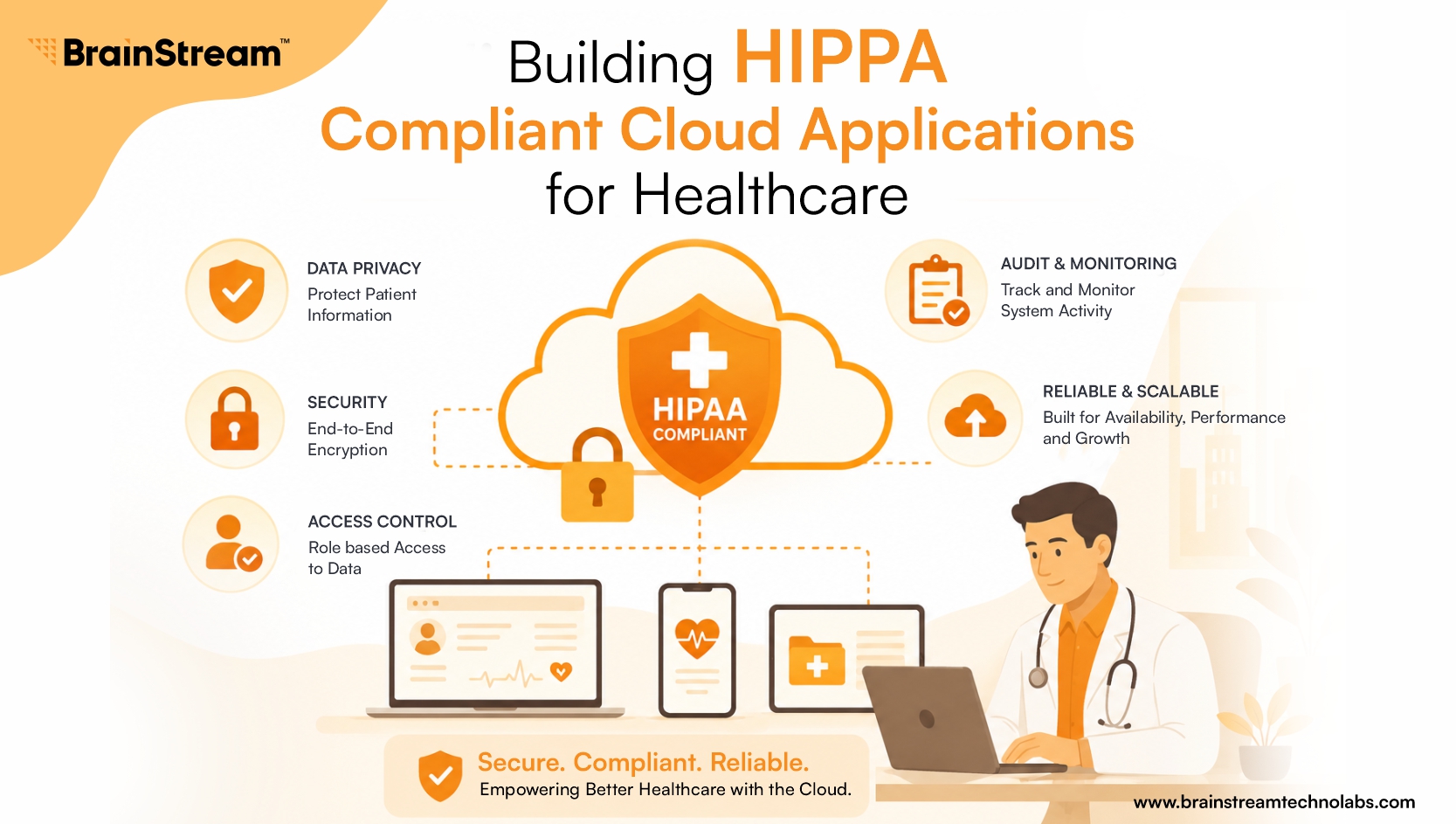
Building HIPAA-Compliant Cloud Applications for Healthcare
Healthcare organizations are rapidly adopting cloud technology.
From telemedicine platforms to patient portals, cloud applications help providers improve efficiency and deliver better patient experiences. However, healthcare data is highly sensitive.
As a result, healthcare organizations must follow strict regulations when storing, processing, and sharing patient information.
One of the most important regulations in the United States is HIPAA.
Building HIPAA-compliant cloud applications is not just about meeting legal requirements. It is also about protecting patient trust, reducing security risks, and ensuring business continuity.
In this guide, we will explain what HIPAA compliance means, why it matters, and how healthcare organizations can build secure cloud applications.
What Is a HIPAA-Compliant Cloud Application?
A HIPAA-compliant cloud application adheres to the security and privacy standards established by the Health Insurance Portability and Accountability Act (HIPAA).
These standards help protect Protected Health Information (PHI).
PHI includes:
- Patient names
- Medical records
- Health insurance details
- Treatment information
- Billing records
A HIPAA-compliant cloud application ensures that this information remains secure at all times.
Additionally, it provides safeguards against unauthorized access, data breaches, and cyber threats.
Why HIPAA Compliance Matter in Healthcare?
Healthcare organizations handle large volumes of sensitive data every day.
Without proper security measures, patient information can become vulnerable to cyberattacks.
HIPAA compliance helps organizations:
- Protect patient privacy
- Reduce legal risks
- Improve data security
- Build customer trust
- Avoid costly penalties
Therefore, compliance should be a priority from the beginning of every healthcare software project.
Why Healthcare Organizations Are Moving to the Cloud?
Cloud technology offers several advantages for healthcare providers.
As healthcare services become more digital, cloud platforms provide the flexibility needed to support growth.
Improved Scalability
Healthcare applications often experience changing workloads.
For example, telehealth platforms may see significant traffic during peak periods.
Cloud infrastructure allows organizations to scale resources as needed.
As a result, applications remain responsive even during high demand.
Better Accessibility
Healthcare professionals need secure access to patient data from multiple locations.
Cloud applications support remote access while maintaining security controls.
This improves collaboration and patient care.
Cost Efficiency
Traditional infrastructure requires significant hardware investments.
Cloud platforms reduce upfront costs and provide flexible pricing models.
Therefore, organizations only pay for the resources they use.
Essential Components of HIPAA-Compliant Cloud Applications
Building a secure healthcare application requires multiple layers of protection.
Data Encryption
Encryption protects sensitive information while it is stored and transmitted.
Healthcare organizations should use strong encryption standards for:
- Data at rest
- Data in transit
- Backup data
Even if unauthorized users access data, encryption helps prevent exposure.
Access Controls
Not every employee should have access to all patient information.
Role-based access control helps organizations restrict access based on job responsibilities.
This reduces the risk of internal security incidents.
Audit Logs
HIPAA requires organizations to track access to sensitive data.
Audit logs record:
- User activity
- Login attempts
- Data modifications
- Security events
As a result, organizations can quickly identify suspicious behavior.
Secure Authentication
Strong authentication protects healthcare systems from unauthorized access.
Best practices include:
- Multi-factor authentication (MFA)
- Strong password policies
- Session management controls
These measures significantly improve security.
Data Backup and Recovery
Data loss can disrupt healthcare operations.
Cloud applications should include disaster recovery and backup strategies.
This ensures business continuity during unexpected events.
Choosing the Right Cloud Platform for Healthcare
Selecting the right cloud provider is a critical decision.
Several major providers offer healthcare-focused services.
AWS for Healthcare Applications
AWS provides healthcare organizations with secure and scalable cloud services.
Key benefits include:
- Strong security features
- Compliance support
- Global infrastructure
- Advanced analytics capabilities
Microsoft Azure for Healthcare
Azure offers healthcare-specific solutions designed for compliance and interoperability.
Many healthcare organizations choose Azure because of its enterprise integrations.
Google Cloud for Healthcare
Google Cloud provides healthcare APIs, analytics tools, and machine learning capabilities.
Additionally, it supports secure healthcare data management.
The best platform depends on business requirements, budget, and long-term goals.
Common Challenges in HIPAA-Compliant Cloud Development
Healthcare organizations often face several challenges during cloud adoption.
Managing Compliance Requirements
HIPAA includes detailed security and privacy requirements.
Without proper planning, compliance can become difficult.
Therefore, organizations should involve compliance and technology experts early in the project.
Data Security Risks
Cyberattacks targeting healthcare organizations continue to increase.
Sensitive patient data remains a valuable target for attackers.
As a result, security must be built into every stage of development.
System Integration Challenges
Many healthcare organizations use legacy systems.
Integrating modern cloud applications with existing platforms can be complex.
However, proper architecture planning helps reduce integration issues.
Scalability Planning
Healthcare applications often experience growth over time.
Without scalable architecture, performance problems may occur as usage increases.
Best Practices for Building HIPAA-Compliant Cloud Applications
Successful healthcare cloud projects follow established best practices.
Perform Regular Security Assessments
Security assessments help identify vulnerabilities before they become serious risks.
Organizations should conduct regular audits and penetration testing.
Implement Role-Based Access Controls
Access should be limited to authorized users only.
This reduces unnecessary exposure to sensitive information.
Use End-to-End Encryption
Encryption should protect data throughout its entire lifecycle.
This includes storage, transmission, and backup environments.
Monitor Systems Continuously
Real-time monitoring helps detect suspicious activity quickly.
Additionally, monitoring improves incident response capabilities.
Maintain Detailed Documentation
HIPAA compliance requires documentation of policies, procedures, and security controls.
Proper documentation simplifies compliance audits.
How Cloud Consulting Helps Healthcare Organizations?
Building HIPAA-compliant cloud applications requires technical expertise and strategic planning.
Cloud consulting services help healthcare organizations:
- Design secure architectures
- Develop compliance strategies
- Optimize cloud infrastructure
- Reduce operational risks
- Improve application scalability
Additionally, consultants help businesses avoid costly mistakes during implementation.
As a result, healthcare organizations can focus on patient care while maintaining compliance.
Future Trends in Healthcare Cloud Applications
Healthcare technology continues to evolve rapidly.
Several trends are shaping the future of cloud-based healthcare solutions.
AI-Powered Healthcare Applications
Artificial intelligence helps healthcare organizations improve diagnostics, automate workflows, and enhance patient experiences.
Telehealth Growth
Virtual healthcare services continue to expand.
Cloud infrastructure supports secure and scalable telemedicine platforms.
Remote Patient Monitoring
Healthcare providers increasingly use connected devices to monitor patient health remotely.
Cloud applications play a critical role in managing this data.
Healthcare Data Analytics
Organizations use cloud-based analytics to gain insights from large volumes of healthcare information.
This supports better decision-making and improved patient outcomes.
Conclusion
Cloud technology offers tremendous opportunities for healthcare organizations.
It improves scalability, accessibility, and operational efficiency. However, healthcare providers must prioritize security and compliance throughout the development process.
Building HIPAA-compliant cloud applications requires careful planning, strong security controls, and a clear compliance strategy.
Organizations that invest in secure cloud solutions can protect patient data, reduce risks, and support future growth.
As healthcare technology continues to evolve, HIPAA-compliant cloud applications will remain essential for delivering secure and reliable digital healthcare services.
FAQs
What is a HIPAA-compliant cloud application?
A HIPAA-compliant cloud application follows security and privacy standards that protect patient health information.
Why is HIPAA compliance important?
HIPAA compliance helps healthcare organizations protect patient data, reduce legal risks, and maintain trust.
Which cloud platforms support HIPAA compliance?
AWS, Microsoft Azure, and Google Cloud all provide services that support HIPAA compliance requirements.
Is encryption required for HIPAA compliance?
Encryption is strongly recommended and plays a critical role in protecting healthcare data.
How can healthcare organizations improve cloud security?
Organizations should use encryption, access controls, monitoring, regular security assessments, and disaster recovery planning.

Manish Khilwani
Author
Co-Founder at BrainStream Technolabs, he focuses on building people-first, scalable eCommerce and digital products that help brands grow with clarity and innovation.
Table of contents
BLOGS
Learn & Grow with Us
Get the latest updates on trends and strategies that shape the business world. Our insights are here to keep you informed and inspired.
How Much Does AI Integration into a Symfony Application Cost in 2026?
Adding artificial intelligence to your Symfony application can improve customer…
Modernizing Legacy Symfony Applications with AI: Where to Start
Your Symfony application still runs your business. However, adding features…
Agentic Commerce in 2026: How AI Agents Are Changing Online Shopping
Online shopping is entering a new phase. For years, shoppers…
Top 7 Must-Have Bagisto Extensions to Improve Your eCommerce Store in 2026
Running an online store takes more than adding products and…