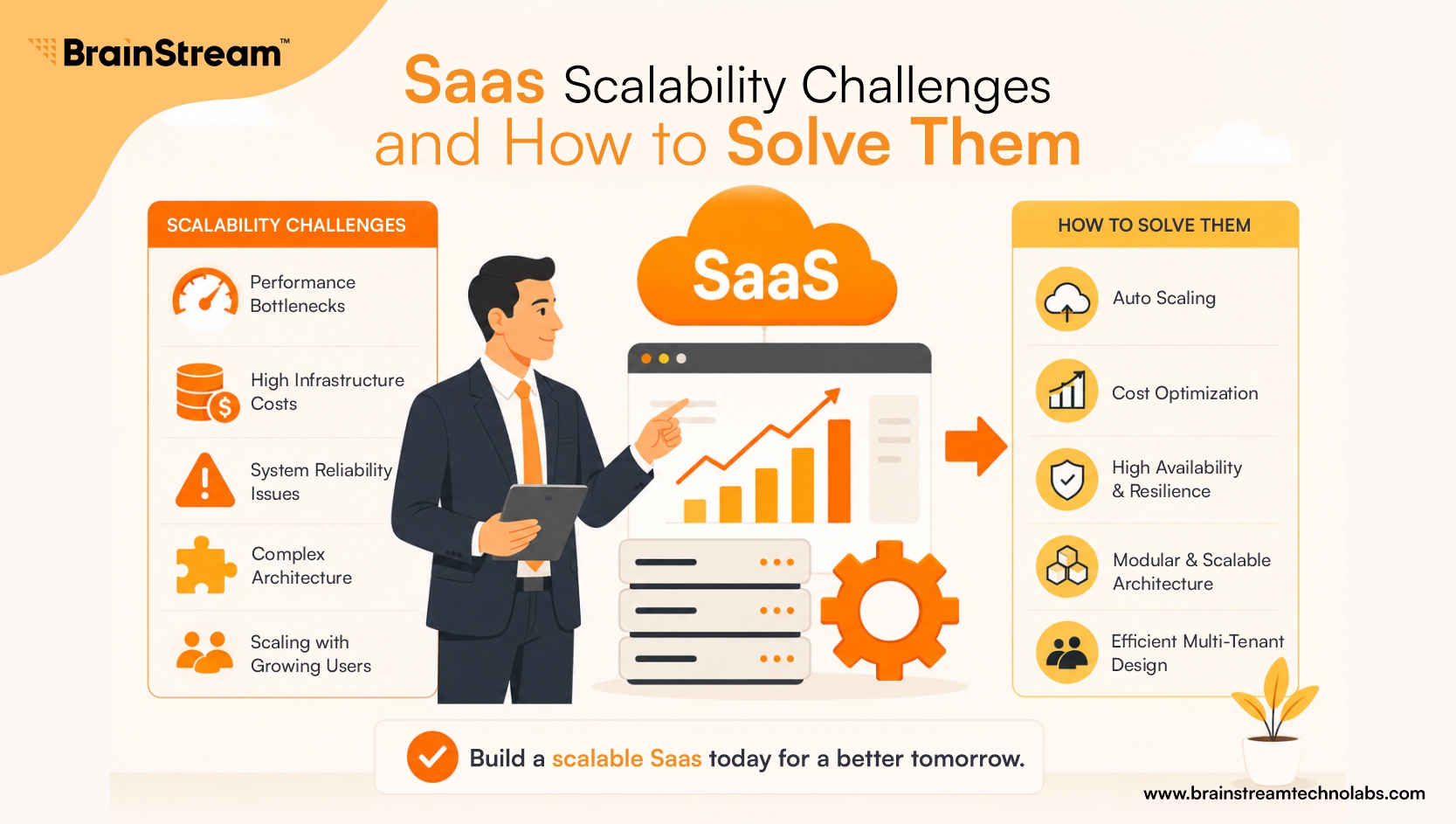
SaaS Scalability Challenges and How to Solve Them
Building a SaaS product is exciting. However, growing it successfully is a different challenge.
Many SaaS companies launch with a great idea and gain early customers. At first, everything works smoothly. The application performs well, users are happy, and the infrastructure handles the workload.
As the business grows, things start to change.
More users create more requests. Larger datasets increase processing demands. New features add complexity. As a result, the application may become slower, less reliable, and more expensive to maintain.
This is where SaaS scalability becomes important.
Scalability allows a SaaS platform to handle increasing workloads without sacrificing performance or user experience. Without a scalable foundation, growth can quickly become a problem instead of an opportunity.
In this guide, we will explore the most common SaaS scalability challenges and practical ways to solve them.
What Is SaaS Scalability?
SaaS scalability refers to the ability of a software application to support growth efficiently.
A scalable SaaS platform can:
- Handle more users
- Process more data
- Support additional features
- Maintain performance during traffic spikes
Most importantly, scalability ensures that business growth does not negatively impact the customer experience.
Why Scalability Matters for SaaS Businesses?
Users expect fast and reliable software.
If your application becomes slow or unavailable, customers may leave and choose a competitor.
A scalable SaaS platform helps businesses:
- Improve user experience
- Reduce downtime
- Support rapid growth
- Control infrastructure costs
- Increase customer retention
Therefore, scalability should be a priority from the beginning.
Common SaaS Scalability Challenges
Increasing User Traffic
One of the most common challenges is handling growing user demand.
When thousands of users access the platform at the same time, servers may struggle to keep up.
As traffic increases, businesses often experience:
- Slow response times
- Server overload
- Application crashes
- Poor user experience
Without proper planning, growth can expose weaknesses in the system.
Database Performance Issues
As more customers use the platform, data volume grows rapidly.
Over time, databases become larger and more complex.
Common database challenges include:
- Slow queries
- High latency
- Storage limitations
- Data synchronization issues
Consequently, application performance begins to suffer.
Infrastructure Limitations
Many startups begin with a basic hosting setup.
While this works initially, it often becomes a bottleneck later.
Limited infrastructure can cause:
- Downtime
- Resource shortages
- Reduced reliability
- Poor scalability
As a result, businesses struggle to support growing demand.
Application Architecture Problems
Poor architecture is another major scalability challenge.
Applications built without scalability in mind often become difficult to maintain.
Common issues include:
- Monolithic architecture
- Tight system dependencies
- Slow deployment cycles
- Difficult feature expansion
These problems can slow business growth significantly.
Rising Operational Costs
Growth usually increases infrastructure expenses.
However, inefficient resource management can cause costs to rise unnecessarily.
Many SaaS businesses face challenges such as:
- Overprovisioned servers
- Unused cloud resources
- Inefficient workloads
Therefore, cost optimization becomes essential.
How to Solve SaaS Scalability Challenges?
Adopt Cloud Infrastructure
Cloud platforms provide the flexibility needed for growth.
Instead of relying on fixed infrastructure, businesses can scale resources on demand.
Popular cloud platforms include:
- AWS
- Microsoft Azure
- Google Cloud Platform
Cloud infrastructure helps businesses handle traffic spikes while maintaining performance.
Additionally, it reduces the need for large upfront investments.
Use a Scalable Application Architecture
Architecture plays a critical role in long-term scalability.
Modern SaaS platforms often use microservices architecture.
Benefits of Microservices
- Independent service deployment
- Better fault isolation
- Faster development cycles
- Easier scaling
For example, businesses can scale specific services without affecting the entire application.
As a result, performance improves significantly.
Optimize Database Performance
Database optimization is essential for a scalable SaaS application.
Several techniques can improve performance.
Best Practices
- Use indexing effectively
- Optimize database queries
- Implement caching
- Archive outdated data
- Monitor database performance regularly
These practices help reduce latency and improve response times.
Implement Auto-Scaling
Auto-scaling automatically adjusts resources based on demand.
During periods of high traffic, additional resources become available.
When traffic decreases, resources scale down.
Benefits include:
- Better performance
- Improved reliability
- Lower costs
- Reduced manual intervention
Therefore, auto-scaling is one of the most effective scalability strategies.
Improve Application Performance
Performance optimization should be an ongoing process.
Small improvements can create a significant impact on user experience.
Key Optimization Techniques
Use Content Delivery Networks (CDNs)
CDNs deliver content closer to users.
As a result, page load times improve.
Implement Caching
Caching reduces unnecessary database requests.
This improves speed and reduces server load.
Optimize APIs
Efficient APIs reduce processing time and improve scalability.
Monitor and Analyze System Performance
You cannot improve what you do not measure.
Continuous monitoring helps businesses identify bottlenecks before they become serious problems.
Important metrics include:
- CPU usage
- Memory utilization
- Response times
- Error rates
- Database performance
Monitoring tools provide valuable insights that support growth.
The Role of Cloud Consulting in SaaS Scalability
Many businesses understand the importance of scalability but struggle with implementation.
Cloud consulting services help organizations:
- Design scalable architectures
- Optimize cloud infrastructure
- Reduce operational costs
- Improve performance
- Plan future growth
Expert guidance can prevent expensive mistakes and accelerate business growth.
Common Mistakes to Avoid
Waiting Too Long to Scale
Many businesses delay scalability planning.
Unfortunately, this often creates bigger problems later.
Ignoring Performance Testing
Performance testing reveals bottlenecks before they affect customers.
Skipping this step increases risk.
Overengineering Early
Businesses should plan for growth but avoid unnecessary complexity.
Focus on current needs while preparing for future expansion.
Neglecting Cost Optimization
Scaling should improve efficiency, not create uncontrolled expenses.
Monitor cloud spending regularly.
Best Practices for Building a Scalable SaaS Platform
Start with Scalability in Mind
Design systems that can grow from the beginning.
Invest in Cloud Infrastructure
Cloud platforms provide flexibility and scalability.
Continuously Monitor Performance
Regular monitoring helps identify potential issues early.
Automate Wherever Possible
Automation reduces manual work and improves operational efficiency.
Review Architecture Regularly
Technology evolves quickly.
Regular architecture reviews help maintain scalability over time.
Conclusion
Growth is a positive sign for any SaaS business. However, growth also creates technical challenges.
Without a scalable foundation, increasing users and workloads can impact performance, reliability, and customer satisfaction.
Fortunately, these challenges can be addressed with the right strategy.
Cloud infrastructure, scalable architecture, database optimization, auto-scaling, and continuous monitoring all play important roles in building a successful SaaS platform.
Businesses that prioritize scalability early can support growth confidently while delivering a better experience to their users.
In today’s competitive SaaS market, scalability is not just a technical requirement. It is a business advantage.
FAQs
What is SaaS scalability?
SaaS scalability is the ability of a software application to handle increasing users, workloads, and data without reducing performance.
Why is scalability important for SaaS businesses?
Scalability supports business growth, improves user experience, and helps prevent performance issues.
What causes SaaS scalability problems?
Common causes include poor architecture, database bottlenecks, infrastructure limitations, and inefficient resource management.
How does cloud infrastructure improve scalability?
Cloud platforms provide on-demand resources, auto-scaling capabilities, and improved reliability.
What is the best architecture for scalable SaaS applications?
Microservices architecture is often preferred because it supports flexibility, independent scaling, and faster development.

Manish Khilwani
Author
Co-Founder at BrainStream Technolabs, he focuses on building people-first, scalable eCommerce and digital products that help brands grow with clarity and innovation.
Table of contents
BLOGS
Learn & Grow with Us
Get the latest updates on trends and strategies that shape the business world. Our insights are here to keep you informed and inspired.
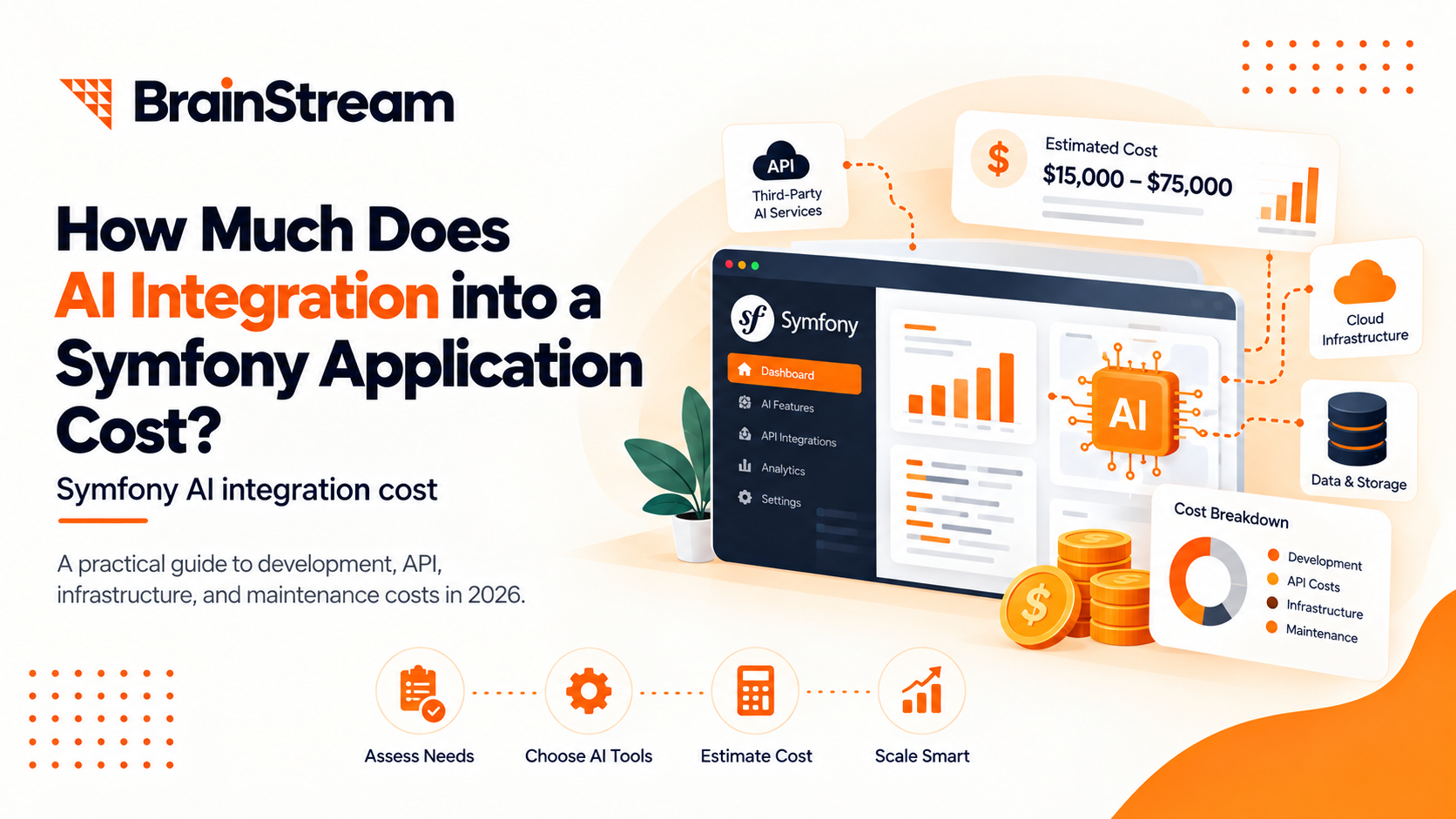
How Much Does AI Integration into a Symfony Application Cost in 2026?
Adding artificial intelligence to your Symfony application can improve customer…
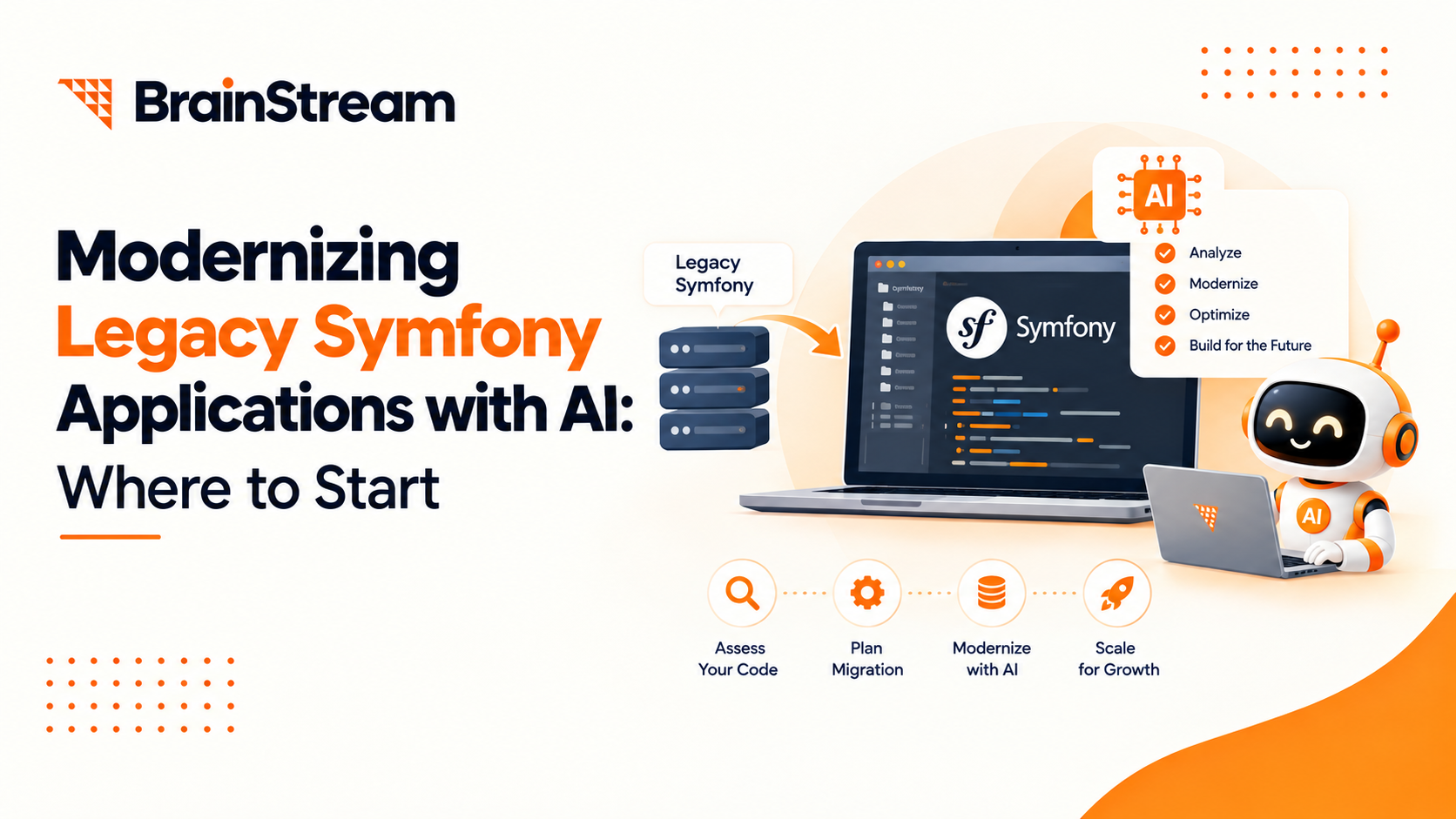
Modernizing Legacy Symfony Applications with AI: Where to Start
Your Symfony application still runs your business. However, adding features…

Agentic Commerce in 2026: How AI Agents Are Changing Online Shopping
Online shopping is entering a new phase. For years, shoppers…

Top 7 Must-Have Bagisto Extensions to Improve Your eCommerce Store in 2026
Running an online store takes more than adding products and…