How OpenAI Became the Face of the Global AI Revolution?
Artificial Intelligence was once limited to research labs, academic papers, and futuristic predictions. Today, AI is everywhere from content creation and coding to healthcare, customer support, and enterprise automation. At the center of this transformation stands OpenAI, the company that changed how the world interacts with AI.
What began as a research organization focused on safe and responsible AI development has evolved into one of the world’s most influential technology companies. With the launch of ChatGPT and advanced generative AI models, OpenAI accelerated mainstream AI adoption faster than any previous technological shift.
For startups, enterprises, and digital-first businesses, OpenAI’s rise represents more than innovation. It signals a major shift in how modern businesses operate, scale, and compete in a technology-driven market.
The AI Industry Before OpenAI Changed Everything
Before OpenAI captured global attention, artificial intelligence was already being used across industries for analytics, recommendation engines, fraud detection, and process automation. However, most AI systems remained highly technical, expensive to implement, and inaccessible to everyday users.
Traditional AI solutions were often:
- Complex to deploy
- Limited to technical teams
- Infrastructure-heavy
- Built for niche enterprise use cases
While businesses understood AI’s potential, widespread adoption remained relatively slow.
The emergence of generative AI completely changed that landscape.
For the first time, users could interact with AI naturally through conversational interfaces. Instead of operating silently in the background, AI became directly accessible to businesses, developers, creators, and consumers.
Users could now:
- Generate content instantly
- Write and debug code
- Automate repetitive workflows
- Build AI-powered applications
- Access intelligent responses through simple prompts
This marked the beginning of a new era in software and business innovation.
OpenAI’s Mission Stood Apart From Traditional Tech Companies
Unlike many technology companies focused purely on commercialization, OpenAI was originally founded with a broader vision: to ensure that artificial general intelligence benefits humanity.
This mission-driven approach immediately differentiated OpenAI from traditional Silicon Valley narratives.
The organization focused heavily on:
- AI safety
- Responsible AI development
- Research transparency
- Human-centered AI systems
Over time, OpenAI successfully evolved from a research-focused organization into one of the fastest-growing AI companies globally. Its ability to combine advanced research with highly usable products became one of its strongest competitive advantages.
The Launch of ChatGPT Changed Public Perception of Artificial Intelligence
The release of ChatGPT became a defining moment for the AI industry.
For the first time, millions of users experienced AI through a simple conversational interface. Instead of requiring technical expertise, users could type prompts and receive intelligent, human-like responses within seconds.
This transformed AI from an experimental technology into an everyday productivity tool.
ChatGPT rapidly became:
- A writing assistant
- A coding companion
- A research tool
- A learning platform
- A business productivity solution
Its viral adoption reshaped the global technology market. Businesses that had previously viewed AI as an optional innovation suddenly began investing heavily in AI transformation initiatives.
OpenAI’s growth also accelerated enterprise AI adoption worldwide, influencing industries across healthcare, SaaS, fintech, eCommerce, education, and customer support.
Why OpenAI Became the Global Symbol of AI Innovation
1. OpenAI Made AI Accessible
One of OpenAI’s biggest achievements was simplifying AI interaction.
Previous AI systems often required:
- Technical implementation
- Specialized infrastructure
- Data science expertise
- Enterprise-level budgets
OpenAI significantly lowered these barriers.
Today:
- Students use AI for learning
- Developers use AI for coding
- Marketing teams use AI for content
- Enterprises automate operations using AI APIs
Accessibility became the growth engine behind the AI revolution.
2. OpenAI Combined Research With Real-World Products
Many AI companies focused only on research papers. Others focused purely on commercialization.
OpenAI successfully combined both.
The company consistently released:
- Advanced AI models
- Developer APIs
- Enterprise AI tools
- Consumer-friendly AI platforms
This combination helped OpenAI dominate both enterprise adoption and mainstream awareness
3. Microsoft Partnership Accelerated Enterprise Growth
OpenAI’s partnership with Microsoft became one of the most important collaborations in modern tech history.
Microsoft invested billions into OpenAI while integrating AI capabilities across products such as :
- Azure
- Microsoft 365
- Copilot
- Enterprise cloud solutions
This partnership provided OpenAI with:
- Massive cloud infrastructure
- Enterprise-scale reach
- Faster AI deployment capabilities
- Global market credibility
The collaboration also accelerated enterprise AI adoption worldwide and strengthened Microsoft’s position in the AI ecosystem.
OpenAI Turned AI Into a Business Imperative
Before ChatGPT, many businesses viewed AI as an optional innovation.
Today, companies see AI as:
- A competitive advantage
- A productivity accelerator
- A customer experience enhancer
- A revenue growth driver
Organizations across industries now invest in:
- AI automation
- AI chatbots
- AI-powered SaaS platforms
- AI workflow optimization
- Generative AI integration
OpenAI played a major role in driving this mindset shift.
The Rise of Generative AI Created a New Technology Economy
OpenAI’s success triggered massive investment across the global AI ecosystem.
Industries rapidly started adopting:
- AI-powered customer support
- AI content generation
- AI coding assistants
- AI analytics tools
- AI-driven business automation
This created entirely new markets.
Companies worldwide began competing to:
- Build AI products
- Hire AI engineers
- Integrate large language models
- Launch AI startups
- Modernize legacy systems with AI
Generative AI is no longer a niche trend; it is becoming a foundational layer of modern digital infrastructure.
How OpenAI Influenced Modern Software Development
The AI revolution has completely changed software development practices.
Modern businesses now expect applications to include:
- AI-powered search
- Conversational interfaces
- Smart automation
- Predictive recommendations
- Natural language processing
This shift has increased demand for:
- AI software development
- Custom AI integrations
- AI-driven web applications
- Enterprise AI consulting
- AI-powered SaaS development
At Brainstream Technolabs, businesses are increasingly seeking AI integration services that combine scalable development with real-world business outcomes.
The market no longer asks whether AI should be implemented. The real question is:
“How fast can businesses adopt AI effectively?”
OpenAI’s Biggest Strength: User Experience
Many AI models exist today, but OpenAI succeeded because of usability.
The company focused heavily on:
- Clean interfaces
- Natural conversations
- Fast responses
- Easy onboarding
- Developer-friendly APIs
This user-first approach helped AI reach mainstream audiences much faster than expected.
Even non-technical users could immediately understand the value of generative AI.
Challenges OpenAI Faces Moving Forward
Despite its rapid growth, OpenAI faces several long-term challenges.
Rising Competition
Major technology companies, including Google, Anthropic, Meta, Amazon, and Microsoft, continue investing aggressively in AI infrastructure and large language models.
Competition within enterprise AI continues to intensify globally.
Infrastructure Demands
AI models require enormous computing power and infrastructure.
Companies are now investing heavily in:
- GPU infrastructure
- AI cloud systems
- Large-scale data centers
- Scalable deployment environments
OpenAI’s future growth depends heavily on infrastructure scalability and cloud partnerships.
AI Regulation and Ethics
As AI adoption grows, governments and organizations are demanding:
- AI transparency
- Responsible AI practices
- Data privacy protections
- Ethical AI governance
The future AI leaders will need to balance innovation with accountability.
What Businesses Can Learn From OpenAI’s Growth
Technology becomes successful when it simplifies complexity for users.
Innovation Wins When Technology Is Accessible
The most successful technology products simplify complexity for users.
Speed Matters in Emerging Markets
OpenAI moved quickly while competitors were still experimenting.
Fast execution created market dominance.
AI Adoption Is No Longer Optional
Businesses delaying AI transformation risk falling behind competitors already using AI to improve:
- Productivity
- Customer experience
- Operational efficiency
- Revenue opportunities
The Future of the AI Revolution
The AI revolution is still in its early stages.
Over the next few years, AI will likely become deeply integrated into:
- E-commerce
- Healthcare
- Finance
- SaaS platforms
- Enterprise operations
- Customer engagement systems
OpenAI helped start this transformation, but the long-term impact will extend far beyond one company.
The future belongs to businesses that successfully combine:
- AI innovation
- Human creativity
- Scalable technology
- Responsible implementation
For modern companies, AI is no longer just a technology trend.
It is becoming the foundation of digital transformation itself.

Manish Khilwani
Author
Co-Founder at BrainStream Technolabs, he focuses on building people-first, scalable eCommerce and digital products that help brands grow with clarity and innovation.
Table of contents
BLOGS
Learn & Grow with Us
Get the latest updates on trends and strategies that shape the business world. Our insights are here to keep you informed and inspired.
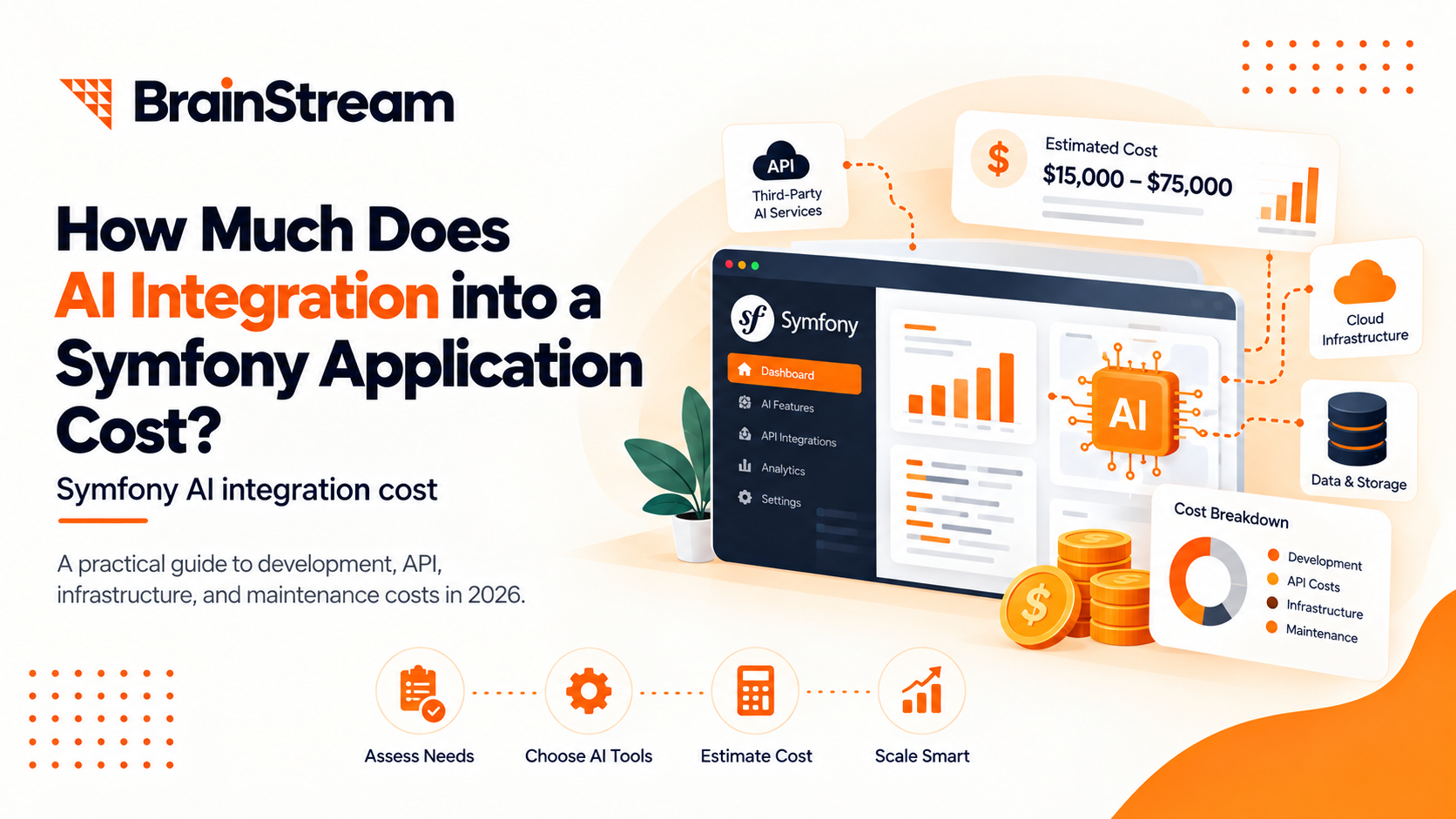
How Much Does AI Integration into a Symfony Application Cost in 2026?
Adding artificial intelligence to your Symfony application can improve customer…
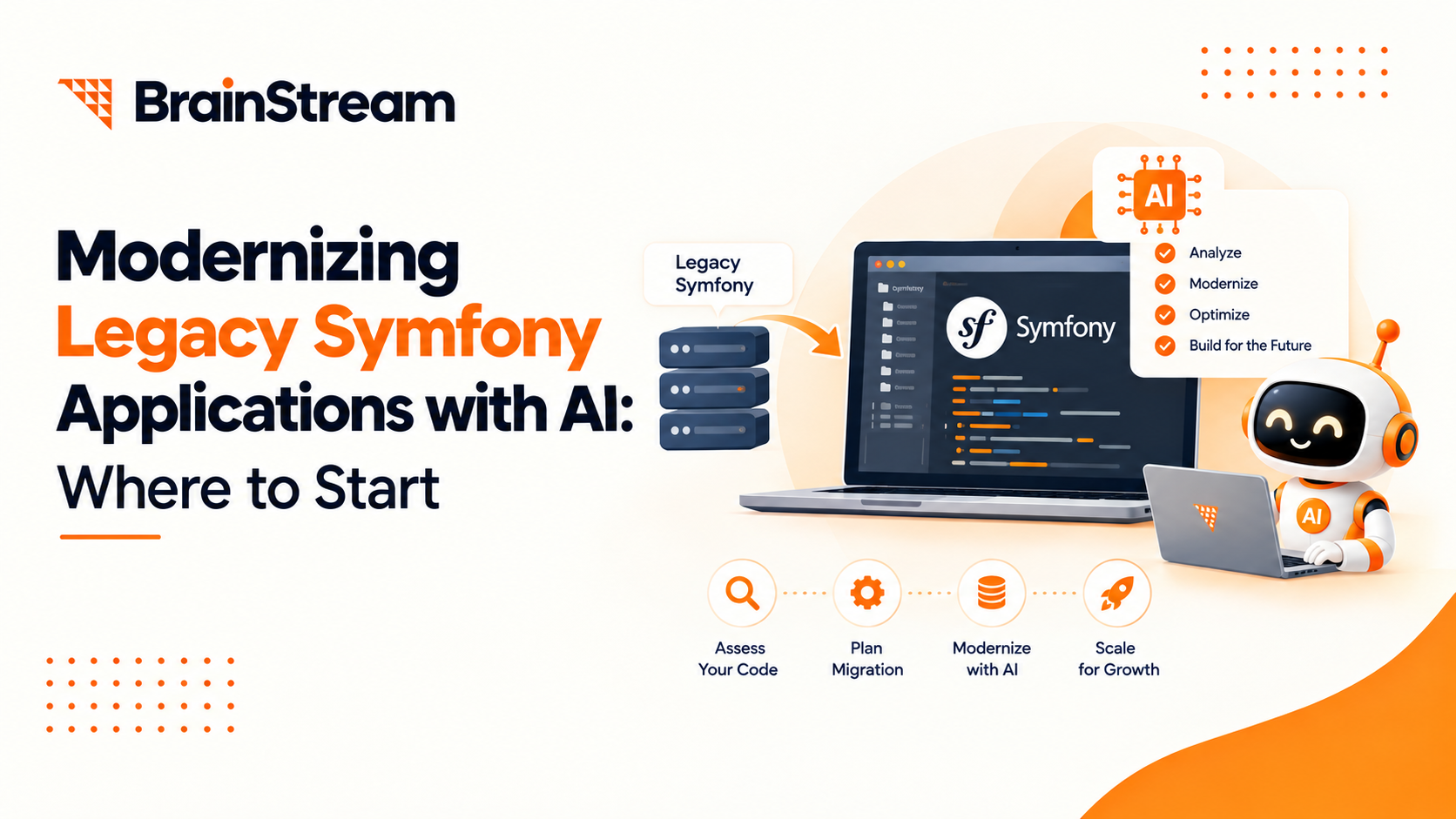
Modernizing Legacy Symfony Applications with AI: Where to Start
Your Symfony application still runs your business. However, adding features…
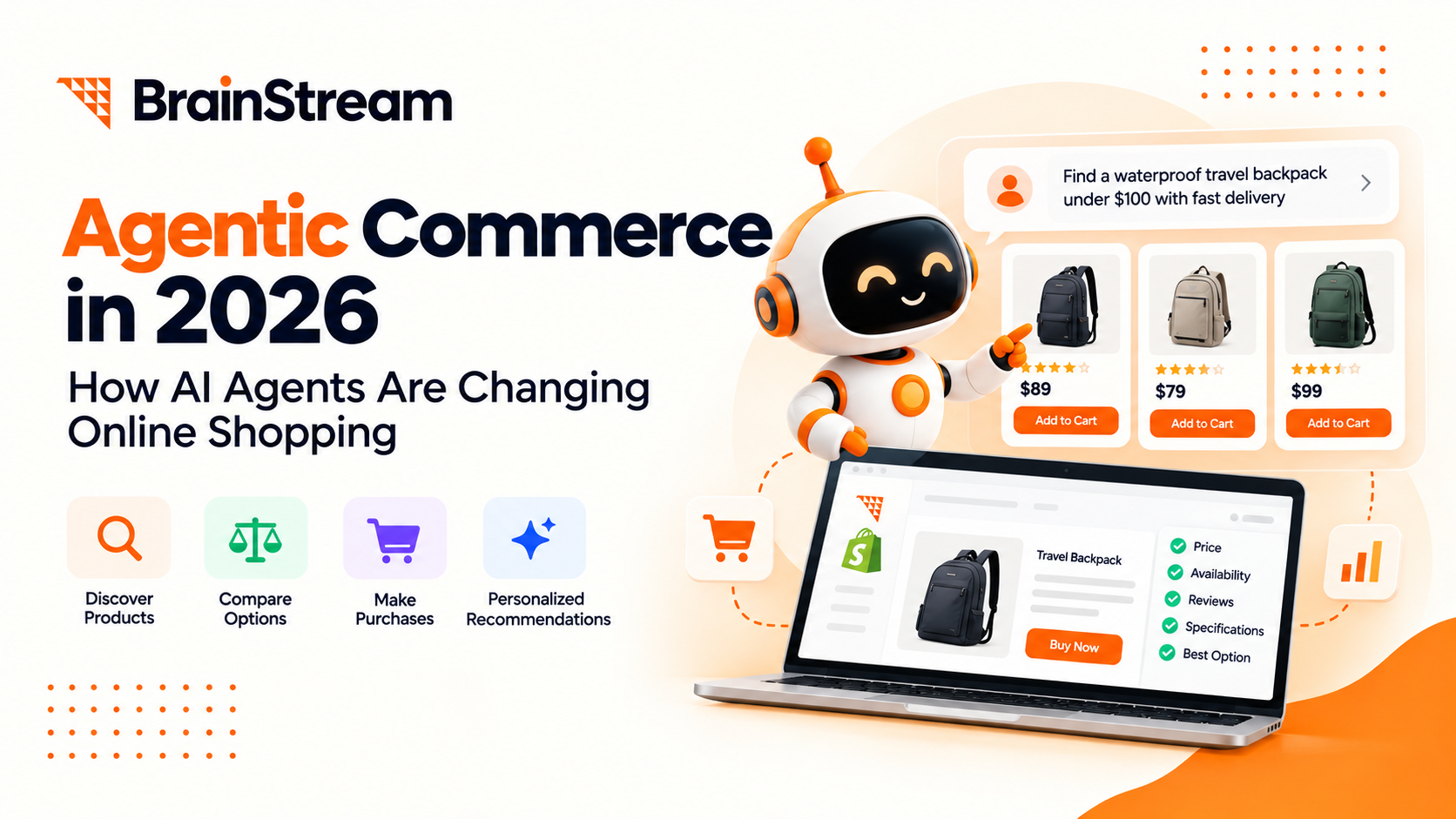
Agentic Commerce in 2026: How AI Agents Are Changing Online Shopping
Online shopping is entering a new phase. For years, shoppers…

Top 7 Must-Have Bagisto Extensions to Improve Your eCommerce Store in 2026
Running an online store takes more than adding products and…